
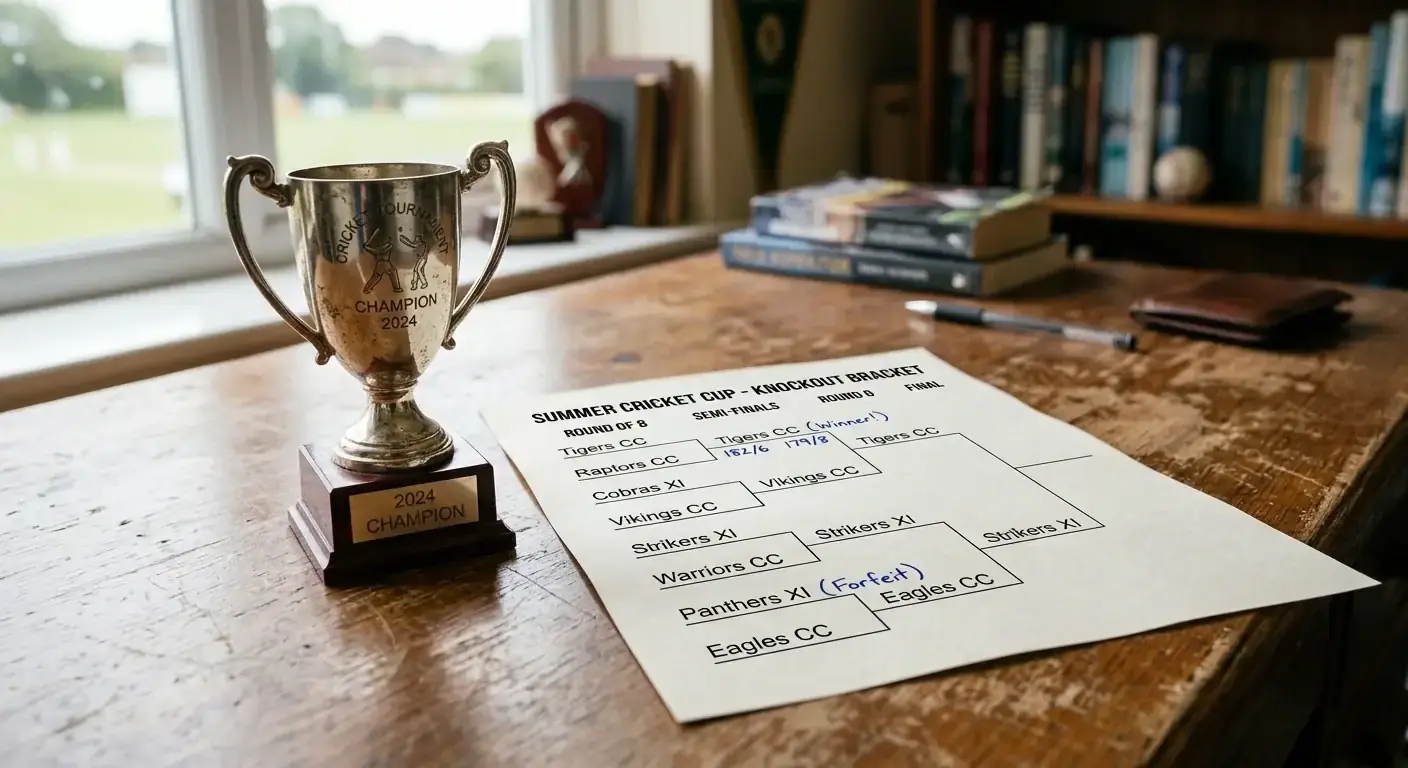

The IPL outright that taught me how settlement timing works
Early 2023. I’d taken Gujarat Titans at 11/1 at the start of an IPL season after a careful read of their squad continuity and the pitch shift at their home venue. They reached the final, lost a tight match, and I watched the trophy lift on television wondering how the settlement screen would handle the second-place finish. The next morning my account showed a “each-way” return I hadn’t realised was applied – the outright market was offered each-way at fifth of the odds for top two, and the book had automatically applied the each-way settlement rather than the win-only price I thought I’d taken. The bet I thought I’d placed at 11/1 was actually placed at 11/1 each-way with the place terms baked in. The lesson was the one outright bettors learn the hard way: the rules around outright markets are uniquely operator-specific, and what you think you’ve bet is often modified by terms you didn’t notice when you placed the bet.
This walks through the rules that govern UK outright cricket betting – the settlement timing, the each-way structure, the rules around player withdrawals, the void scenarios, and the practical things that separate good outright bettors from those who get blindsided by terms they didn’t read.
What an outright market is and when it settles
Outright markets are bets on tournament-long outcomes – winners, top scorers, top wicket-takers, finalists, group winners, runner-up positions, specific player awards. They’re long-dated bets that may be open for months before settlement, and they’re governed by tournament-specific rules that interact with operator-specific rules in ways that can surprise punters.

The settlement trigger is generally the official trophy presentation or the formal end of the tournament. Until that point, the market is open or suspended, and the operator may close the market for new bets at any point – usually at the start of the final or the start of the relevant match. Settlement happens when the tournament officially completes, which can be a few hours after the result for trophy-presentation markets or several days for “Player of the Tournament” awards decided by a panel after the final.
The Ashes is a useful frame. The series outright market closes either at the start of the final Test or when the series is mathematically decided. If England leads 3-1 going into the fifth Test, the Australia outright is still live until the series officially ends – but if England leads 4-0, Australia outright bets may settle as losers before the final Test even starts because the series result is already decided. The exact moment depends on the wording of the market: “to win the series” settles once the series is mathematically decided; “to win or draw the series” stays open longer because of the drawn-series possibility.
Each-way rules and place terms
Many outright cricket markets are offered each-way, with place terms varying by tournament and operator. A typical IPL outright market might be offered each-way at quarter of the odds for top two or fifth of the odds for top four, depending on the operator. A World Cup outright might be each-way for top two – meaning win or runner-up triggers the place portion of the bet. Top batter and top bowler markets are often dead-heat-rules markets where ties at the top split returns proportionally.
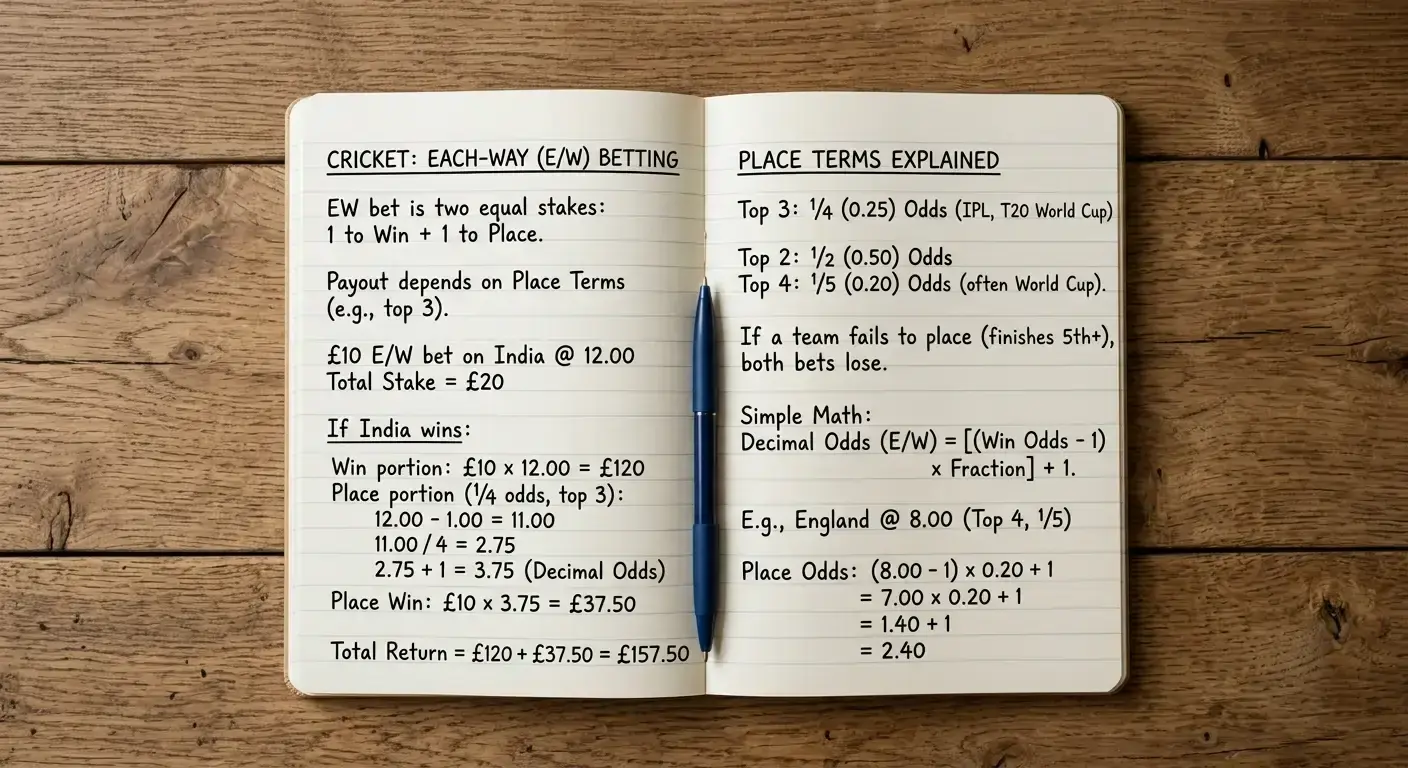
I check the each-way terms before I place every outright. The variation is real. Some books make outright markets win-only by default, with each-way as an explicit toggle. Others apply each-way automatically and split your total stake into a win portion and a place portion. The difference is critical because your effective stake on the win outcome is halved when each-way is applied, and the price you thought you took is the win-only price even when the bet placed has each-way structure.
The dead-heat rule is also worth knowing. If two players tie for top scorer in a tournament and you’ve backed one of them, the standard dead-heat treatment splits your stake – you get half-stake at the full price rather than full-stake. Most UK books apply this rule explicitly to top batter and top bowler markets and explicitly note it in their terms. A few books offer “rule four” treatment instead, which adjusts the price downward to reflect the dead-heat probability rather than splitting the stake. The end financial result is similar but not identical, and the difference matters at long-shot prices.
Player withdrawals and the rule four scenarios
This is the rule that catches more outright bettors than any other. When a player you’ve backed in a top batter market withdraws from the tournament before play begins – IPL injury, ICC event illness, family bereavement – the rules vary. Most UK books apply “rule four” deductions to the market: prices on remaining players are adjusted downward to reflect the reduced field, and bets on the withdrawn player are voided with stake returned. Some books void the entire market if a top player withdraws before tournament start. A few books – and this is the dangerous corner – apply different rules depending on whether withdrawal happens before or after a specific cutoff.

A player who plays one match and then withdraws partway through the tournament is a different scenario again. They’ve “participated” in the tournament for top scorer purposes, so the bet doesn’t void – it just runs to settlement with the player’s actual stats. If they played one match and scored zero runs, the bet settles as a loser. If they played one match and scored 80 runs and the next four top batters can’t catch them, the bet settles as a winner despite the withdrawal. The participation threshold is what governs.
The market that exemplifies this is the IPL Orange Cap. The Indian Premier League’s signature batting award has been won by players who played fewer than the full season schedule when no other batter could match their tally. Outright bets on those players settled as winners despite the early exit. Punters who’d backed batters who played the full season but scored less had legitimate questions about whether participation rules applied, but the published terms were unambiguous – the player who scored most runs across their matches won the award, and that’s how the bet settled.
Tournament format changes and rain-affected finals
Cricket’s history has a few notable tournament outcomes that tested settlement rules. The 2002 ICC Champions Trophy final was abandoned due to rain on consecutive days and the trophy was shared between India and Sri Lanka. Books that had offered straight outright “to win the tournament” markets had to decide whether shared trophies triggered settlement on both finalists, voided the market, or applied to neither. Different books took different positions, and the policies were updated in the aftermath to clarify shared-title outcomes in future tournaments.
The more recent test was the 2019 ICC Cricket World Cup final, where England and New Zealand tied both the match and the super-over, with England declared winners on boundary count. Outright “to win the World Cup” markets settled on England without controversy because the tournament’s tiebreaker rules produced an official winner. But each-way markets on New Zealand and on tournament top scorers (where Rohit Sharma won the run-scoring race with 648 runs across nine matches) settled cleanly. The lesson was that tournament-specific tiebreaker rules govern outright settlement, and the punter who knows the tournament’s playing conditions has a settlement-rules edge.
Settlement timing for non-match-result outright markets
Top batter and top bowler outrights settle when the relevant player or team has completed their participation in the tournament. Player of the Tournament awards settle when the official award is announced, which is typically immediately after the final but may be the day after. Group-winner markets settle when the group stage concludes. Specific milestone markets – “to score 500 runs in the tournament,” “to take 25 wickets in the tournament” – settle the moment the milestone is reached or becomes impossible.

The global sports betting market generated around USD 100.9 billion in 2024 and is projected to grow to USD 187.39 billion by 2030, with Europe holding roughly 48% of that volume. Outright markets contribute a meaningful share of cricket handle within that figure because they offer the kind of staggered, season-long exposure that ICC tournament betting generates across two- and three-month tournament windows. The volume justifies the rule development at major UK books, and the published terms are substantial documents in their own right.
The “all bets stand” exception
One rule worth understanding is the “all bets stand” treatment that some books apply to outright markets once a tournament has officially begun. The principle is that once the tournament starts, the field is set, and player withdrawals or team changes don’t trigger void unless the tournament itself is abandoned. This is a punter-favourable rule because it protects the value of your outright bet against pre-tournament withdrawals after the bet has been placed – but it’s also a rule that means a player who’s pulled out before bowling a ball still leaves your bet running with no protection.
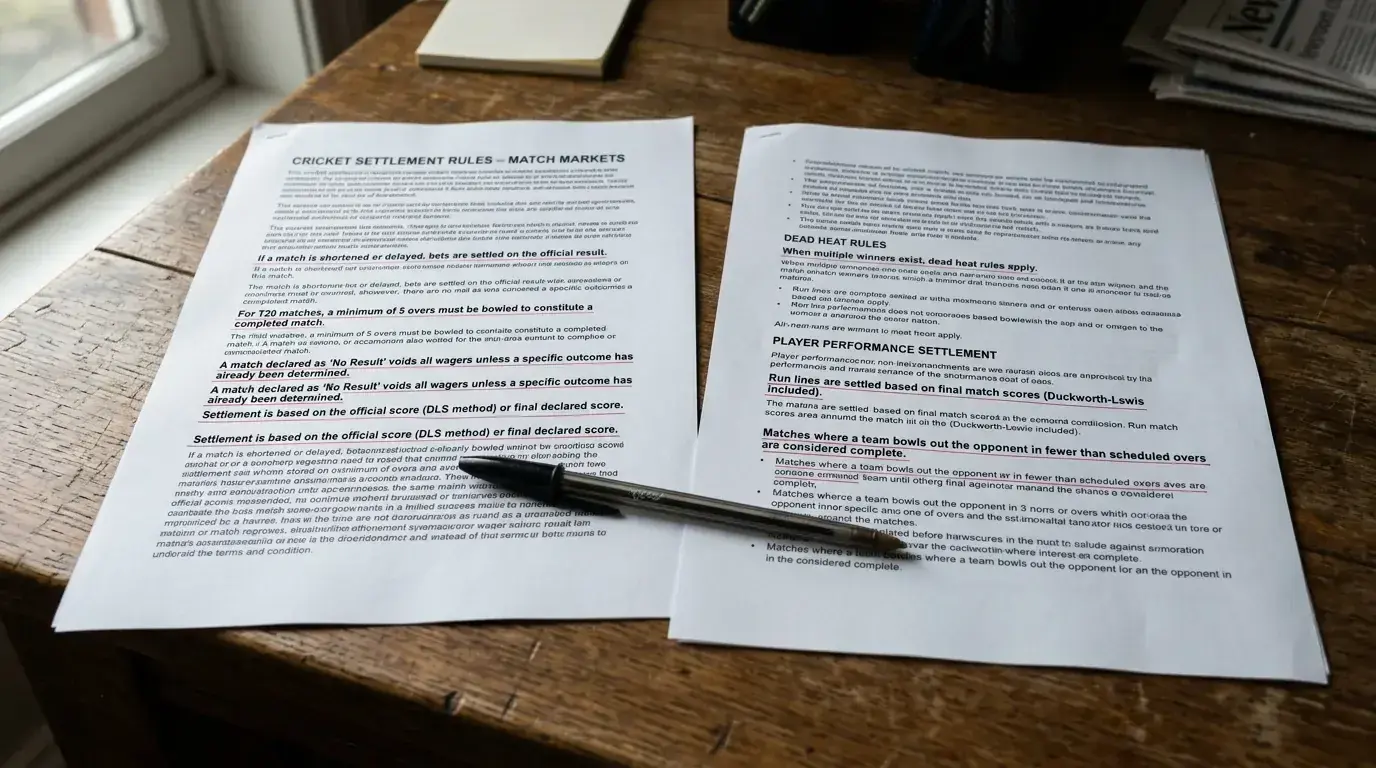
The opposing rule is “rule four after start of tournament for major withdrawals only” – which means that minor withdrawals (squad players who’d have been unlikely to feature heavily) don’t trigger adjustments, but a marquee player withdrawing mid-tournament does. The third common rule is “void on withdrawal before participation” – your bet on a player who never plays a match voids, but a player who plays one match and then withdraws keeps your bet live.
I check which rule applies before I bet on outright player markets at any new book. The difference between these three rules can mean the difference between a void stake refund, a price adjustment, or a losing bet on the same set of factual circumstances. The Gambling Commission requires UK-licensed operators to publish these rules clearly, and the rules are typically embedded in the cricket section of operator terms running to several pages. Reading them is unglamorous but essential.
How outright betting changes my season planning
Outright markets are where seasonal betting strategy lives. The Ashes outright, the IPL outright, the T20 World Cup outright – these are markets I open at the start of the relevant season with a plan for what value I’d accept and what conditions would make me hedge mid-tournament. The advantage of outrights over single-match betting is the long tail of opportunity. The disadvantage is that your capital is tied up for weeks or months and the settlement rules can change the effective return on the bet.
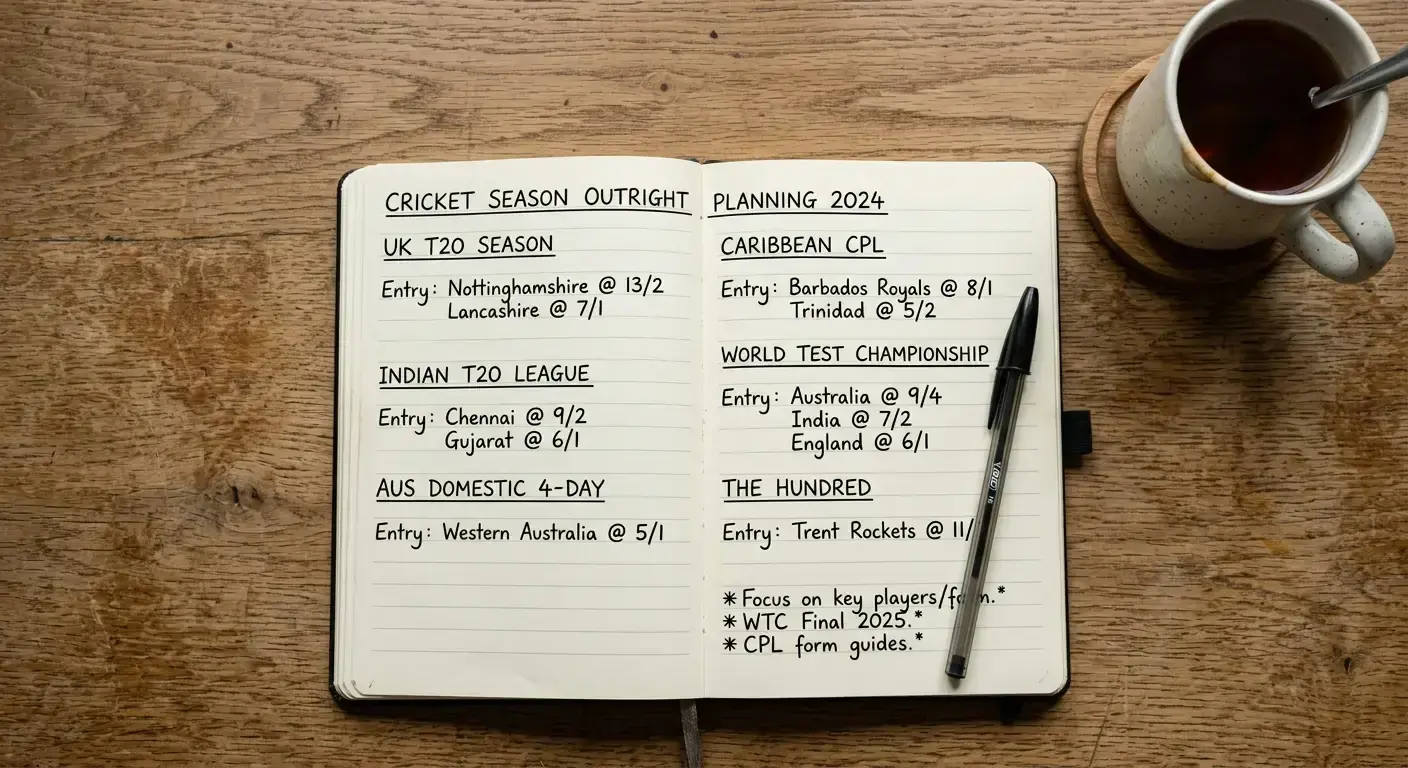
One discipline that’s helped me is treating outright bets as portfolio positions with explicit hedge plans. Back England Ashes outright at 2.20 at the start of the series, then have a plan for what triggers a partial cash-out or a counter-bet on Australia if positions shift. The hedge logic depends on the each-way structure of the original bet – if you’ve taken win-only, hedging is mathematically simpler than if you’ve taken each-way, where part of your stake is already protected by the place portion. Knowing what you’ve actually bet is the foundation of knowing how to manage the position.
Where outright rules genuinely matter
The summary I’d offer is that outright cricket bets are the market category where rule-reading provides the highest information edge per minute spent. Match-result rules are largely standardised across UK books. Player prop rules vary mainly in void thresholds. Outright rules vary in ways that change settlement outcomes in genuinely material ways – each-way terms, dead-heat treatment, withdrawal rules, settlement timing, shared-trophy treatment.
The Gujarat bet from 2023 that opened this article taught me a habit I’ve kept since. Before placing any outright cricket bet of meaningful size, I confirm three things: the each-way structure (win-only or each-way default, with what place terms), the withdrawal rule applied by the operator, and the settlement trigger (specific event or formal trophy presentation). Those three confirmations take two minutes per bet and have saved me from more settlement surprises than any other discipline I’ve developed. Outright cricket betting is a long-form market that rewards long-form preparation. The rules are part of that preparation.
