

UK remote betting generates around £16.8
The first cricket bet I ever placed was on a 2012 county fixture nobody else seemed to be watching. I lost it, badly, on a market I did not fully understand — top wicket-taker in an innings where my chosen bowler did not even finish his spell before lunch. A decade on, I write about this market for a living, and the lesson from that day still sits behind every paragraph I publish: cricket betting is not roulette dressed up in whites. It is one of the most data-rich, format-aware, regulation-shaped corners of the UK gambling industry, and treating it as anything less is the surest way to bleed your bankroll.
If you opened this page hoping for a ranked list of operators with welcome offers, you have come to the wrong editorial desk. What you will get here is the map — markets, formats, tournaments, the regulators who set the rules and the integrity systems that try to keep the sport clean.
UK remote betting generates around £16.8 billion in gross gambling yield each year, and cricket sits inside that machine as the highest-growth global sports betting segment forecast for the decade. That growth is why I sat down to write a 2026 editorial map: the rules around you have changed, the levy is now real money, the ECB has rewritten how gambling firms can sponsor the game, and the integrity threat is moving faster than most coverage admits.
Five Things to Pocket Before the First Ball
- UK remote gambling is a £7.8 billion gross-yield market in the year to March 2025, and cricket sits inside the highest-growth global sports betting segment forecast for the decade.
- Fractional odds are profit-to-stake — a £20 bet at 5/2 returns £70 total. Combined implied probabilities above 100 per cent are the operator's margin.
- 2025 brought the statutory levy at 0.1 to 1.1 per cent of GGY, raising roughly £120 million in year one; remote gaming duty rises to 40 per cent in April 2026.
- The ECB Code of Conduct on gambling sponsorship took effect in 2025 — only UK-licensed operators can sponsor cricket here.
- Around 0.5 per cent of UK adults — about 340,000 people — meet the problem gambling threshold. Set deposit limits before you bet, not after.
The Market Behind Every Cricket Coupon You Open
Open any UK cricket coupon at lunchtime on an Ashes Saturday and you are standing on a global market worth roughly 76.5 billion US dollars in 2023, projected to climb to 151.2 billion by 2032 at a compound rate of 7.6 per cent a year. Cricket is forecast as the highest-growth sports betting segment between 2025 and 2030. None of that explains why your in-play market just suspended on the third ball of an over, but it does explain why every UK operator with serious ambitions builds a cricket trading desk first and a marketing campaign second.
The UK piece is enormous in its own right. Total gross gambling yield for the remote casino, betting and bingo sector in Great Britain reached £7.8 billion in the year to March 2025, a 13.1 per cent jump on the previous twelve months. Non-remote betting still pulls its weight — £622 million in the first quarter of the 2025/26 financial year alone, slightly over half of total non-remote yield in the country. Roughly 290 million online bets on real events are placed every month in the UK. Cricket does not dominate the way football does, but it is consistently the second or third highest sport-specific market on summer evenings.
£16.8 bn
UK remote sports betting GGY, annual
£7.8 bn
Remote casino, betting and bingo GGY, year to March 2025
290 m
Online bets on real events placed in the UK per month
76.5 → 151.2 bn USD
Global cricket betting market, 2023 to 2032 forecast
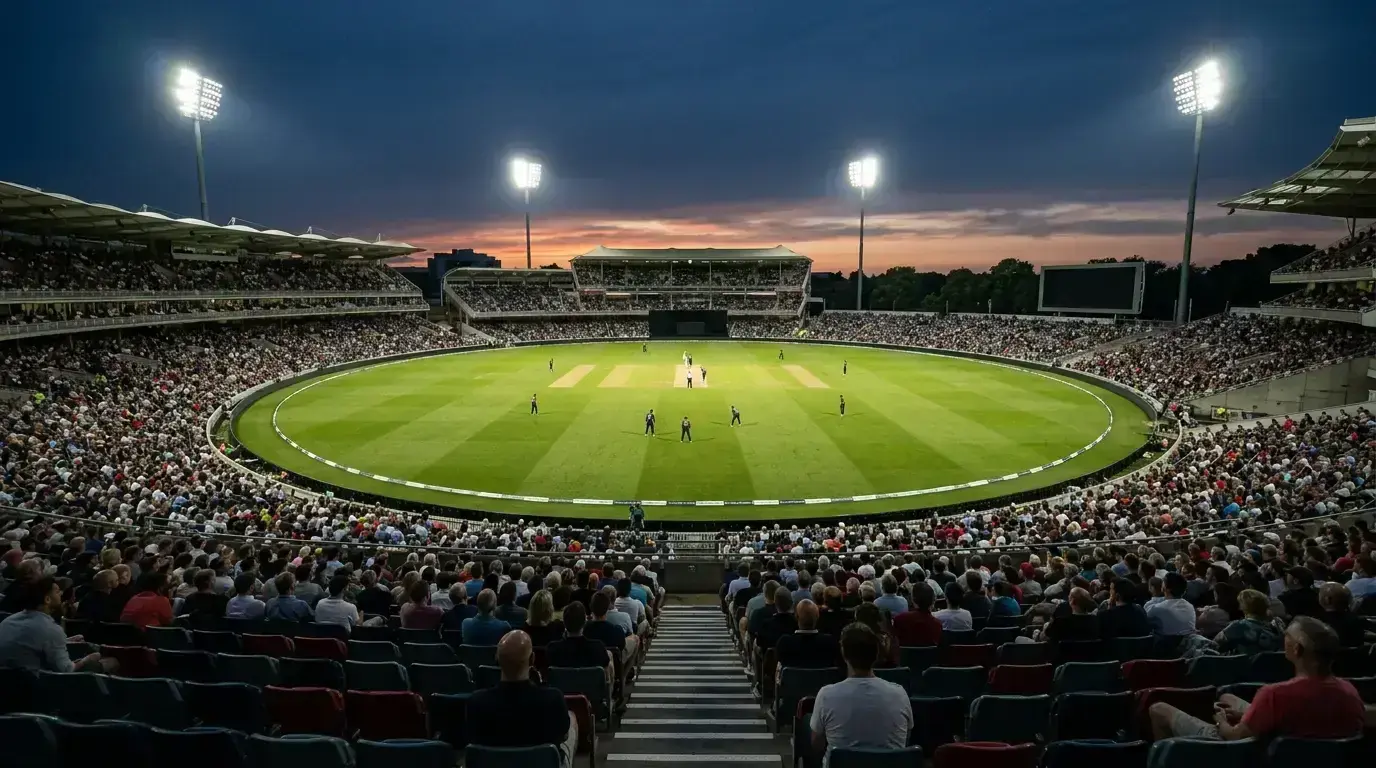
Two structural shifts sit underneath those numbers. Online platforms now account for 67.5 per cent of the global sports betting market in 2025. Cricket, with its long match windows and constant micro-moments, is almost custom-built for the in-play web app. The second is regulatory weight. Baroness Twycross, the Minister for Gambling, put it cleanly during the Gambling Levy Regulations debate: "Two decades have passed since the Gambling Act 2005 was introduced. Leading gambling firms operating in this country are now some of the world's most successful companies. With cutting-edge technological capabilities and deep insight into customer behaviour, the gambling industry and gambling behaviours have undergone monumental change." That is the sentence I would frame above every editor's desk in this industry.
What "GGY" actually is. Gross gambling yield is what operators keep after paying out winnings but before they pay tax, levies and overheads. When you read that UK remote GGY is £7.8 billion, that is the slice of bettors' lost money — not turnover. Turnover is many times larger. The distinction matters when you read coverage about "the industry's profits", which is almost always a confused reference to GGY rather than net profit.
The Europe-wide picture frames this further. The global sports betting market reached USD 100.9 billion in 2024 and is on track for USD 187.39 billion by 2030 at 11 per cent compound growth, with Europe holding roughly 48 per cent of revenue share. The UK is not the largest sub-market on the continent, but it remains the most heavily regulated — and that combination is exactly why I spend most of this guide on what UK regulation has just done to your coupon, rather than on which logo to click first.
How Cricket Odds Actually Work on a UK Coupon
Ask a Continental punter to read "9/4" off a UK cricket coupon and you will see a moment of genuine confusion. Fractional odds are a British dialect of probability — once you stop reading them as fractions and start reading them as a ratio of profit to stake, the whole language clicks.
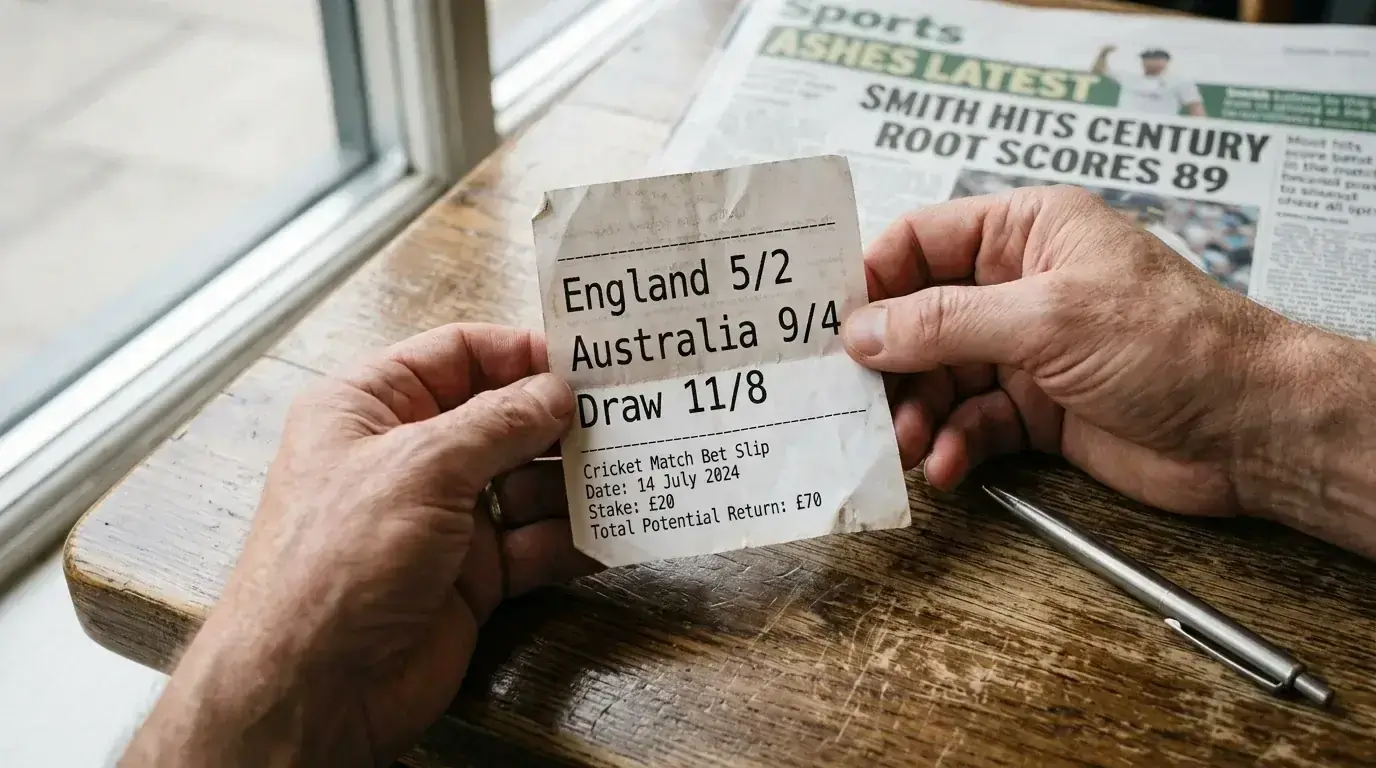
A price of 5/2 means you win five units of profit for every two you stake, and your stake comes back on top. Convert to a decimal coupon and you are looking at 3.50. Either format describes the same implied probability — roughly 28.6 per cent — but UK operators default to fractions because that is how punters here have read price for a century.
Pricing a cricket bet in plain numbers
Stake: £20 at fractional odds of 5/2
Profit: £20 × 5 ÷ 2 = £50
Total return if the bet wins: £50 profit + £20 stake = £70
Implied probability: 2 ÷ (5 + 2) = 28.6 per cent
What punters miss most often is the third layer: the bookmaker's margin. Add up the implied probabilities of every outcome on a market and you will not get 100 per cent — you will get 105, 108, sometimes 112 per cent on player props. That overround is how operators earn their living. The thicker the overround, the worse the price you take on average. The rule of thumb: a tight two-way Test match-result market in good weather sits around 104–106 per cent. A method-of-dismissal market on the same fixture can run 115 per cent or worse.
England v Australia, Test outright
England 11/8 — fractional
Australia 13/8 — fractional
Draw 9/2 — fractional
Decimal equivalents: 2.375 / 2.625 / 5.50
Combined implied probability: 42.1 + 38.1 + 18.2 = 98.4 — note this is a stylised illustration; real coupons run an overround above 100.
Two pieces of vocabulary recur from here on, and they deserve a flag.
Crease — the painted line at each end of the pitch that defines a batter's safe zone and a bowler's legal delivery position. "On the crease" in betting slang means "still in the bet, still alive".
Overround — the sum of implied probabilities across all outcomes of a market. An overround above 100 per cent is the bookmaker's edge. The lower the number, the closer to fair the prices.
If you take only one thing from this section, take this: every cricket price you see is a probability claim with a tax on top. Your job is not to predict the result — it is to find prices the trading desk has set wider than the true probability. That hunt is what every later section in this guide is really about.
The Core Cricket Markets You Will Meet Every Match
When a reader writes to me asking why his bet on "top batter" lost despite his player scoring 80, the answer is almost always the same — he backed the wrong market, not the wrong player. Cricket markets multiply like rabbits across the four formats, and on a busy IPL weekend a single fixture page might offer 250-plus lines before live trading begins. Here is the cartography you need before you click anything.
The big three — match result, top performer, total runs — are where nine out of ten cricket bets settle in the UK. Everything else is layered on top. I keep this section as a map; the detailed walkthrough lives in the dedicated cricket betting markets guide.
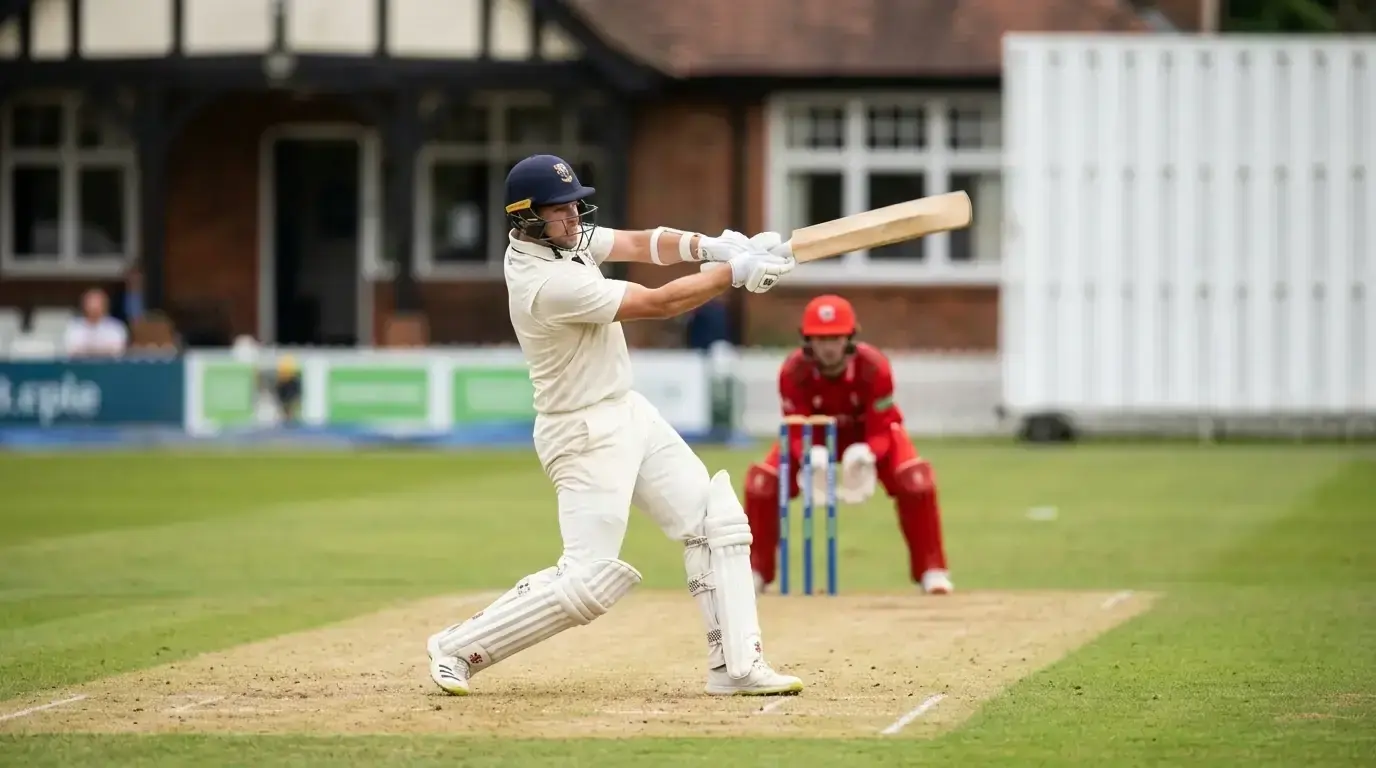
Match result
Who wins the fixture. In Tests, the draw is a separate outcome priced alongside the two teams. In white-ball cricket — ODI, T20, The Hundred — markets are normally two-way with a tie clause for refunds.
Top batter / Top bowler
Who scores the most runs or takes the most wickets across an innings or full match. Rules vary between operators, especially around dead-heat treatment and whether the player must come in to bat or bowl at all.
Total runs
Over or under a posted line for an innings, a match or even a particular over. The most popular line for a T20 innings sits at the projected par score the bookmaker's model produces, often within five runs of the eventual total.
Method of dismissal
How a particular batter or the next wicket falls — bowled, caught, leg before, run out, stumped. The overround on this market is wide because outcomes are genuinely difficult to model.
Runs in an over
Total runs scored in a specific over, often with a four-way line: 0–5, 6–10, 11–15, 16+. The defining in-play product for T20 and The Hundred.
Toss winner
The pre-match coin flip. A pure 50/50 priced around 10/11 each side — the cleanest way to see the operator's overround on display.
Three smaller vocabulary points are worth flagging because they trip up newer bettors.
No-ball — an illegal delivery that gives the batting side one penalty run and a free hit. It does not count as a legal delivery and can void some markets settled "on the next legal ball".
LBW — leg before wicket. The ball would have hit the stumps but struck the batter's pad first. One of the five settling outcomes on method-of-dismissal markets.
Session bet — a market on total runs scored in a defined block of overs. Originated in subcontinental cricket and now widely offered on T20 coupons. Settlement edge cases matter — what happens if the innings ends mid-session is operator-specific.
One product is worth flagging early because it is genuinely different. The Betfair exchange is a peer-to-peer marketplace where you can lay an outcome as well as back it — meaning you can act as the bookmaker for another punter. Liquidity is good on the IPL and the Ashes, thin on County Championship day three. The mechanics get their own section in the markets cluster, but the headline is this: if you ever want to see what "fair" pricing looks like before the operator's margin is added, the exchange is where you look.
The Tournaments That Shape a UK Cricket Bettor's Year
If you want to know whether someone actually bets on cricket or merely says they do, ask them when the County Championship resumes after The Hundred break. The cricket calendar is fragmented, layered, frequently rescheduled, and the bettor who tracks it well has a structural edge. I spend almost as much time on Cricinfo's fixture list as I do on any odds screen.
This section is an aerial view. Each tournament has a dedicated drill-down in the cricket tournaments betting guide, where I get into outright timing, market depth and broadcast specifics.
The Ashes
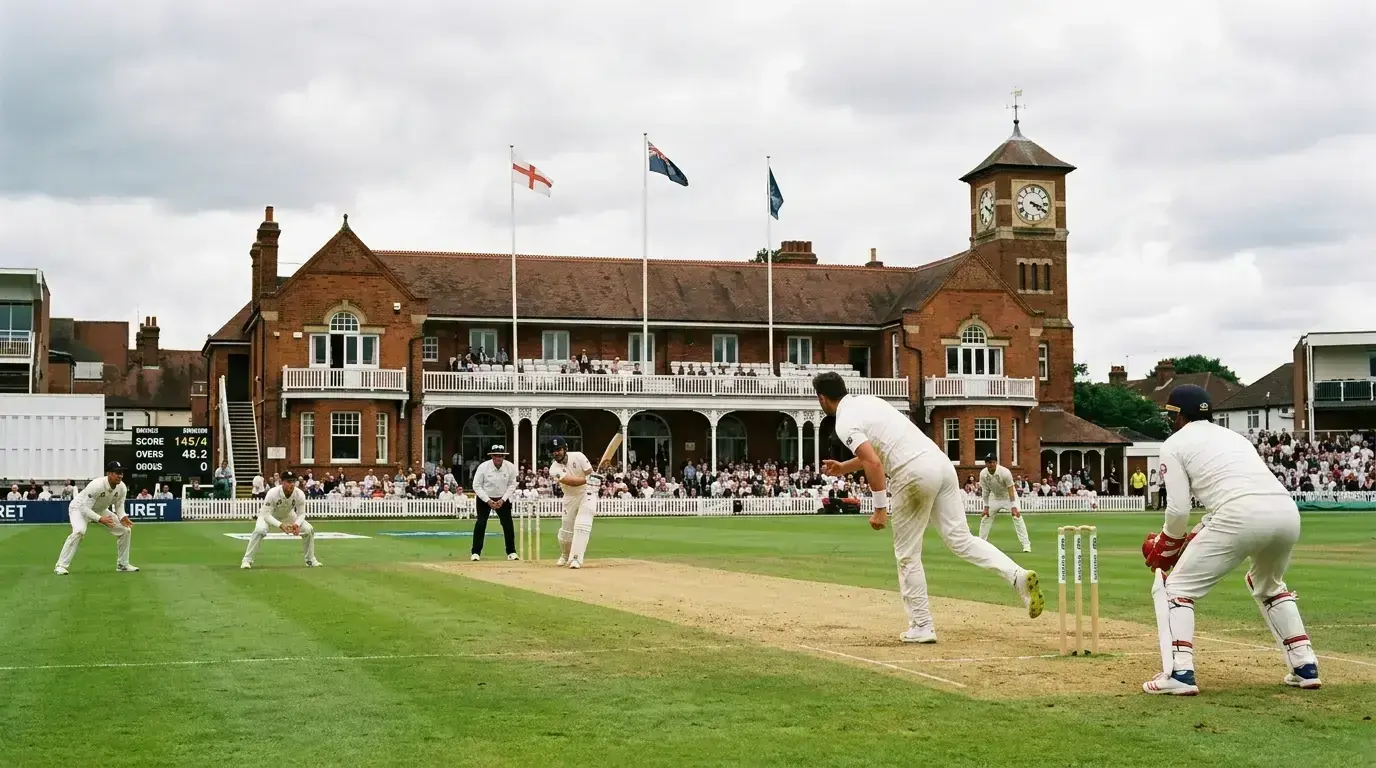
The five-Test series between England and Australia, held every couple of years and alternating venues. The 2023 series pulled a peak UK TV audience of 2.12 million — the highest cricket figure since Sky took broadcasting rights post-2005. Outright series prices are typically posted twelve months in advance; full top-batter and top-wicket markets open a month before the first Test.
ICC global events
The ODI World Cup, the T20 World Cup, the Champions Trophy and the World Test Championship. Outright betting depth peaks here — twenty-plus team prices, group-stage qualification markets, player of the tournament lines often opening six months out.
Indian Premier League
March to May. UK afternoons turn into IPL in-play windows; the global IPL betting market is estimated at around USD 100 billion and projected to grow at 7.1 per cent annually through 2033. UK-licensed sites cover it deeply, though some player props are pulled because of source-feed restrictions.
The Hundred
August. 100 balls a side, eight city franchises, parallel men's and women's competitions on the same ground. The 2025 edition issued 580,000 tickets with record attendances at four of the eight grounds, the women's competition broke the global women's cricket attendance record at 349,401 fans, and Sky Sports' group-stage audience was up 38 per cent on the previous year.
T20 Blast
England's eighteen first-class counties in the regional Twenty20. Runs May to September around the rest of the schedule. Markets are decent on group-stage match-result, thin on player props.
County Championship
The first-class red-ball domestic competition, played in two divisions across April to September. Draw markets are short-priced and frequently the right price. Over 40 per cent of cricket fans in the UK are aged 65 or older, and Championship audiences skew older still — which says something about why this market has not been monetised as aggressively as the white-ball products.

580,000
The Hundred 2025 tickets issued
349,401
Women's Hundred attendance — global record for women's cricket competition
+38 per cent
Sky Sports group-stage audience uplift in 2025 vs 2024
£54.3 m / year
Hundred domestic TV deal value, 2025–2028, up from £37.8 m in 2024
The age skew matters for more than ticket sales. The Hundred has been built explicitly to recruit a different audience — 31 per cent of its fanbase is aged 18–44, compared to 24 per cent of total UK cricket fans in the same bracket. That demographic delta is why every UK operator's marketing department has been pivoting white-ball cricket spend toward The Hundred since the competition's launch.
The competition's own management is open about this. Vikram Banerjee, the managing director of The Hundred, framed the 2025 numbers with a sentence that should be quoted in every market-sizing report on UK cricket: "The aim of this competition from day one was to throw open cricket's doors and bring more people into our game — these numbers demonstrate that has been happening and everyone involved in The Hundred can be rightly proud of that." From a bettor's seat that translates into deeper liquidity and tighter prices in the white-ball end of August than at any other point in the UK summer.
Once you know which tournaments are running and what audiences they pull, the next question is what happens to the coupon between the first ball and the last. That is where in-play takes over.
In-Play Cricket: Where the Coupon Updates Ball by Ball
I have a friend who refuses to bet in-play on cricket. His reasoning is honest — he cannot trust himself not to chase the screen. That is the central tension of in-play cricket betting in a sentence. Online platforms now account for 67.5 per cent of the global sports betting market, and in-play is the engine room of that share. Cricket, with its discrete ball-by-ball structure, is one of the cleanest sports for live trading — and one of the easiest to lose discipline on.
The mechanics deserve their own piece, and I have written one — the full mechanics live in the dedicated in-play cricket betting guide. Here, I want to leave you with three things only.

The market suspends between balls. Every legitimate UK in-play cricket book pauses its prices in the second or two between deliveries. That suspension is what stops you from sniping a stale price after the ball has been bowled but before the screen updates. If your operator does not suspend between balls, that is a warning sign, not a feature.
The product range in-play is wider than the pre-match list. Next-over runs, next-ball outcome, next-wicket method, partnership totals, session lines — all update ball by ball. Cash-out values move continuously between deliveries and lock during them. The faster the format, the more volatile the cash-out value: a T20 chase in the eighteenth over can swing your cash-out figure by 80 per cent on a single boundary.
The shortest in-play market I have ever seen settle was a next-ball "any wicket" prop that resolved in 0.4 seconds — the price flicked up, my finger hovered, and the keeper had taken the catch before I clicked. That speed is the reason I stopped trading next-ball markets unless I am physically at the ground.
The third point is about live streaming. Sky Sports and the BBC carry the bulk of UK cricket; some operators stream secondary tournaments under specific licence deals. The 38 per cent year-on-year uplift in Sky's Hundred audience tells you something about where the eyes are. If you bet in-play, you need the picture — and if your operator does not stream the fixture you are watching on broadcast, accept a one-to-three-second delay between your screen and the trading desk's data feed. That gap is not paranoia; it is reality.
UK Regulation in 2025 and 2026: What Changed Around You
Two years ago a colleague at a trade publication told me regulatory change in UK gambling moved like coastal erosion — slow, visible only across decades. He would not say that today. The last eighteen months have been the most active regulatory period in this industry since the Gambling Act 2005. Tim Miller, an executive director at the UK Gambling Commission, captured the mood addressing the Peers for Gambling Reform Summit: "we are currently in the midst of seeing the delivery of the largest programme of reform since the Gambling Act of 2005." From your seat as a bettor, four specific changes matter.
I cover the full regulatory architecture in the dedicated UK gambling regulation guide for cricket bettors. Here I want to anchor the highlights so the rest of this page makes sense.

The statutory levy went live in April 2025
The UK Statutory Levy on gambling operators came into force on 6 April 2025, with rates set between 0.1 and 1.1 per cent of gross gambling yield depending on licence type. First payments were due 1 October 2025. In its first full year, the levy raised approximately £120 million — roughly double the peak voluntary contributions under the GambleAware funding model it replaced. That cash funds research, education and treatment for gambling harm. For you, the bettor, the change is mostly invisible — operators pay it, not punters — but margins will reflect it over time, especially on thinner markets where there is less room to absorb cost.
Remote gaming duty rises to 40 per cent in April 2026
The other piece of cost on operators' balance sheets is remote gaming duty, the headline tax on remote gambling operators' profits, set to rise to 40 per cent from April 2026. This is a more material number than the levy because it applies directly to GGY. Where it lands depends on competition: in thick markets — match-result football, single-game cricket match-result — operators will eat it. In thinner products like player props and method-of-dismissal, you will see prices widen.
Slot stake limits and behavioural spillover
The Gambling Act 2005 (Operating Licence Conditions) Amendment Regulations 2024 set online slot stake limits at £5 a spin for adults aged 25 and over and £2 a spin for 18-to-24-year-olds. These caps are not aimed at cricket bettors directly, but they matter for behavioural reasons. Baroness Twycross put the case sharply during the parliamentary debate: "Online slots are the highest-risk gambling product. They have the highest rate of binge play and the highest average losses of any online product, and are associated with long playing sessions and high levels of use by people experiencing gambling harm." That framing — that a single product type sits at the centre of measurable harm — is the lens the Commission is now applying to all licensed activity, including cricket betting.
Online gambling slot yield grew by 61 per cent in the past five years according to the government's own framing during the levy debate. The political pressure to slow that curve is what shapes everything else around it.
The ECB Code of Conduct on gambling sponsorship
The fourth change is sport-specific and almost nobody outside the cricket trade press has registered it properly. The England and Wales Cricket Board's Code of Conduct on gambling sponsorships took effect from the start of the 2025 season. Only UK-licensed operators — or those with white-label UK partners — may sign cricket sponsorship deals. The ECB's own statement framed the move plainly: "The Code of Conduct signifies a strong commitment to balancing commercial partnerships with gambling companies while protecting the integrity of cricket. By reinforcing responsible sponsorship practices, the code seeks to safeguard both the sport and its community from potential gambling-related risks." If you see a logo on a county shirt you do not recognise, that is now your cue to check the licence register before opening an account.
Enforcement is active, and the fines tell the story
Paddy Power Betfair was fined £2 million in December 2025 for social-responsibility failures in customer interaction. Betfred was fined £825,000 for similar anti-money-laundering and social-responsibility failures. These are not nine-figure headline numbers, but they are clear signals — the regulator is willing to act on individual operator conduct, particularly around financial vulnerability checks and customer interaction. The Betting & Gaming Council estimates around 1.5 million Britons are active on black-market unlicensed gambling sites, and the council has separately argued that around 28 per cent of regulated punters might shift further if reforms tighten too much. That tension — protecting consumers without pushing them offshore — is the central regulatory balance, and it is unresolved.
What this means for you in 2026
- The levy is now real money and will slowly tighten margins on thinner cricket markets.
- Remote gaming duty rising to 40 per cent in April 2026 will widen prices in low-liquidity products first.
- If a cricket sponsor's logo is unfamiliar, check the licence register — the ECB code does not permit unlicensed firms in cricket.
- Regulator enforcement is active and operator behaviour is changing in response.
Integrity: The Quiet Architecture That Keeps the Sport Bettable
Some years back I sat through a presentation by a betting-integrity analyst who said something I still think about: "If you bet on cricket, you are trusting an entire global infrastructure of investigators, regulators and informants you will never meet." He was right. The reason cricket remains a viable bet at all is that a quiet, mostly invisible architecture of integrity work catches the most obvious attempts to corrupt outcomes before they hit your coupon.
This section is a map. The full anatomy of how detection works and how UK operators participate sits in the dedicated cricket betting integrity guide.
The architecture's centrepiece is the ICC Anti-Corruption Unit, established in 2000. The ACU works with member boards, players, support personnel, law-enforcement agencies and betting regulators on a four-stage model — prevention, investigation, disruption and prosecution. At the 2025 ICC ACU Workshop, 19 domestic anti-corruption units presented case studies — nine Full Member nations and ten Associate Members — alongside the IOC, the UN Office on Drugs and Crime, and Starlizard, one of the world's leading betting-integrity providers. That is the cooperative web sitting behind every legitimate cricket bet.
The legal instrument the ACU enforces is the ICC Anti-Corruption Code, with the current version effective from 1 June 2024. The code covers everyone — players, coaches, trainers, managers, selectors, team owners, doctors, physiotherapists, match referees, pitch curators, player agents, umpires and ICC and member-board officials. It continues to bind individuals for two years after their last participation. The maximum sanction is a life ban; in some jurisdictions criminal sanctions apply on top. The code's breadth is the point.
Spot-fixing vs match-fixing. Match-fixing rigs the result of an entire game. Spot-fixing rigs a discrete event — a no-ball at a specific point in the over, a particular delivery being a wide, the second ball of the third over going for a six. Spot-fixing is harder to spot because it does not alter the final score and is easier to bet on undetected via small-stakes high-frequency markets. UK operators report unusual betting patterns to the Sports Betting Intelligence Unit, the ACU and integrity providers as standard practice.
Where the threat is currently sharpest is below the international tier. Alex Marshall, who served for years as General Manager of the ICC ACU and now consults for the Bangladesh Cricket Board, has been blunt: "I am confident that the cricket you watch is safe and clean. But I am also absolutely sure that corruptors are constantly looking for a route into the game, particularly in badly-run lower-level franchise leagues. The threat to the game is corruptors won't go away while there is always money to be made and they will look for weakness in the system to get in." That sentence is the reason I am cautious about player props on minor franchise T20 competitions and would not bet on a tournament I cannot find on a UK broadcast schedule.
From your seat, three things follow. Suspicious price movements you can sometimes see — a market shortening on an obscure outcome with no news catalyst is worth flagging to your operator. The ACU's hotline and the UK Gambling Commission's intelligence channels exist precisely for that purpose, and reports from punters do feed real investigations. And the structural risk is not the Ashes or the IPL — it is the lower-tier league where audiences are thin, broadcast feeds are crude and operator monitoring is harder.
If a cricket market does not feel right and you cannot explain why, that instinct is worth more than the bet you are about to place. Walk away from the market, not toward it.
Choosing a UK-Licensed Operator Without Falling for a Logo
I do not name operators in this guide and the reasons are editorial — not commercial timidity. The rankings other sites publish are almost always shaped by affiliate commercials. What I can give you is the checklist I would hand my own father if he asked me where to open his first cricket account.
Before opening an account, verify the following
- The operator displays its UK Gambling Commission account number with a link to the public register confirming an active remote betting licence.
- The licensee is clearly identified — parent company or white-label partner, either acceptable provided the licence is current.
- Deposit limits, loss limits and self-exclusion controls are available before you fund the account.
- The cricket coupon includes UK-licensed events: County Championship, T20 Blast, The Hundred. Their absence signals the operator is targeting a different market.
- Customer service is reachable within the UK without an international call charge.
- The site links visibly to GamCare, the National Gambling Helpline and the GamStop self-exclusion scheme.
The reverse list — what should make you close the tab — is shorter but louder.
Do
- Check the UKGC public register before depositing.
- Set deposit limits on day one, before the first bet.
- Read the operator's bet-settlement rules for abandoned and rain-affected matches.
- Treat any unsolicited inducement to deposit larger sums as a flag, not a favour.
Don't
- Bet on a site that advertises crypto-only deposits and no GBP option.
- Accept "VIP" treatment that bypasses standard responsible-gambling tools.
- Click cricket sponsorship logos on social media without verifying the licence first.
- Assume a familiar brand name guarantees a UK licence — some international brands trade unlicensed.
The black market is the reason this matters. The Betting & Gaming Council estimates 1.5 million Britons are active on unlicensed gambling sites. Andrew Rhodes, Chief Executive of the UK Gambling Commission, has made the licensed industry's position plain when challenged on partners downstream of unlicensed activity: "I do not understand why anyone in the licensed industry would want to be in business with a company that is supporting illegal competition." On crypto specifically, Rhodes has shortened his own timeline: "What I thought was a five-year-away problem, perhaps a year or two ago, I think is now an 18-months-to-two-years challenge."
If you bet on cricket with an unlicensed site, three things happen at once. You have no UKGC route for disputes — winnings can be withheld with no recourse. Your funds may transit through payment rails that UK banks can and increasingly will block. And the operator may share your data with parties you have not consented to. None of these are theoretical. All three are documented in current enforcement coverage.
Who Actually Bets on Cricket in the UK, and What the Numbers Say About Harm
The honest data on who bets on cricket is more interesting than the marketing narrative. YouGov's deep-dive on gambling and sport in the UK found 21 per cent of UK cricket fans say they have placed an online sports bet in the past 12 months — close behind football fans at 23 per cent. That is a higher engagement rate than tennis or rugby fan bases, and it tracks what I see in my inbox: cricket bettors are engaged, informed, and overwhelmingly male.
The wider UK gambling picture in 2025 looks like this. Around 47 per cent of UK adults aged 16-plus participated in some form of gambling. Betting participation in the past four weeks reached 12 per cent in Wave 2 of the Commission's gambling survey, with 16 per cent of UK males vs 4 per cent of females in Wave 3. The gender skew is sharper in cricket than in many other markets.

Harm sits in the same dataset. Approximately 0.5 per cent of UK adults — around 340,000 people — meet the problem gambling threshold according to the Commission's 2024 prevalence work. A further 1.8 million people are classified as at-risk. Cricket-specific harm data is not separately reported, but cricket sits inside those figures, and 11 to 13 per cent of cricket, tennis, football and rugby union fans stake more than £50 on sports in an average month.
The industry's own position on harm matters here. The Betting and Gaming Council's chief executive Grainne Hurst was clear at recent committee sessions: "The BGC takes the issue of gambling related harm incredibly seriously. Our CEO, Grainne Hurst, was clear throughout the session that the industry recognises gambling can cause harm and has a role to play in mitigating it. The BGC's priority remains raising standards, promoting safer gambling, and protecting consumers." Hurst has also defended the industry's right to push back on bad data with good: "Having the evidence base to counter some of the myths, misconceptions and quite frankly lies that you read in the media sometimes is really important and an important role for the BGC to play." Both can be true at once, and an honest reader holds both.
The youth picture is the most uncomfortable strand. The Commission's 2025 Young People and Gambling Report found 30 per cent of 11-to-17-year-olds in Great Britain had spent their own money on gambling in the previous twelve months — a 3 per cent increase from 2024, with 18 per cent engaging in unregulated activity. None of this concerns cricket-licensed sites, all of which are 18-plus, but it is the context every responsible adult bettor should keep in view.
Reader Questions I Hear Most Often
Is online cricket betting legal in the UK?
Yes — provided you bet through an operator holding a current UK Gambling Commission remote betting licence. The licensing regime is open to public verification on the Commission's register. Betting through an unlicensed site is not a criminal offence for you personally, but you lose every regulatory protection — disputes, payouts, data handling, complaints. The legal status is identical across Test, ODI, T20 and franchise cricket.
How do cricket betting odds work in the UK?
UK operators default to fractional notation — 5/2, 9/4, 11/8. The first number is profit, the second is stake. A £20 bet at 5/2 returns £50 profit plus your £20 stake, total £70. Decimal odds are usually available in account settings; 5/2 in decimal is 3.50. Implied probability is profit divided by total — 2 divided by 7 in our example, around 28.6 per cent. Add the implied probabilities of every outcome on a market and the total above 100 per cent is the operator's margin.
What are the most popular cricket betting markets?
Match result, top batter, top bowler, total runs and method of dismissal account for the vast majority of pre-match cricket turnover in the UK. Each has format-specific quirks: the Test draw exists as a third match-result outcome; method of dismissal carries a wider margin because outcomes are harder to model. In-play opens up next-over runs, next-ball outcomes and partnership lines — much wider depth than pre-match.
Can I bet live (in-play) on cricket matches?
Yes, on every major UK-licensed cricket book. In-play markets price ball by ball and suspend between deliveries to prevent stale-price exploitation. The product range live is wider than pre-match — next-over runs and next-wicket method are typically in-play only. Cash-out values move continuously between balls and lock during them. Discipline matters more here than anywhere else on the coupon.
Which cricket tournaments can I bet on from the UK?
Every major international and domestic cricket event is covered. International: the Ashes, the ICC ODI World Cup, the ICC T20 World Cup, the Champions Trophy, the World Test Championship, bilateral series across all three formats. Domestic UK: the County Championship, the T20 Blast, the One-Day Cup, The Hundred. International franchise: the IPL deeply, though some player props are pulled because of source-feed restrictions. Women's competitions are increasingly covered.
Are there responsible gambling tools available on cricket betting sites?
Every UK-licensed operator must offer deposit limits, loss limits, session-time reminders and access to self-exclusion via GamStop. Affordability and financial-vulnerability checks have been tightened materially since 2024. GamCare and the National Gambling Helpline are signposted on every licensed site by licence condition. Tools work better the earlier you set them — ideally before your first bet rather than after a heavy losing run.
What is the minimum deposit for UK cricket betting sites?
Most UK-licensed cricket operators set a minimum deposit between £5 and £10, with debit-card and e-wallet routes the most common. Some accept lower amounts via specific payment methods. Withdrawal minimums tend to mirror deposit minimums but may be higher on certain payment rails. The minimum is set by the operator, not the regulator, so it varies across sites.
The Editorial Map, Folded and Pocketed
If you have read this far, you hold something most cricket-betting readers never get: a complete view of the terrain. You know how big the market is, how UK odds language works, which markets exist on a coupon, which tournaments run through the calendar, how in-play moves between balls, what the regulator changed in 2025 and 2026, how integrity actually functions, what separates a licensed operator from a black-market one, and what the data say about the people doing this alongside you.
Cricket betting rewards patience more than any other UK gambling product I know. The market is wide enough to find value if you do the work, and unforgiving enough to punish you if you do not.

The map is the map. The terrain is yours to cross — slowly, with limits set on day one, and with a clear-eyed sense of what you actually know about each price you take. I am back next week with the markets cluster.
