
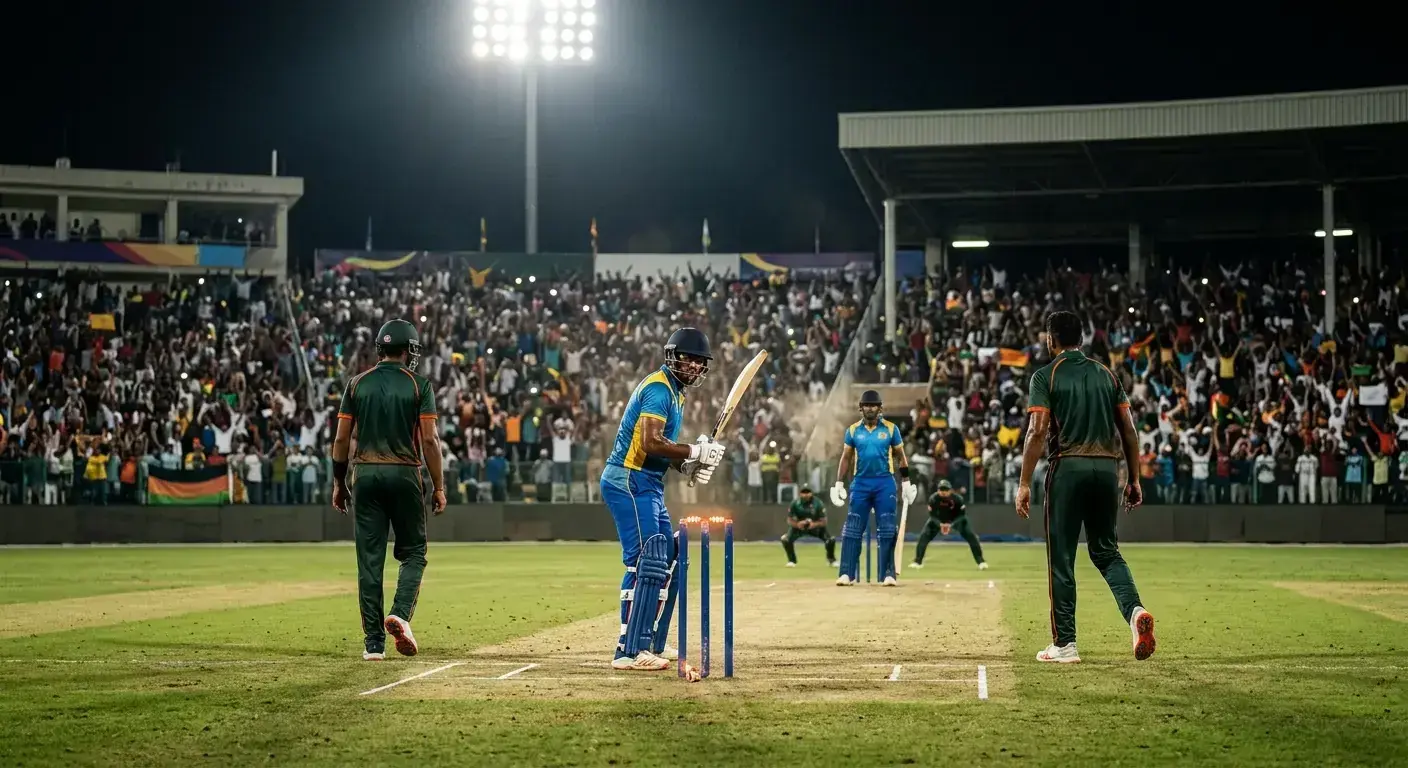

The Lord’s super over that broke everyone’s settlement
14 July 2019. England-New Zealand World Cup final. The match tied, the super over tied, England declared winners on boundary count after one of the most extraordinary endings to a major cricket tournament I’ve ever watched. My match-winner bet on England settled cleanly because the tournament’s tiebreaker produced an official winner. But across UK books, the super over markets that had popped up live during the chase settled in ways that surprised punters who hadn’t read the specific rules. Some books had offered “super over winner” as a separate market. Some had a “boundary count tiebreaker” market. Some books voided certain props because the super over wasn’t part of their match-result definition. The post-match settlement screens told stories of just how varied the rules around super over markets are at UK operators.
This is about super over betting markets – how the tiebreaker structure interacts with UK book settlement rules, what markets exist before and during the super over, and where the rules around tiebreaker outcomes catch punters who assume the markets settle uniformly.
What a super over actually is
The super over is a one-over-per-side tiebreaker introduced into limited-overs cricket to resolve tied matches. Each team selects three batters and one bowler. The team batting second in the main match bowls first in the super over. Each team has six legitimate deliveries and two wickets – the innings ends at either two wickets lost or six balls bowled. The team scoring more in their over wins the match. If the super over itself ties, the tournament’s specific rules determine the outcome – boundary count was used at the 2019 World Cup, while modern ICC tournaments use additional super overs until a winner emerges.

The format is used in major T20 tournaments, in some ODI competitions, and in knockout stages of major events. League matches in some T20 competitions still permit tied results without a super over. The variation by competition is what makes the betting rules complex – the super over exists in IPL knockouts but not always in IPL league matches; it exists in T20 World Cup knockouts; it exists in The Hundred per the competition’s playing conditions. The rule that applies depends on the specific competition and the specific match.
How match-winner markets settle when super overs happen
The standard UK book rule is that match-winner markets settle on the official result of the match, including the super over outcome. England wins the 2019 World Cup final on boundary count after a tied super over, and “England to win the match” bets settle as winners. New Zealand bets settle as losers. The market settles as a binary outcome despite the tied scores at multiple stages because the tournament’s playing conditions produced a winner.
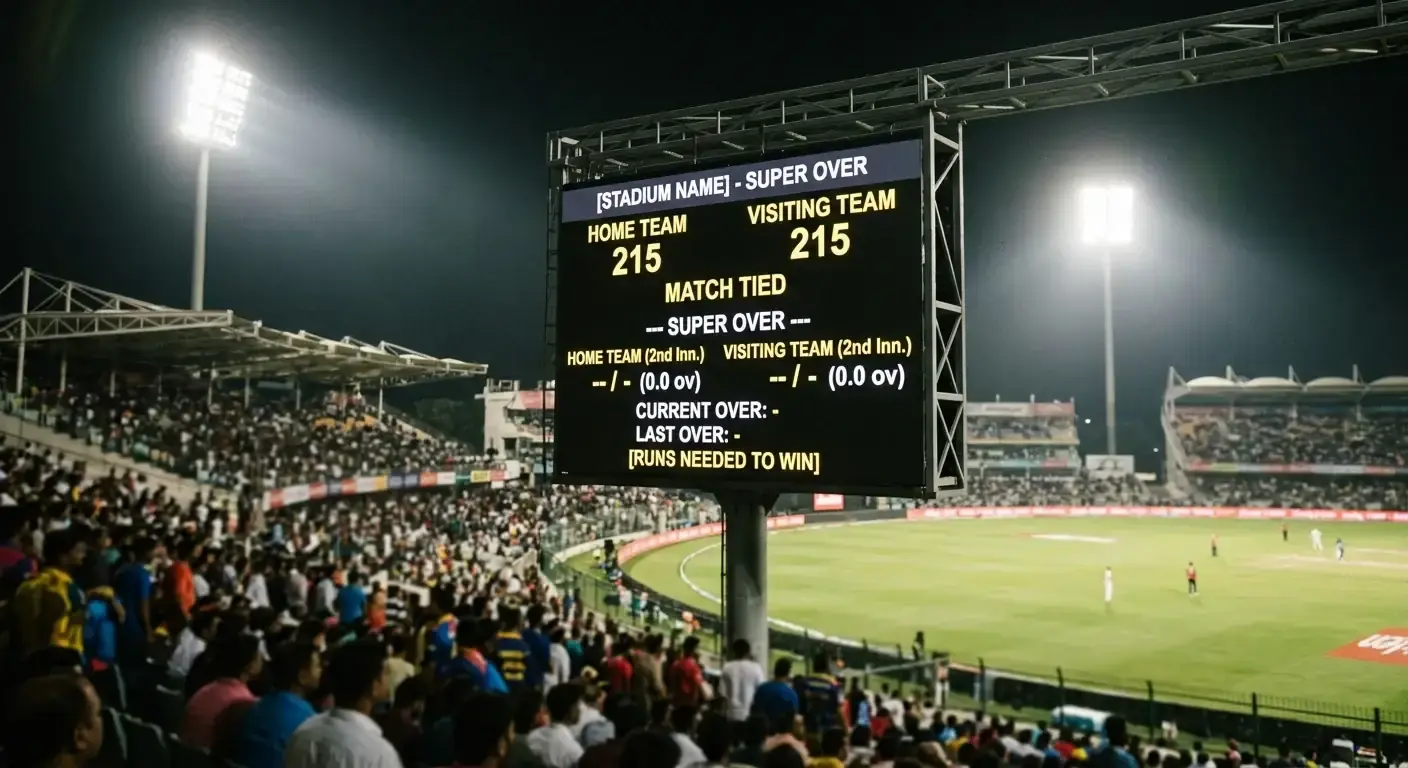
The exception is some books that explicitly carve super overs out of certain markets. “Match winner in regulation play” is a market some books offer specifically because the main-match tie is meaningful information. These markets settle as void on a tied main match regardless of who wins the super over. The market wording matters. “Match winner” usually includes super over results. “Match winner in regulation play” or “result after standard overs” usually doesn’t. Reading the market title carefully before placing the bet is the discipline that prevents post-match surprise.
I’ve made the mistake of assuming uniform settlement and been corrected by the rulebook more than once. The 2019 final was the most public example, but tied limited-overs matches that go to super overs happen regularly enough – IPL matches with super overs occur a few times per season, T20 international super overs happen across most calendar years – that the settlement rules get tested in real money.
The super over as its own market
Some UK books offer a separate “super over winner” market that activates when a super over is confirmed. The market is set live, with prices reflecting the strength of each side’s super over batting and bowling, and settlement happens at the conclusion of the super over. This is essentially an in-play side market, available only when the main match has tied and a super over is imminent.

The pricing of super overs is its own challenge. Six balls is a tiny sample, and the variance is enormous. A team that scores 200 in 20 overs might score 4 runs in a super over against good death bowling. The same team might score 22. The book’s pricing has to factor batting selection, bowling selection, and the small-sample variance of six-ball innings. Most books price super over winners at relatively close to even because the variance dominates the expected value, and the favourite is usually only marginally favoured even when the main-match favourite was substantial.
The information edge in super over markets is in knowing the squad selection and the likely bowler. A team that selects its three best power-hitters and uses its best death bowler in the super over is a different proposition than a team that selects whoever is available. Some teams have established super over batting selections – the same trio used across multiple super overs. Others adapt to the match situation. Knowing this is the kind of detail-level information that occasional bettors don’t track and dedicated cricket bettors do.
Total runs in the super over
The other common super over market is total runs scored in the over, usually offered as an over/under with a line around 12-16 runs depending on the matchup. The line moves based on which team is batting and which bowler is operating, and the over/under is one of the more readable super over markets because the question is straightforward – will this six-ball innings produce more or fewer than X runs?
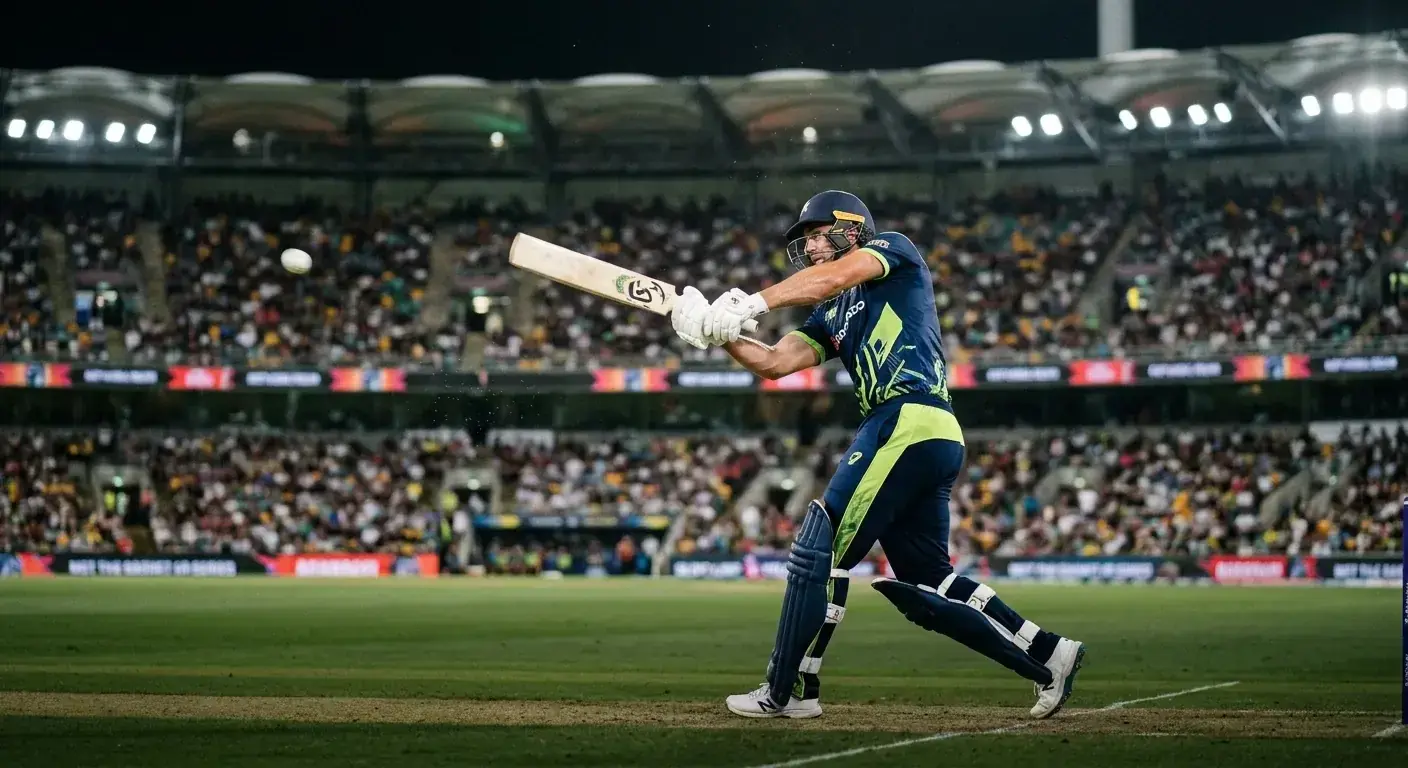
The historical record is helpful here. Super overs in IPL competition have produced scores ranging from single digits to over 30. The median is around 13-15 runs. The variance is extreme because both bowling teams understand the stakes and bowl wide yorkers, slower bouncers, and field-restriction-aware lines. A super over with no wides and no extras might produce 8 runs off six legitimate deliveries. A super over with two wides and a no-ball off a poor bowler might produce 25.
The market is one of the few in cricket where six deliveries are enough to settle a meaningful bet. Pre-match positions matter less than the immediate matchup of bowler against batter, the field setting, and the boundary dimensions. Punters with a strong read on the specific bowler-batter matchup have an edge that doesn’t exist in the broader match markets.
Settlement timing and post-match adjustments
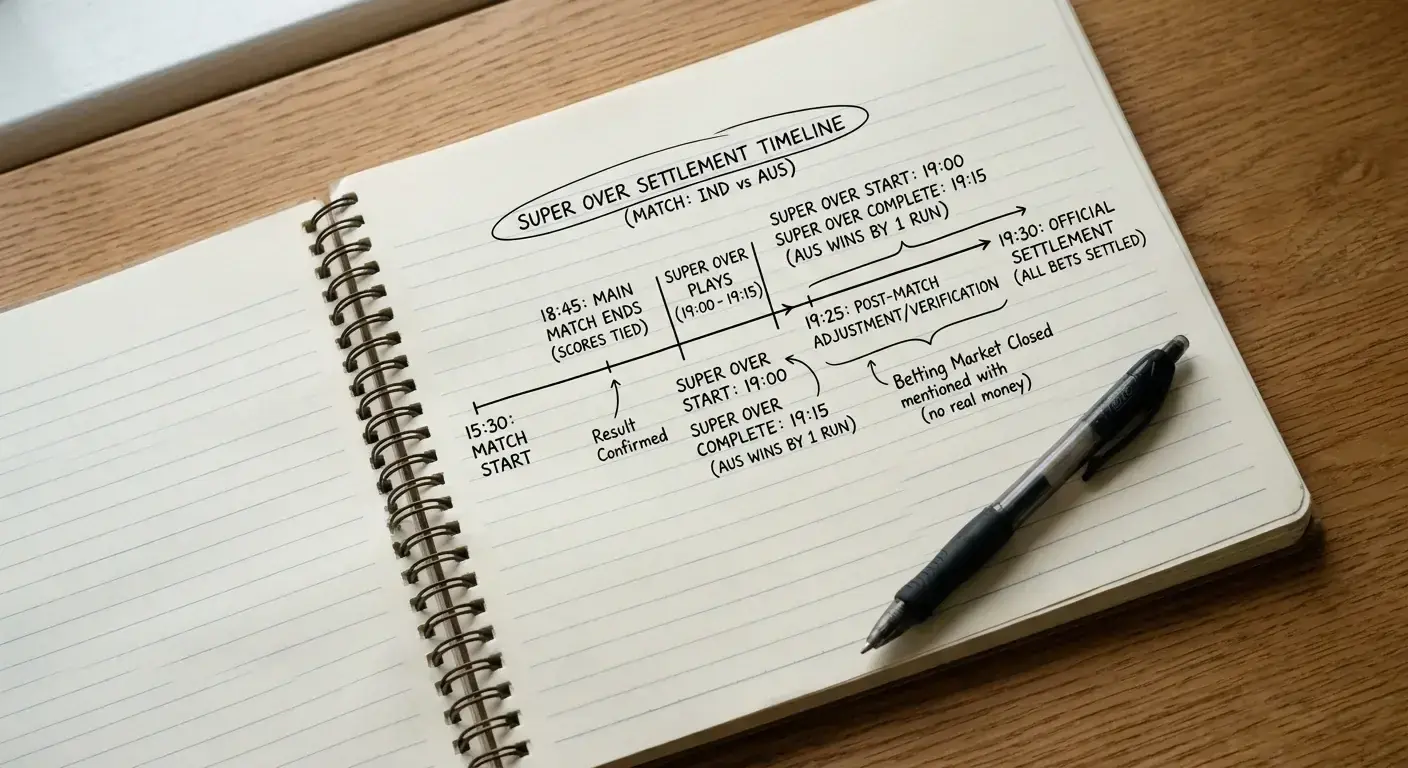
Super overs that produce results settle quickly – within minutes of the final ball being bowled – because the result is unambiguous. Super overs that themselves tie introduce settlement delay because the tournament rules determine the eventual winner. In 2019, the boundary count tiebreaker took a few minutes to confirm because the data needed verification, and books that had super over markets paused settlement during that period before declaring outcomes.
The ICC’s anti-corruption code, effective from June 2024 in its updated form covering players, coaches, support personnel, and others across the cricket community, applies to super over situations as much as to main match cricket. The reduced sample size of a super over makes it theoretically more vulnerable to corruption – six balls can be more directly influenced than a full innings – and the ACU monitors super overs with the same intensity as main matches. The reporting requirements for unusual betting patterns include super over markets explicitly.
Where super overs intersect with broader markets
Super over results affect tournament outright markets. If the tournament knockout structure depends on net run rate or some other tiebreaker, super over results can be relevant – though in modern tournaments, super overs typically only happen in knockout matches where the result simply progresses one team. League-stage ties handled by super overs do affect points distributions in some competitions, which can ripple through outright markets and group-winner markets in ways that punters with futures positions need to track.

The broader interaction is with bet builder markets that incorporate super over outcomes. Some books allow bet builders to include “winner including super over” alongside other props, which exposes the bet builder to the super over outcome even if all other legs are settled by the main innings. The correlation between the original main match and the super over is non-trivial – a team that’s just batted poorly in the main match may bat poorly in the super over too – and the bet builder price reflects whatever correlation the book has built into its pricing engine.
How the 2019 final still shapes book rules
The 2019 World Cup final was a stress test for super over settlement rules across global cricket betting. The boundary count tiebreaker, applied because the super over itself was tied, was a tournament-specific rule that some punters hadn’t known existed. The settlement outcomes at UK books generally followed the official ICC result – England as the winners – but the conversation about whether boundary count was a legitimate tiebreaker continued long after the match. The ICC subsequently changed the rule for knockout matches in major tournaments, replacing boundary count with additional super overs until a winner emerged.

The rule change matters for current punters because it means modern tournament knockouts can produce multiple super overs in sequence. A 2023 IPL match featured this scenario, where the first super over tied and a second super over was bowled to determine the winner. The match-winner market settled on the second super over’s result. The book that had a “super over winner” market priced it for the first super over only; the second super over became its own market with its own pricing. Punters who bet on the first super over winner settled on that result, regardless of what happened in the second.
What super over markets reward
The reward in super over markets goes to detail-level information about specific matchups. The market is short, the variance is high, and the broad statistical patterns that govern main match betting matter less. What matters is the bowler chosen, the batters chosen, the field setting, the boundary dimensions, the pitch behaviour in the death overs of the main match. A bettor who watches the entire main match has information that the pricing engine processes more slowly than a human can, and the gap between the human read and the book’s read is the edge.
The other edge is in not betting super overs when you don’t have the read. The variance is high enough that random super over bets lose money over time at standard book margins. The discipline is to bet only when you can articulate why this matchup at these prices is favourable. Most super over situations don’t meet that bar, and skipping them is the right play even when the temptation to bet through the excitement is real.
Where the tiebreaker sits in the broader cricket betting picture
Super overs are a small but distinct corner of cricket betting that exists because limited-overs cricket needs a tiebreaker structure and the structure happens often enough to support markets. The Lord’s 2019 final demonstrated how strange the outcomes can be. The IPL super overs that happen most seasons demonstrate how routine the tiebreaker has become. The rules around UK book settlement are clear when you read them and confusing when you don’t.
The lesson I keep returning to from the 2019 final is that the published rules govern the bet, not the intuitive sense of fairness. England won that final on a boundary count after a tied match and a tied super over. The book settled accordingly. Punters who’d taken England on the match winner bet won. Those who’d taken New Zealand lost. The boundary count wasn’t a settlement quirk – it was the published tournament rule applied to the moment that required it. Reading what rules apply before placing the bet is the only way to bet super over markets without surprise. Five minutes of rulebook reading at the start of a tournament season prevents most of the settlement frustrations that catch occasional super over bettors out.
