

The withdrawal that taught me to verify on day one
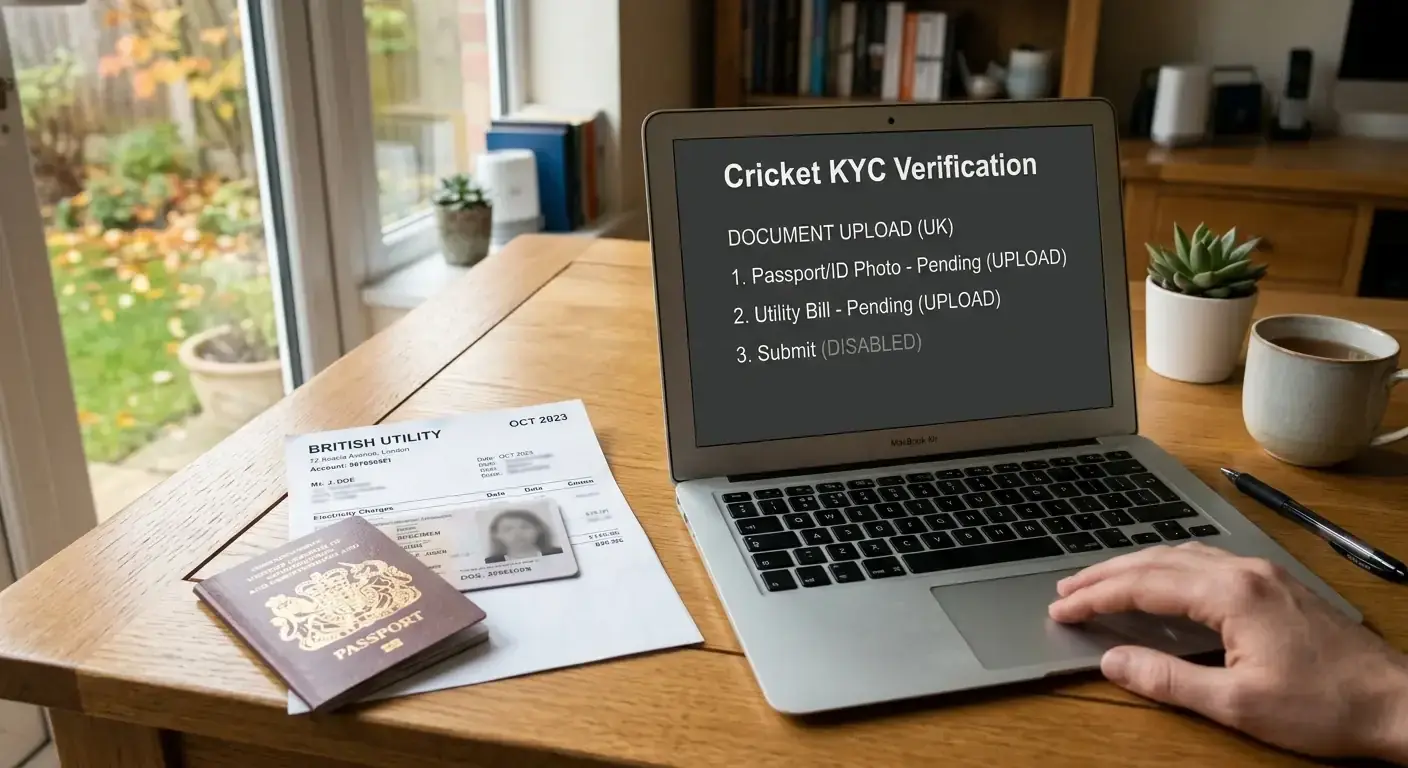
An IPL final I’d bet pre-tournament had landed. Outright winner at 8.50, £40 stake, £340 return waiting in the account. I went to withdraw. The site flagged the account for enhanced KYC verification and asked for proof of identity, proof of address, and a source-of-funds statement covering the deposits I’d made over the previous six weeks. The verification took eight working days because I had to track down a utility bill in the right name and submit a bank statement that showed the deposit history matching what the operator had on file. The winnings were safe and the withdrawal eventually processed cleanly, but the delay turned what should have been a celebratory afternoon into a week of document hunting. Since then I’ve verified every new account on the day I create it, before depositing a penny, and I haven’t had a withdrawal delay since.
This piece walks through KYC (Know Your Customer) verification at UK cricket betting sites – what documents you’ll be asked for, when the checks happen, why they exist, and how to navigate them without the kind of delay that turns a winning bet into a frustrating week of paperwork.
What KYC actually is
KYC is the regulatory framework that requires gambling operators to verify the identity, age, and (where appropriate) source of funds of every customer they deal with. The UK Gambling Commission’s licensing conditions require licensed operators to implement KYC processes before allowing significant gambling activity, with stricter checks applied as deposit and bet volumes increase. The framework draws from the broader Money Laundering Regulations that apply across UK financial services, with gambling-specific adaptations.
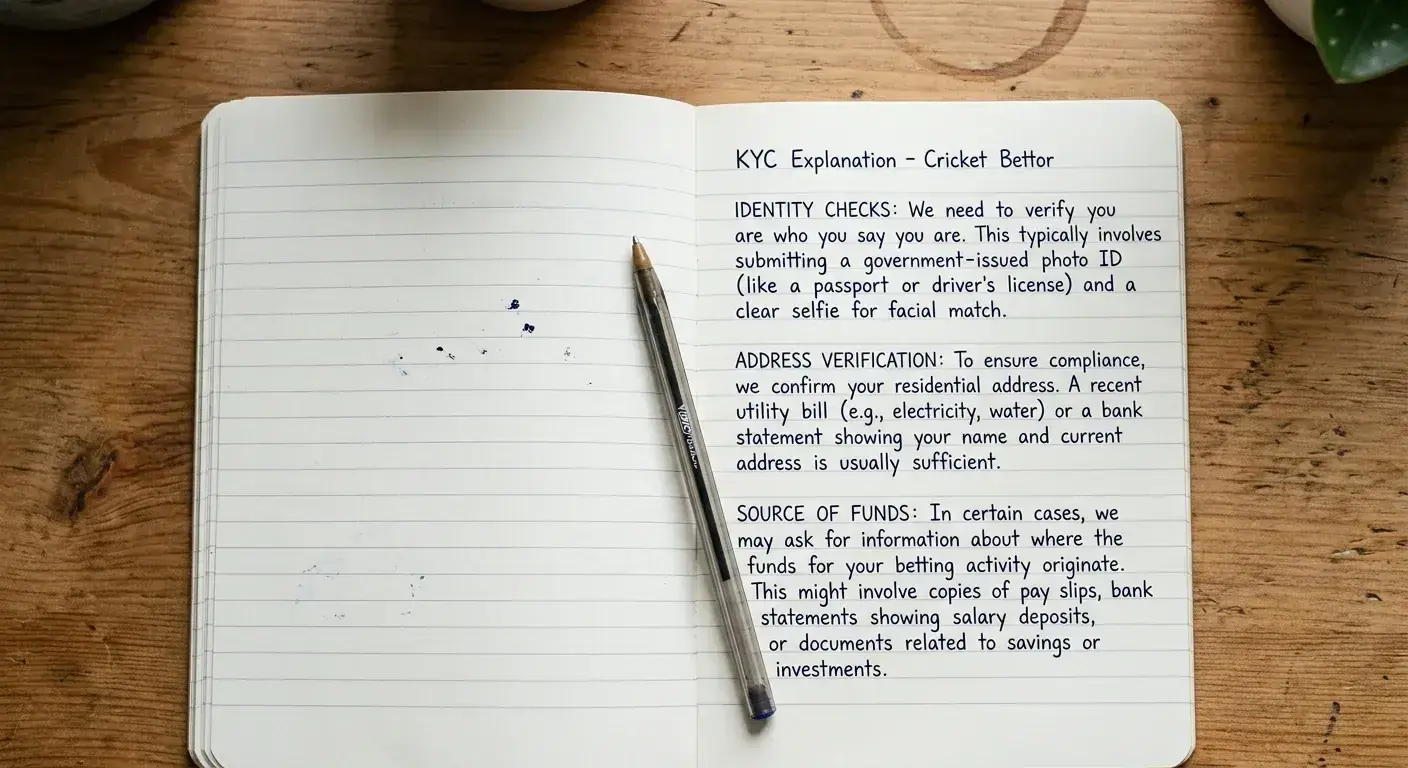
The standard checks include identity verification (confirming the account holder is who they claim to be), age verification (confirming the account holder is 18+), residence verification (confirming the address provided is genuine), and where the volume of activity warrants it, source-of-funds verification (confirming the money being gambled comes from legitimate sources). The first three are standard for every UK gambling account. The fourth applies at higher deposit or wager thresholds and varies by operator.
The framework exists to satisfy multiple regulatory objectives – preventing underage gambling, preventing identity fraud, preventing money laundering, and increasingly, supporting affordability and financial vulnerability monitoring. Each of these objectives drives different elements of the verification process, which is why a fully completed KYC profile can include documents covering all four categories.
When verification happens
UK-licensed operators typically run initial verification at account opening, with light-touch checks using electronic data sources (electoral roll matches, credit reference data, identity database checks). For most UK residents, this initial verification completes automatically within minutes of account creation and the customer can deposit and bet immediately. The system has identified the customer in the available databases, confirmed age and residence, and applied a “verified” status to the account.

Where electronic verification doesn’t complete – perhaps because the customer is new to UK databases, has recently moved, or has a less common name combination – the operator falls back to document verification. The customer is asked to upload photo ID (passport, driving licence) and proof of address (utility bill, bank statement) through the operator’s interface. This document verification typically takes 24-72 hours, depending on the operator’s processing capacity, and the account may be restricted from withdrawals during the verification window.
Enhanced KYC checks trigger at thresholds set by each operator’s risk-based approach. Common triggers include cumulative deposits exceeding a threshold (£2,000+ depending on operator), large single deposits, withdrawal requests for substantial amounts, or activity patterns that the operator’s monitoring systems flag for review. These enhanced checks often require source-of-funds documentation in addition to identity verification, which is where the document burden gets meaningful.
What documents are typically requested
Photo identification is universally required. Acceptable documents include UK passport, UK photocard driving licence (provisional or full), and EEA national ID cards. Some operators accept other forms of photo ID for specific customer segments. The document needs to be in date and the photo needs to be clearly visible. Operators typically ask for a colour photograph of the document, sometimes accompanied by a selfie holding the document to confirm the photo matches the person submitting it.
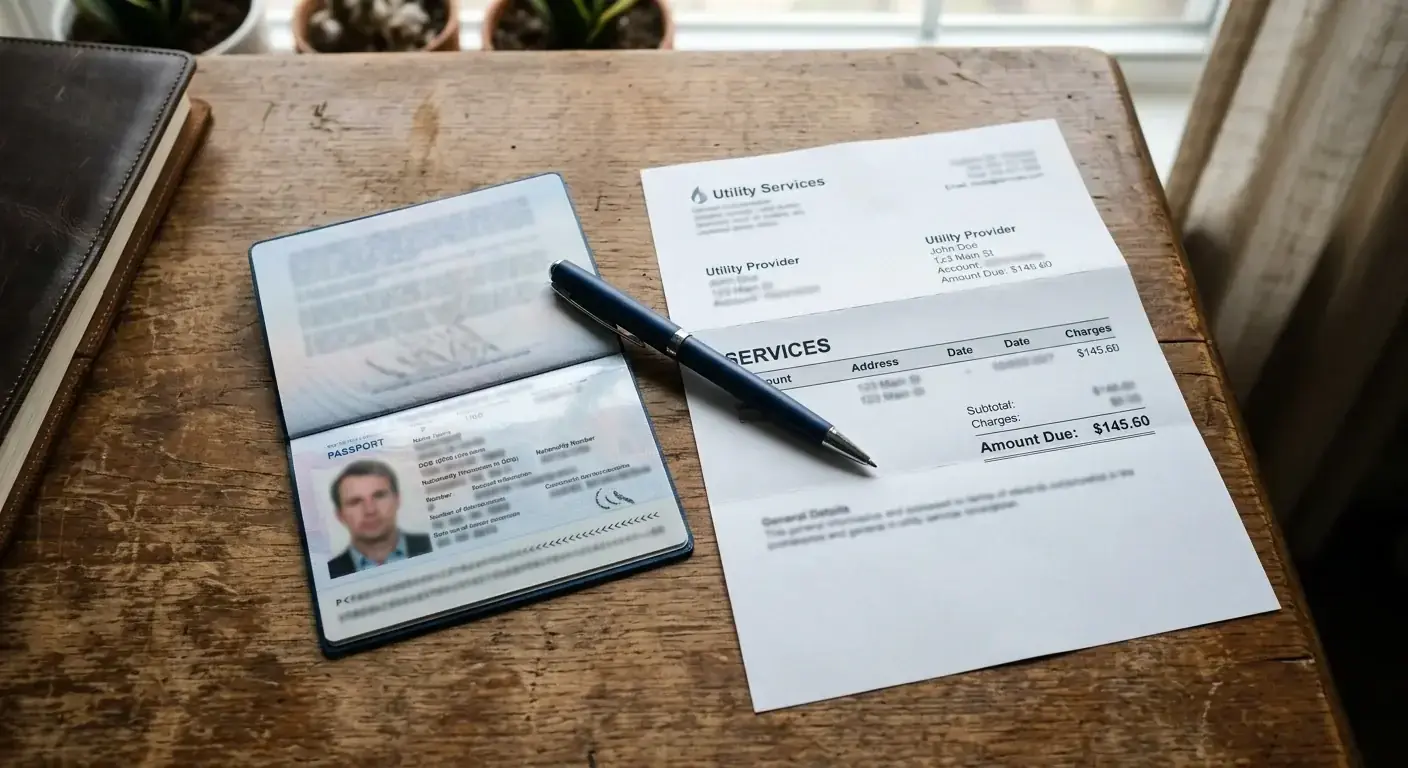
Proof of address is the next standard requirement. Acceptable documents include recent utility bills (gas, electricity, water, council tax), bank or credit card statements showing the registered address, mortgage or rental statements, and HMRC correspondence. The document typically needs to be dated within the last three months and to show the customer’s name and address clearly. Mobile phone bills are often not accepted because they’re considered too easy to obtain at any address.
Source-of-funds documentation, when requested, is where the verification process becomes more substantial. Acceptable documents include payslips covering recent months, bank statements showing employment income or other recoverable sources, tax returns, evidence of pensions or savings, or documentation of inheritance or property sale proceeds. The operator’s risk team reviews the documents and confirms that the deposits made to the account are consistent with the legitimate sources documented.
The source-of-funds conversation
The source-of-funds check is the part of KYC that surprises most cricket bettors, particularly those who’ve grown an account substantially through winnings. The check isn’t only about the original source of the deposits – it’s about whether the operator can satisfy itself that the cumulative activity through the account is consistent with the customer’s known financial profile. A customer who has deposited £20,000 over six months on an income of £25,000 a year may face questions about whether the deposits are sustainable from declared income, regardless of whether the underlying source is legitimate.

This is where the broader UK affordability framework intersects with KYC. The UK Gambling Commission’s regulatory reform agenda includes financial vulnerability checks designed to identify customers whose gambling may be causing financial harm, and the threshold for these checks has been the subject of substantial industry debate. Andrew Rhodes, the Gambling Commission CEO, has framed the reform agenda as the largest programme of gambling reform since the 2005 Act. The practical implication for cricket bettors is that the verification framework has moved from a pure anti-fraud function to something broader that includes harm-prevention objectives.
The documents requested at the source-of-funds stage can include income evidence, bank statements showing the broader financial picture, and in some cases, employment confirmation. Operators handling these requests well treat them as a routine part of customer due diligence. Operators handling them poorly create friction that disproportionately affects customers who have done nothing wrong but happen to be flagged by automated thresholds.
The verification timeline
Initial electronic verification at account opening typically completes within minutes for most UK residents. Document verification when electronic verification fails typically takes 24-72 hours. Enhanced KYC for source-of-funds typically takes 3-10 working days depending on the operator and the complexity of the documents provided. The total timeline from request to full verification can be two weeks for complex cases.

The verification request can come at inconvenient moments. A withdrawal request after a winning Ashes bet, an IPL outright that’s landed, or a successful in-play position can trigger an enhanced KYC check that pauses the withdrawal until verification completes. The funds aren’t at risk – they remain in the account, segregated under UK regulatory requirements – but they’re not accessible during the verification window. The strategy I’ve adopted is to complete enhanced KYC proactively at any operator I expect to use for substantial activity. Submitting identity, address, and basic source-of-funds documents at account opening takes 30 minutes upfront and saves potential days of delay later.
Common verification problems and how to avoid them
The most common verification problem is document mismatch. The name on the photo ID doesn’t exactly match the name on the proof of address, or the name on either document doesn’t match the name on the account. These mismatches usually arise from minor inconsistencies – middle names included on some documents and not others, abbreviated forms, or maiden names on documents predating a marriage. The operator’s verification system typically requires exact matches.

The second common problem is expired documents. A passport that expired six months ago isn’t acceptable regardless of how clearly it identifies the customer. A utility bill from 18 months ago isn’t acceptable as proof of address. The third common problem is poor-quality scans or photographs. Documents need to be clearly legible, with all four corners visible, no glare obscuring details, and sufficient resolution that the operator can read every field.
What the verification doesn’t do
KYC verification doesn’t prevent every form of fraud or risk. It establishes the identity of the account holder at the moment of verification, but it doesn’t continuously confirm that the same person is using the account. It doesn’t prevent the account holder from sharing their account with others (which is against operator terms but still happens). It doesn’t prevent the account holder from depositing using funds that come from a legitimate source but that they can’t afford to lose.
The framework that addresses these residual risks is the broader monitoring infrastructure – pattern recognition for unusual activity, affordability checks at higher thresholds, intervention protocols when patterns suggest harm. The relationship between KYC and the broader safer gambling framework is direct. KYC establishes the customer. Safer gambling tools allow the customer to control their own activity. Affordability checks monitor whether the activity is consistent with the customer’s financial capacity.
Why the friction exists and what it’s worth
The friction of KYC verification is real and sometimes frustrating. For customers who have done nothing wrong, being asked to prove who they are and where their money comes from can feel intrusive. The UK regulatory framework has made a deliberate choice to accept this friction as the cost of preventing harm at scale – both financial harm to individuals and the broader social harm of money laundering through gambling channels.
The UK Gambling Commission’s quarterly statistics for the year to March 2025 showed the licensed remote sector generating £7.8bn in gross gambling yield, up 13.1% year on year. The volume going through licensed operators is substantial, and the framework that protects that volume from being a channel for illicit activity is what justifies the verification process. The Betting and Gaming Council, whose CEO has publicly emphasised the industry’s commitment to responsible standards, supports the framework as part of the licensed industry’s distinction from offshore alternatives that operate without these protections.
The trade-off is the friction that customers experience versus the consumer protection the framework provides. For cricket bettors who plan to use UK-licensed operators for any meaningful activity, accepting the friction upfront – verifying documents proactively, providing source-of-funds when requested without resistance, treating the process as a routine cost of using a licensed operator – is the practical approach. The licensed sector is the protected sector. The verification is part of the protection.
How to plan verification around major cricket events
The practical advice that’s emerged from years of using UK cricket betting accounts is to plan verification around the calendar. If the Ashes summer is approaching and you intend to bet meaningfully on the series, verify your accounts thoroughly in the weeks before the series starts rather than mid-series when a winning outright might trigger enhanced KYC at the worst possible moment. The same logic applies to IPL season, T20 World Cup windows, and any tournament where you anticipate significant activity.

The verification done in calm pre-tournament windows is verification done well. Documents are gathered carefully, submissions are made without time pressure, and any back-and-forth with the operator’s verification team resolves over a comfortable timeline. The same verification done mid-tournament under withdrawal pressure produces document rejections, mismatched submissions, and the kind of friction that turns a winning bet into a week of stress. The choice is mine. Planning around it is how I prevent the IPL final scenario from happening again.
