

The colleague who explained what GamStop actually feels like
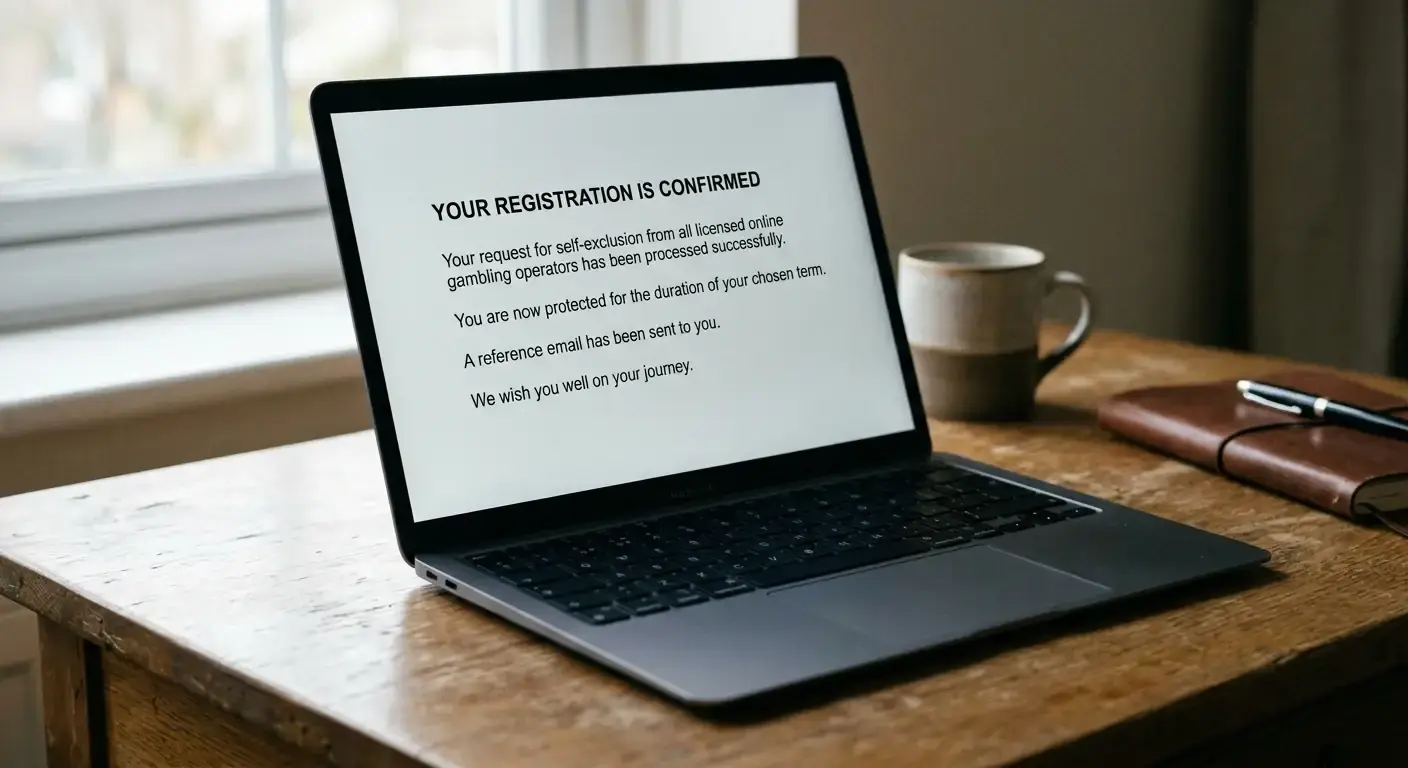
A few years ago a colleague who’d spent two seasons betting heavily on IPL and county T20 came back from holiday and quietly mentioned that he’d registered with GamStop the previous week. He wasn’t dramatic about it. He described it as a thing he’d done because the betting had stopped being fun and he wanted to make sure the next time he was tempted he couldn’t follow through. He’d taken a 12-month exclusion. He said the most surprising thing was how complete the block was – within minutes of confirmation he couldn’t log into any UK betting account, the apps that used to occupy half his phone screen wouldn’t let him past the splash screen, and the daily IPL alerts that had been driving his afternoons just stopped. The infrastructure he’d built around his betting had been dismantled by a single registration form.
This is about how GamStop works specifically for cricket bettors – what the scheme blocks, how it interacts with the UK cricket betting infrastructure, what to expect during the exclusion period, and where the boundaries of the scheme sit.
What GamStop is
GamStop is the national self-exclusion scheme operated by The National Online Self-Exclusion Scheme Limited, a not-for-profit body funded by the UK gambling industry and overseen by the UK Gambling Commission. The scheme is free to register with for any UK customer who wants to exclude themselves from UKGC-licensed online gambling. A single registration applies simultaneously to every UK-licensed online operator, including all the major UK cricket betting brands. There is no opt-in by operator. The exclusion is universal across the licensed estate.

The legal framework that makes GamStop effective is the Gambling Commission’s licensing requirement. Every UKGC-licensed operator is required to integrate with the scheme and to block registered users from accessing their services for the duration of the exclusion. This is a licence condition, not a voluntary commitment. Operators that fail to enforce GamStop registrations face regulatory action, which is why the integration is comprehensive and the enforcement is robust.
The exclusion periods available are 6 months, 1 year, and 5 years. The bettor chooses the period at registration. The exclusion can’t be shortened during the period – the only way out is to wait for the period to end. After the period ends, the registration doesn’t automatically disappear; the bettor has to actively contact GamStop and request to be removed from the register. The default state after exclusion period end is that the registration remains active, requiring a deliberate decision to return to gambling.
What gets blocked
The scheme blocks login, registration, marketing, and deposit functions across every UKGC-licensed operator. An existing account at a cricket betting site becomes inaccessible – the username and password still exist in the operator’s database, but the login process recognises the GamStop registration and refuses access. New account registration is also blocked. If a registered user attempts to sign up at a new licensed operator, the operator’s verification process identifies the GamStop registration and refuses to create the account.
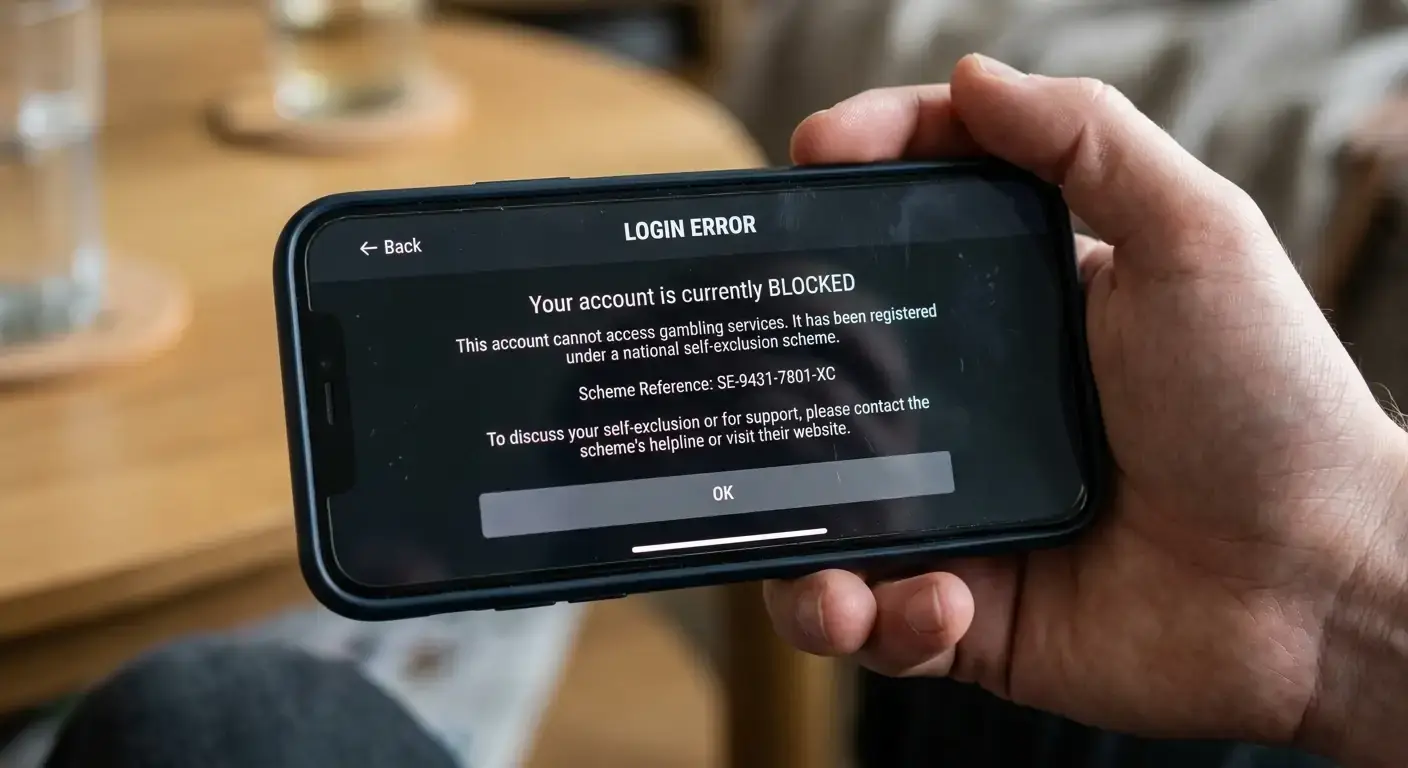
Marketing channels are blocked alongside platform access. Operators are required to remove GamStop-registered customers from their email and SMS marketing lists, which means the daily promotional traffic that drives so much in-play cricket betting simply stops arriving. The push notifications from betting apps stop. The “your odds boost is waiting” reminders stop. The structural infrastructure that makes regular cricket betting easy gets dismantled at the marketing layer as much as at the platform layer.
What GamStop doesn’t block is non-UK-licensed sites, retail (in-person) bookmakers, the National Lottery, and certain non-gambling products that some operators also offer. The non-UK-licensed gambling exclusion is the meaningful gap. Offshore sites that operate outside the UK regulatory framework aren’t required to integrate with GamStop and can be accessed by registered users. The Betting and Gaming Council has estimated that 1.5 million Britons are active on black-market gambling sites, and the BGC’s 2025 policy analysis suggested that 28% of regulated punters in the UK may shift to illegal sites if reforms tighten further. UK Gambling Commission CEO Andrew Rhodes has been blunt about the unlicensed sector, asking publicly why anyone in the licensed industry would want to be in business with companies supporting illegal competition.
Why this matters for cricket specifically
Cricket bettors who register with GamStop face a specific challenge that affects other sports less. The international cricket calendar produces betting opportunities every day, and the marketing infrastructure that connects punters to those opportunities is dense. Daily IPL coverage, ICC tournament push notifications, in-play alerts during The Hundred, Ashes-specific promotional bundles – all of these stop when GamStop activates. The absence is conspicuous because it was so present before.

The cricket betting community also has informal social structures that interact with the exclusion. WhatsApp groups for IPL betting, Twitter accounts that track cricket odds movements, friends who share Ashes acca slips – none of these are blocked by GamStop, but engaging with them while excluded from betting creates a tension that some users find difficult. The scheme works best when the social environment around the user also adjusts, which is part of the reason GamStop registration is often accompanied by changes in how the user engages with cricket socially during the exclusion period.
The other cricket-specific consideration is the international dimension. Tours, tournaments, and franchise leagues happen across multiple jurisdictions, and the betting markets for these events exist on operators in different regulatory regimes. A GamStop-registered UK bettor who’s been blocked from UK-licensed operators can technically access offshore sites that take UK customers. The scheme doesn’t prevent this – and the protections that come with UK regulation don’t apply to those sites. The choice to engage with offshore operators after a GamStop registration is a separate decision the user makes, and one that abandons the consumer protections the scheme is part of.
The registration process
Registering with GamStop is straightforward. The form is on the GamStop website. The required information is the registrant’s full name, date of birth, postal address, email address, mobile phone number, and any other names that have been used for gambling accounts. The system uses this information to identify the registrant across all licensed operators where accounts may exist. The data accuracy matters – if the information provided doesn’t match what operators have on file, accounts at those operators may not be properly identified and blocked.

The registration takes effect within minutes of completion, with full implementation across all licensed operators within 24 hours. The bettor receives a confirmation email and the exclusion begins. There’s no phone call, no in-person verification, no waiting period beyond the initial processing window. The friction is deliberately low because the scheme is designed to be accessible at the moment the user decides they need it, which is often a moment when extended bureaucratic processes would deter the registration.
The registration can be done from anywhere – from a betting site that the user is currently logged into, from the GamStop website directly, or from links provided by gambling support organisations. The accessibility is by design. Anyone who wants to register can do so without operator intervention or third-party permission.
What life looks like during the exclusion
The first few weeks of GamStop exclusion typically involve the user navigating habits that no longer have their accustomed outlets. Cricket continues to happen. IPL matches still play. The Ashes still gets covered. The user can still watch the cricket, read the analysis, follow the scores. What they can’t do is bet on it through any UK-licensed channel.
Some users find this clarifying. The cricket-watching experience that had been tangled with constant in-play betting becomes simpler. Others find it disorienting in the early weeks because the engagement structure that defined their relationship with cricket has been removed. The longer exclusion periods (1 year, 5 years) give the user time to reset the relationship with cricket completely. The 6-month exclusion is sometimes used as a circuit-breaker rather than a complete reset.
The relationship with operator-level self-exclusion
GamStop is the comprehensive national scheme, but UK-licensed operators also offer their own self-exclusion at the account level. A cricket bettor who wants to exclude themselves from one specific operator but keep options open with others can use operator-level self-exclusion. The choice depends on what the user wants the exclusion to accomplish.
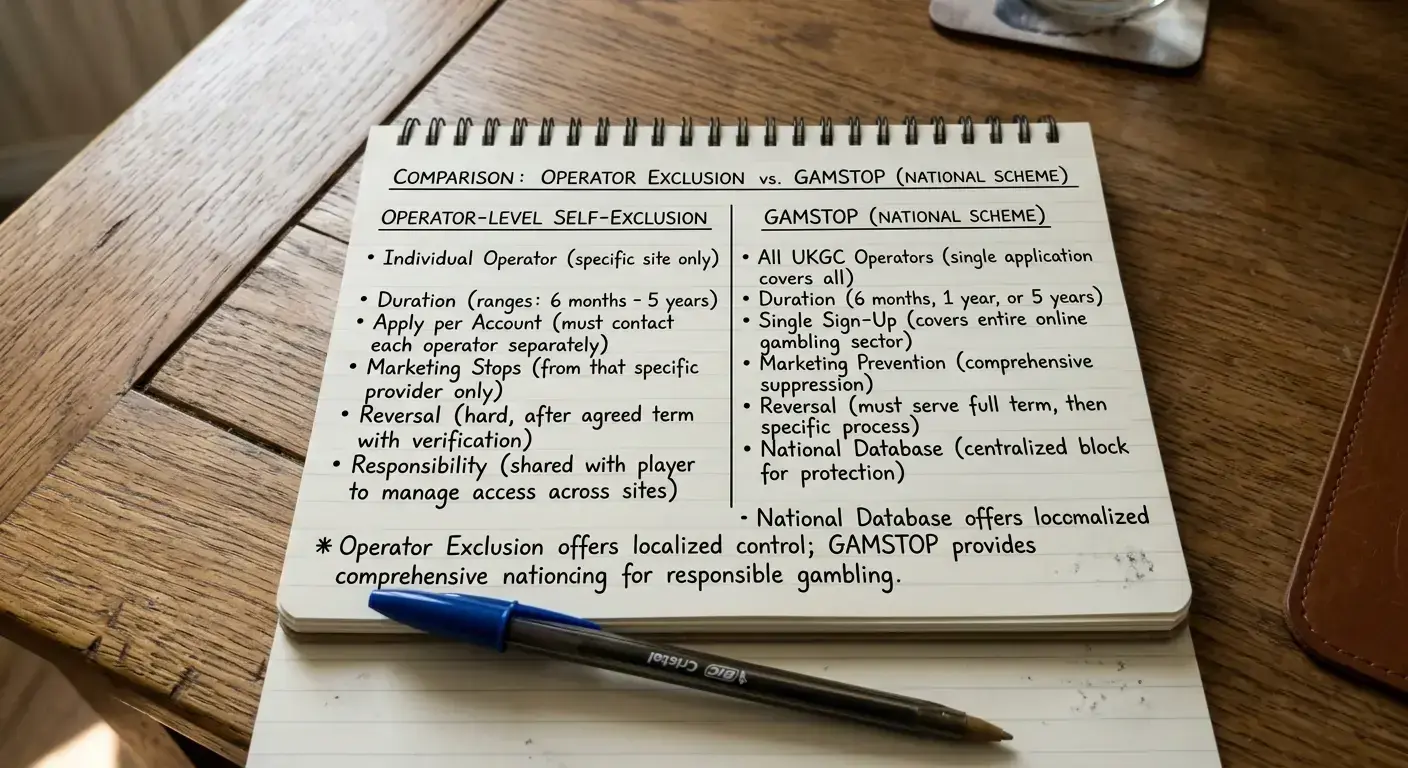
Operator-level self-exclusion is useful for situations where the user has a problem with one specific platform. The exclusion at that operator blocks login and marketing at that site only. Other UK-licensed operators remain accessible. GamStop is the comprehensive option – it blocks every UK-licensed operator simultaneously, including operators the user doesn’t have accounts with, blocks new account registration, and blocks marketing. For cricket bettors who recognise they need a complete break rather than a targeted one, GamStop is the appropriate tool.
The role of GamStop in the safer gambling framework
GamStop sits within a broader framework of safer gambling tools that UK cricket bettors can access. The other tools – deposit limits, loss limits, session time limits, reality checks – are continuous rather than exclusionary. They modify behaviour without removing access. GamStop is the exclusionary endpoint – the tool that removes access entirely when modification of behaviour isn’t enough.
The Betting and Gaming Council, whose CEO Grainne Hurst has spoken about the importance of evidence-based policy in the industry, frames GamStop as part of the consumer protection infrastructure that distinguishes UK-licensed gambling from the offshore alternative. The BGC’s position has been that the industry takes gambling-related harm seriously and that schemes like GamStop are part of how that responsibility is operationalised. The scheme has registered hundreds of thousands of users since its inception and continues to grow as the safer gambling framework expands.
When GamStop is the right tool
The signals that point toward GamStop as the right tool are specific. Continuous escalation of stakes despite recognising it’s a problem. Inability to step away from cricket betting even when consciously trying to. Financial harm – borrowing, missing bills, hiding spending. Emotional consequences – anxiety, irritability, sleep disruption tied to betting outcomes. Relationship strain caused by gambling. Repeated failure of less-comprehensive interventions (limits, breaks, attempts at moderation).

Any one of these patterns is worth taking seriously. Multiple of them in combination suggests the gradual interventions may not be enough and the structural reset of GamStop is worth considering. The registration isn’t a confession or an admission of failure. It’s a practical tool for taking gambling access off the table during a period when access is harmful.
The colleague who told me about his GamStop registration came back to the conversation about a year later. The exclusion had ended. He’d let it expire rather than actively re-registering, and he’d decided not to return to cricket betting at all. The 12 months of exclusion had reset his relationship with the activity completely, and his conclusion was that he didn’t want it back. That’s not the only outcome – some users return to gambling after exclusion with healthier habits – but it’s a legitimate outcome that GamStop makes possible.
Where GamStop fits in cricket betting’s broader picture
GamStop isn’t a default tool for every cricket bettor. Most bettors don’t need it and never will. The tools that work for the majority are the lighter-touch ones – deposit limits, session limits, regular reflection on betting habits. GamStop is the tool that works when the lighter touches aren’t enough. The scheme exists because the lighter touches don’t always work, and the framework needs an option that does.
The summary I’d offer is that GamStop is a serious tool for a serious situation. It’s not designed for casual or trial use. The exclusion periods are non-reversible during the registered window. The block across UK-licensed operators is comprehensive. The marketing infrastructure that drives so much in-play cricket betting gets dismantled completely. For users who need that – and there are users who need that – the scheme is one of the most effective consumer protection tools in any regulated gambling market globally. For users who don’t need it, the lighter-touch tools remain available and remain the right place to start.
