
An eight-week Indian distraction with a UK shape
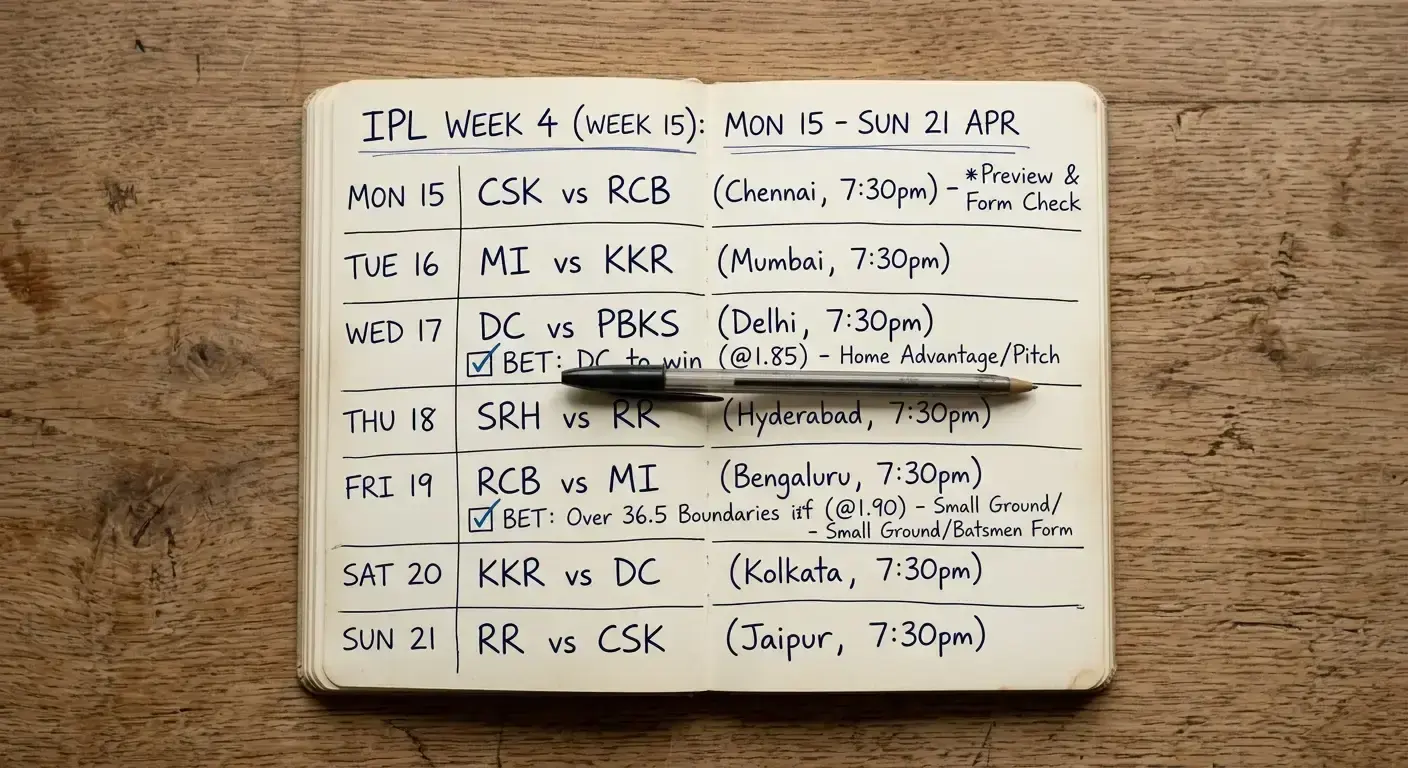
I used to set a phone alarm for the IPL toss because I’d missed the early line on the run-line market three years running. Now I know the rhythm: the toss lands during the British school run, the chase usually starts around the time I’m pouring a coffee, and the entire tournament unfolds in a window that’s much friendlier to UK life than people expect.
This guide is the one I’d hand a UK punter who’s been told the IPL is the world’s best T20 tournament and isn’t sure when to actually watch, what to bet on, or what the regulatory picture looks like from this side of the world.
The UK time zone and live windows
The IPL plays its matches in two slots – afternoon games starting 3:30pm Indian time, evening games starting 7:30pm. Convert to GMT or BST and you get a UK live window that’s surprisingly civil. Afternoon games go live around 11am UK time and finish before 3pm. Evening games start around 3pm UK time and wrap around 7pm, give or take a Super Over.

The double-header weekends are where the calendar gets generous – you can catch the back end of an afternoon innings during lunch and have the evening game playing through the dinner hour. The IPL is the only major T20 tournament whose entire schedule sits inside the UK working day, which is why so many UK bettors quietly drift toward it once The Hundred is over.
Live betting volume reflects that timing advantage. UK afternoon traffic on cricket pages spikes hard during the IPL – the same operators that turn over modest sums during a 2am New Zealand Test see their busiest cricket trading windows of the year between 3pm and 7pm UK time across April and May.
IPL outright and playoff markets
The outright IPL winner market opens about a fortnight before the tournament and prices ten teams across two months of cricket. The structural problem with the outright is the same as every long-format tournament – you’re locking your stake into eight weeks of variance.
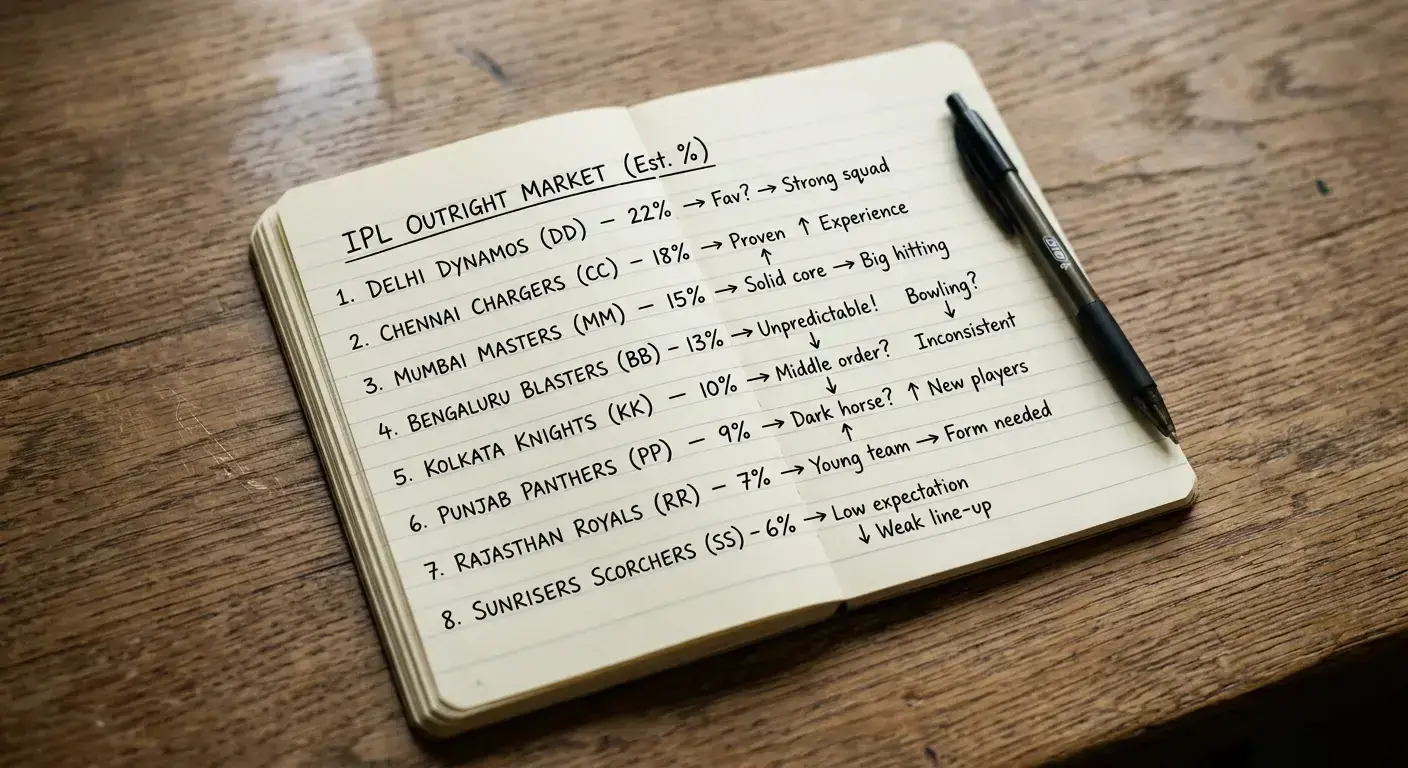
What works better, in my experience, is the post-league-stage betting. The IPL plays a round-robin of fourteen matches per team, then four playoff games. By the time the league phase is done, you know which four teams have qualified, who’s hot, who’s missing key overseas players to international duty, and what the venue rotation looks like. Outright prices in that two-day window between league end and the Qualifier are the most efficient prices of the entire tournament – but also the most readable, because the variance has been compressed from sixty games to four.
Playoff structure markets – Top Two Finish, Top Four Finish, Playoff Qualification – open during the league phase and price the path rather than the destination. These are short bets with shorter prices, and they reward you for spotting which mid-table team has the run-rate cushion to survive a couple of upsets. I’ve found more value in Top Four Finish than in the outright over the last few seasons, partly because the market is less heavily traded.
Player props and what UK-licensed sites actually offer
Player markets on the IPL fall into two categories on UK sites – the deep tournament markets, and the per-match props.
Tournament-long markets sit alongside the outright. Most Tournament Runs, Most Tournament Wickets, Orange Cap winner, Purple Cap winner. These price the season as a whole and they pull genuine engagement – the top of the Most Runs market typically lives between 4/1 and 9/1, with a clear top tier of three or four batters. The Most Wickets market is structurally wider because wicket distribution is patchier than run distribution across a long T20 season.
Per-match props are where UK availability gets thinner. Indian sportsbooks pump out enormous prop boards – fall of first wicket, runs at the end of the powerplay, individual batter milestones, dot-ball counts. UK-licensed operators carry maybe sixty per cent of that volume on a typical IPL match. The reason is regulatory and operational at once. Some prop markets are flagged as integrity-sensitive by international monitoring bodies – spot-style markets that can be manipulated by a single delivery. UK books tend to pull or rate-limit those for their own integrity reasons. If you want the deep prop board, you’ll find it on the exchange or via the betting builder rather than on the per-match coupon. There’s more on what UK sites cover, and why some props vanish close to the toss, in the cricket player props rules in the UK.
IPL market size and why it matters to your odds
The IPL is the largest betting market in cricket by some distance. The most recent industry sizing puts the IPL betting market at around USD 100 billion in turnover, with a projected compound annual growth rate of 7.1% through 2033. That’s a startling number for a single tournament – it means the IPL alone moves more money than several entire European league football competitions combined.
Why does that matter for a UK punter? Two reasons. First, market depth means tight prices. The bookmaker margin on an IPL Match Winner is typically 102-104%, which is sharper than you’ll see on a T20 Blast or Hundred game. Second, the sheer volume of action means liquidity stays high on the exchange even for niche props. If you want to lay an outright pick once a team starts to wobble, the IPL is the only T20 tournament where lay liquidity is reliable across the entire eight weeks.
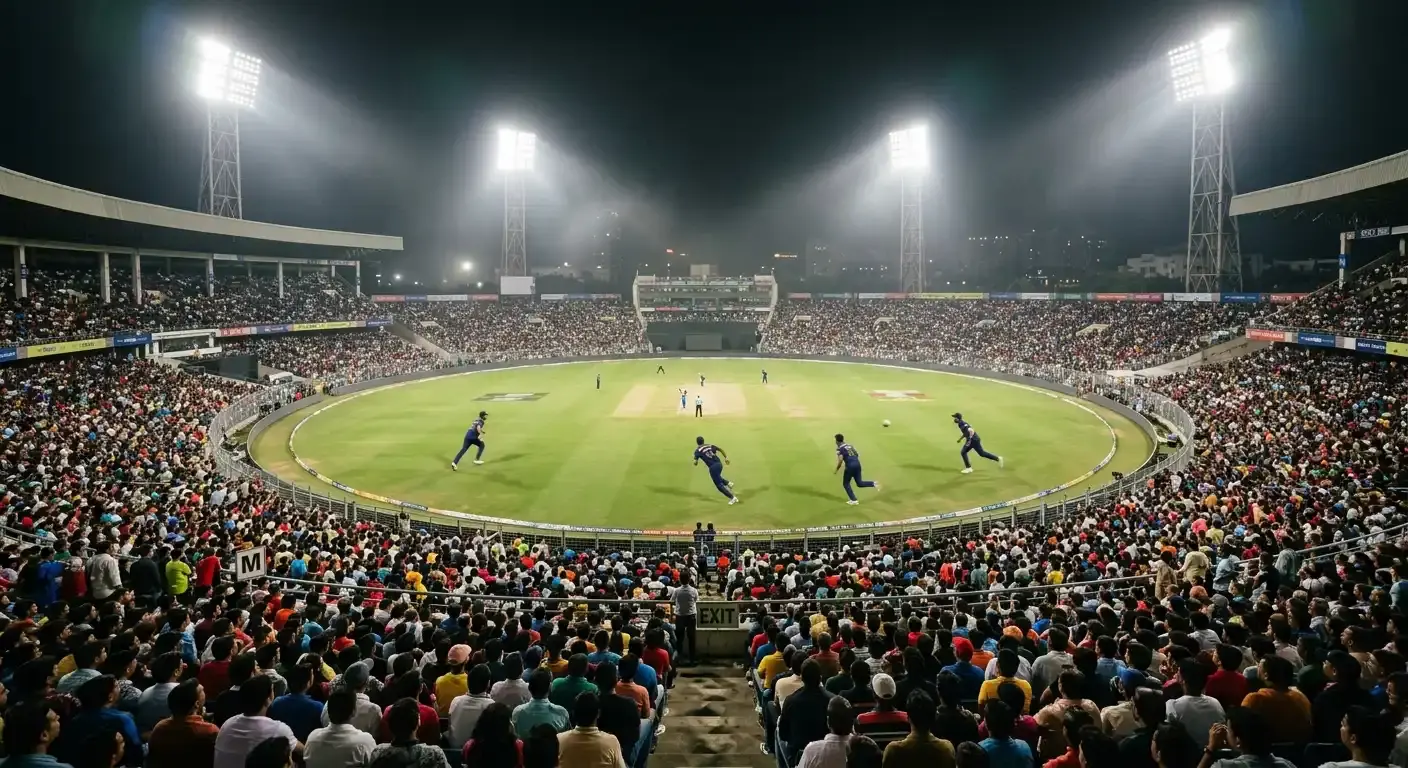
The flipside is that you’re betting into the most actively monitored market in cricket. ICC Anti-Corruption Unit coverage of the IPL is intensive, with Anti-Corruption Code provisions effective from June 2024 covering players, coaches, trainers, managers, selectors, team owners, doctors, physiotherapists, match referees, pitch curators, player agents and umpires. The market sees more eyes than any other domestic T20 league, and integrity is treated as a first-order operational concern.
Regulatory notes for the UK-based bettor
The legal frame for an IPL bet placed from the UK is the same as for any cricket bet placed from the UK – you bet through a UK Gambling Commission licensed operator, the operator pays UK gambling duty, and the bet is settled under UK rules regardless of where the match is being played.

One nuance specific to IPL coverage is sponsorship. The ECB Code of Conduct on gambling sponsorships, which took effect from the 2025 season, restricts gambling sponsorship to UK-licensed operators or those with white-label UK partners, and reshaped how the IPL is marketed within the UK media landscape. Cricket Australia and the BCCI have their own arrangements, but anything that reaches a UK viewer through a UK-regulated broadcaster has to clear UK advertising standards.
Live streaming is the other regulatory wrinkle worth knowing. Some IPL matches are available to stream on UK betting sites under watch-and-bet arrangements; others sit behind subscription broadcast deals. The availability shifts season by season as broadcast contracts get renewed. Don’t assume the stream you used last season will still be there this year.
How I’d structure an IPL betting week
The IPL plays roughly nine matches a week across the league phase. Trying to bet every game is the fastest route to a poorly-thought-through stake. My own rhythm is to pick two or three matches per week – the ones where I’ve watched the previous outing of both teams, where I know the surface, and where one squad has a clear shape advantage the market hasn’t fully priced. That’s it. The IPL rewards selective discipline more than any other T20 tournament, because the prices are sharp, the volume is high, and the noise from social media and tipsters is overwhelming.