


The format that everyone treats as the boring middle child
One-day international cricket sits in an awkward place in the modern game. T20 takes the casual audience. Test cricket holds the purists. ODI cricket is the one your dad watches when there’s nothing else on, and the one most UK bettors quietly underrate. The 50-over format actually rewards more disciplined betting than either of its siblings – the games are long enough to expose poor sides but short enough to finish in a single day, and the markets are priced with less aggression than they deserve.
This is the read for any UK punter who wants to take the format seriously without pretending it’s something it isn’t.
Why ODI format shapes prices the way it does
Fifty overs per side. Two new balls, one from each end. Powerplay restrictions in the first ten overs, fielding restrictions through the middle, and a death overs structure that rewards specialist hitters and yorker-bowlers. That’s the cricket. The market consequences flow from how predictable the format is.

An ODI is the most modelled cricket format in the game. Decades of data, well-understood par scores by ground, and a sample size large enough that bookmaker pricing is genuinely sharp. The bookmaker margin on an ODI Match Winner sits around 102-104%, comparable to the IPL and tighter than any other format outside top-tier T20.
What that tight margin means in practice is that ODI value lives in the secondary markets, not the headline ones. Match Winner prices are usually correct within a couple of percentage points. Top Batter and Top Bowler markets sometimes have softer prices because the trader’s confidence in each individual player’s contribution distribution is lower than their confidence in the overall match outcome.
The global sports betting market reached USD 100.9 billion in 2024 and is projected to hit USD 187.39 billion by 2030, with Europe holding around 48% revenue share. ODI cricket gets a disproportionate slice of that European share because of where the format is most watched – England, the subcontinent, Australia. UK afternoon and evening windows during the ODI calendar are some of the deepest cricket betting markets the year produces.
Match result and the run-line
ODI Match Winner is a clean two-outcome market – no draw, with ties resolved by Super Over in most competitions. That cleanness is part of why the price is sharp. There’s no third option absorbing overround.
The interesting structural quirk is the home advantage gradient. Home sides in ODI cricket win roughly 55-58% of completed matches across the historical data, which is meaningfully higher than the home advantage in T20 or Test cricket. Pitches are prepared by the home board, the home audience drives a real atmospheric advantage, and the home side selects against known opposition weaknesses. Bookmakers price this home advantage, but the size of the price gap between home and away in a competitive ODI bilateral is sometimes narrower than the historical edge would suggest.
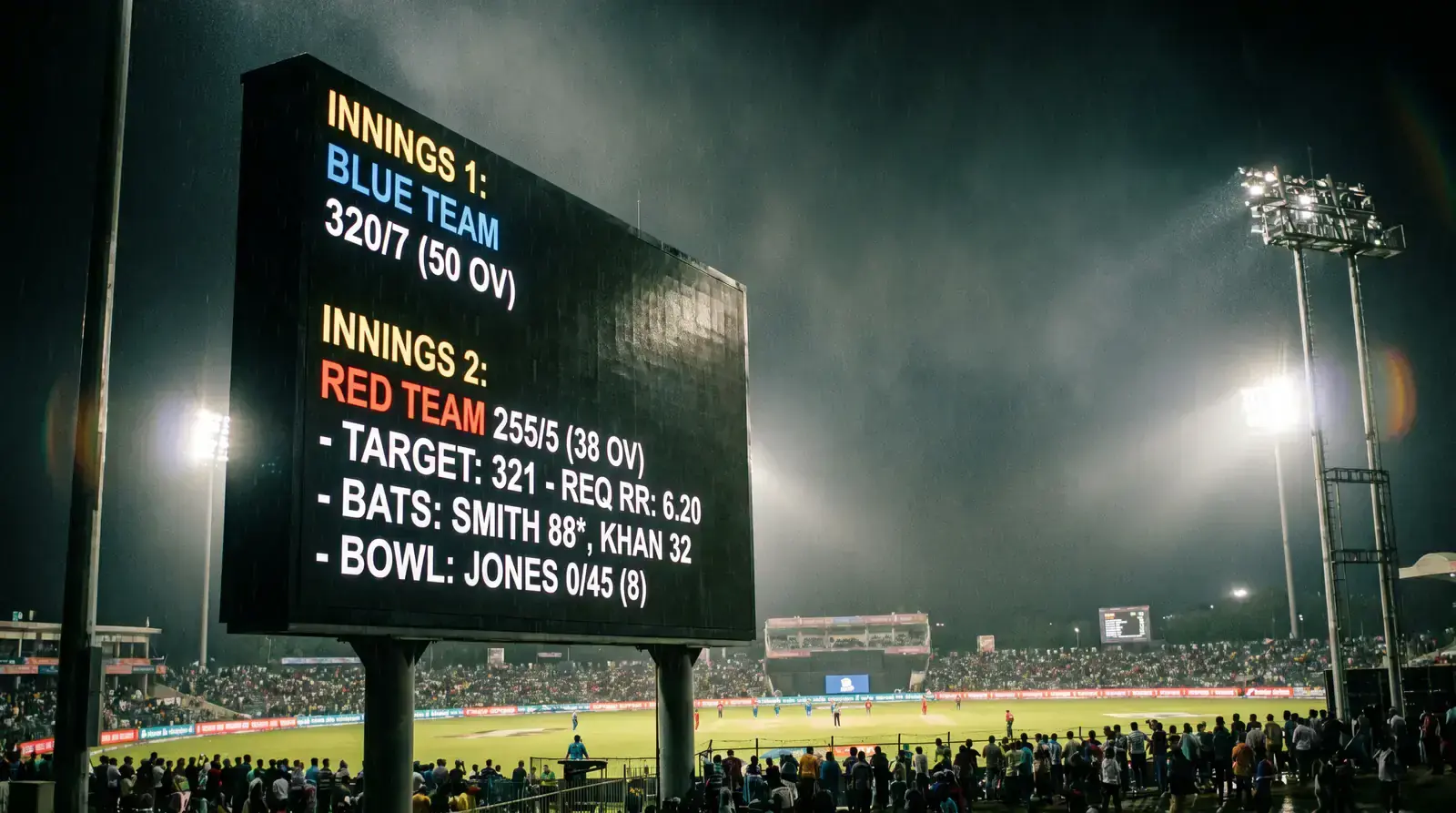
Run-line markets are where ODI betting genuinely pays. A run-line is a points-spread bet – typically structured as “Team A to win by more than 10 runs” or “Team B to win by more than 15 runs”. The line varies by the match-up and the venue, but the underlying logic is the same: it’s a refinement of the Match Winner market for punters who think the favourite will win comfortably.
Run-line markets are usually priced near Evens on both sides, which means the trader is genuinely trying to balance the book at the line they’ve set. That balance is where the value lives. A favourite that historically wins by 30+ runs when they win at all, priced on a run-line of “more than 15 runs”, is structurally a value bet. The line is set conservatively because the trader wants action on both sides.
Tighter ODI run-line prices reflect the same dynamic that drives the T20 equivalent – game length means more variance, but predictable team strength means lower variance in margin of victory. Run-line bets work better in ODI than in T20 because the longer game format reduces the noise around margin-of-victory outcomes.
Top batter and top bowler markets
ODI Top Batter markets pay differently to T20 Top Batter markets because the format gives more time. A top-order batter facing 60-80 balls has more room to recover from a slow start than a T20 batter facing 25-30 balls. That difference shifts the market shape – Top Batter favourites in ODIs sit at shorter prices than the T20 equivalent, because the format is more forgiving of variance.

The structural reading is simple. Top of the order pays. Openers and the number three batter have the largest expected ball-faced count, and Top Batter markets reward volume over strike rate. A reliable opener who averages 50 in ODIs and strikes at 80 is structurally a better Top Batter bet than a number five who averages 60 and strikes at 120 – the opener faces more balls and has more chances to compile a top score.
Top Bowler markets work the opposite way. ODI bowlers are limited to ten overs each, and the wicket distribution across those ten overs is highly variable. A spinner who bowls his ten overs in the middle phase, against patient batters trying to consolidate, often finishes with two wickets at competitive economy. A new-ball seamer who breaks the opening partnership with the third ball of the match takes three wickets and tops the bowler chart.
Alex Marshall – formerly of the ICC Anti-Corruption Unit and now consulting on integrity for Bangladesh Cricket – framed the integrity context that sits around modern ODI markets in straightforward terms when discussing the broader picture: “The reason I’m here is to work with the President and the Board to design an integrity unit which protects the sport from all the different threats.” The threats are real. The market response in UK-licensed operators is rigorous monitoring of large prop bets across ODI series, which is one reason prop coverage on the smaller bilateral ODIs is sometimes thinner than punters expect.
DLS method and how it settles your bet
Rain in ODI cricket is settled by the Duckworth-Lewis-Stern method, which reshapes the target score for the chasing side based on overs lost and wickets remaining. The DLS calculation is published live during interrupted matches, and bookmakers update Match Winner prices in real time as the par score moves.
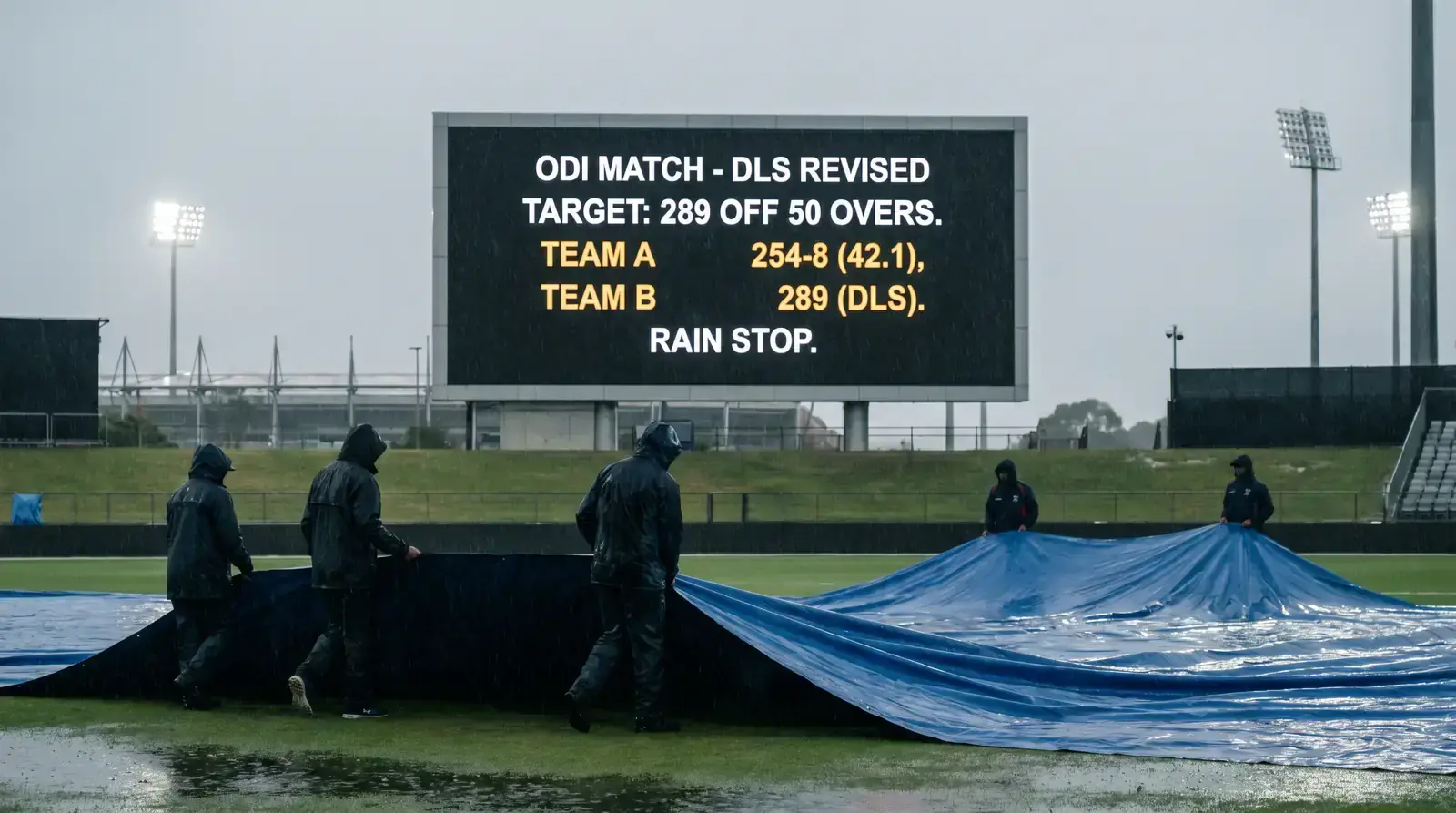
What does DLS mean for your bet? For Match Winner, the DLS outcome counts as the official result – your bet stands. For totals and run-line markets, the answer depends on the operator and the specific line. Most UK-licensed sites void totals markets if the innings is shortened below a threshold, because the line was set against a full 50-over innings and DLS shrinks the available balls. Run-line markets may be settled on the actual margin of victory at the DLS-adjusted target, or voided depending on the operator.
The granular mechanics of the DLS method and cricket bet settlement covers each market type separately – there’s enough operator variation in how DLS reshapes settlement that it pays to know the rules of the specific site you’re betting on before staking on weather-vulnerable fixtures.
One quick rule of thumb: if the match completes a full first innings and only loses overs from the second, DLS is straightforward and most bets settle cleanly. If the match loses overs from both innings, DLS settlement gets complicated and prop voiding becomes more common.
How I’d structure ODI betting around a bilateral series
A typical ODI bilateral is three to five games across ten to fourteen days. The structural advantage is that you’re watching the same two squads across multiple matches, in similar conditions, with information accumulating between games. That makes the second and third matches of a series the most readable cricket on the international calendar.
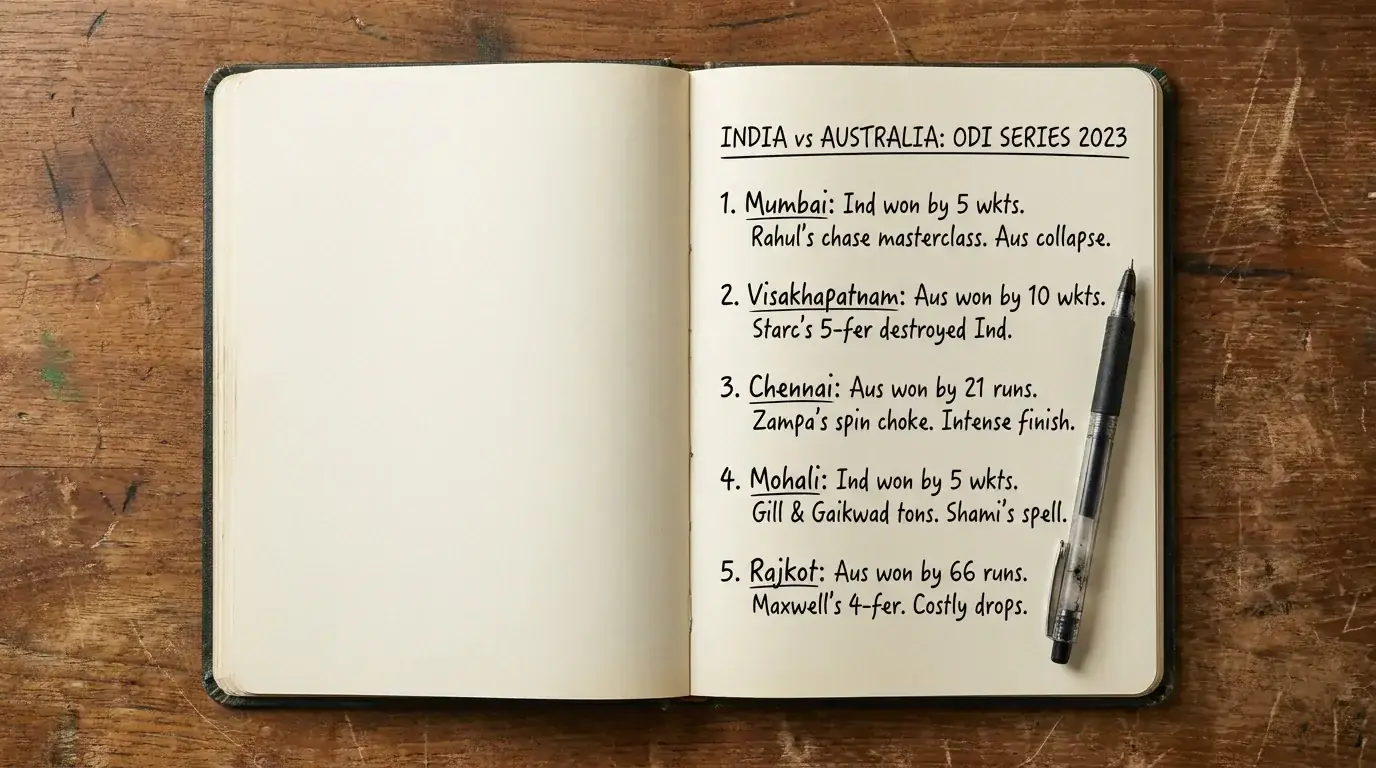
Game one is essentially a clean read on form. Game two is where you start to know whether team selections will hold. Game three onwards is where pricing inefficiencies show up – the bookmaker’s model has to weight new information against the season-long form table, and that weighting is sometimes slow. A team that gets thrashed in games one and two often drifts further on Match Winner for game three than the underlying probability would warrant. Series momentum is real, but it’s also routinely overpriced.
