


The £30 bonus that cost me £180 to unlock
Years ago, in my first IPL season as a serious bettor, I signed up to a new UK operator specifically for a £30 deposit-match bonus that the welcome screen advertised as “free money for new customers.” The bonus credited to my account within minutes of the deposit. The bet I placed with it landed. I went to withdraw and the system reminded me that the bonus carried a 5x rollover requirement on combined deposit and bonus – meaning I needed to wager £300 in total before any of the bonus winnings became withdrawable. I’d wagered £20. The £180 I needed to wager to clear the requirement went through dozens of subsequent bets, most of which lost, and by the time I’d cleared the rollover the original £30 bonus was long gone in net terms. That was the moment I learned the fundamental lesson of UK betting bonuses: they’re rarely the simple gift they appear to be on the welcome screen, and the terms attached to them often consume more value than the bonus provides.
This is about how cricket betting bonus terms actually work at UK-licensed operators – what the headline numbers mean, where the value sits, and how to read terms before accepting bonuses so the promotion works for you rather than against you.
The basic structure of UK betting bonuses
UK bonus offers come in several common structures. The deposit match (deposit £20, get £20 in bonus funds) is the most familiar. The free-bet credit (place a qualifying bet of £10, receive a £10 free bet) is structurally different – the free bet is non-withdrawable and only the winnings from the free bet (excluding the stake) return to the cash balance. The risk-free bet (place a bet, get the stake refunded as bonus if it loses) gives downside protection on a single qualifying bet. The odds boost (specific market priced at enhanced odds for a limited time) gives improved value without a separate bonus credit.

Each of these structures has different headline appeal and different actual value. The deposit match looks like the most generous offer because the headline number can be large (some welcome bonuses match deposits up to £100 or more), but the rollover requirements typically attached to deposit-match bonuses make the actual expected value much lower than the headline suggests. The free bet looks more modest but is usually easier to extract value from because the rollover terms are simpler. The odds boost is the cleanest because there’s no rollover at all – the value is in the enhanced odds on the specific market, and once you’ve used the boost, the bet operates like any other.
The 2025 statutory levy on gambling operators, which came into force on 6 April 2025 at rates between 0.1% and 1.1% of gross gambling yield, has shifted the economics of bonus offering for operators. The combined cost of the levy and the existing remote gaming duty has made operators more cautious about high-value bonus offers, and the bonus market has shifted somewhat toward more modest welcome offers with cleaner terms. The shift is gradual but real, and the most punter-hostile bonus terms from earlier years are less common in the current UK market.
What “wagering requirement” actually means
The wagering requirement, also called rollover or playthrough, is the multiplier that determines how much you need to wager before bonus funds become withdrawable. A 5x wagering requirement on a £30 bonus means £150 of cumulative wagering. A 10x requirement on the combined deposit and bonus (£30 + £30 = £60) means £600 of cumulative wagering. The wagering can be on any markets that meet the operator’s eligibility criteria, but only certain markets typically count toward the requirement.
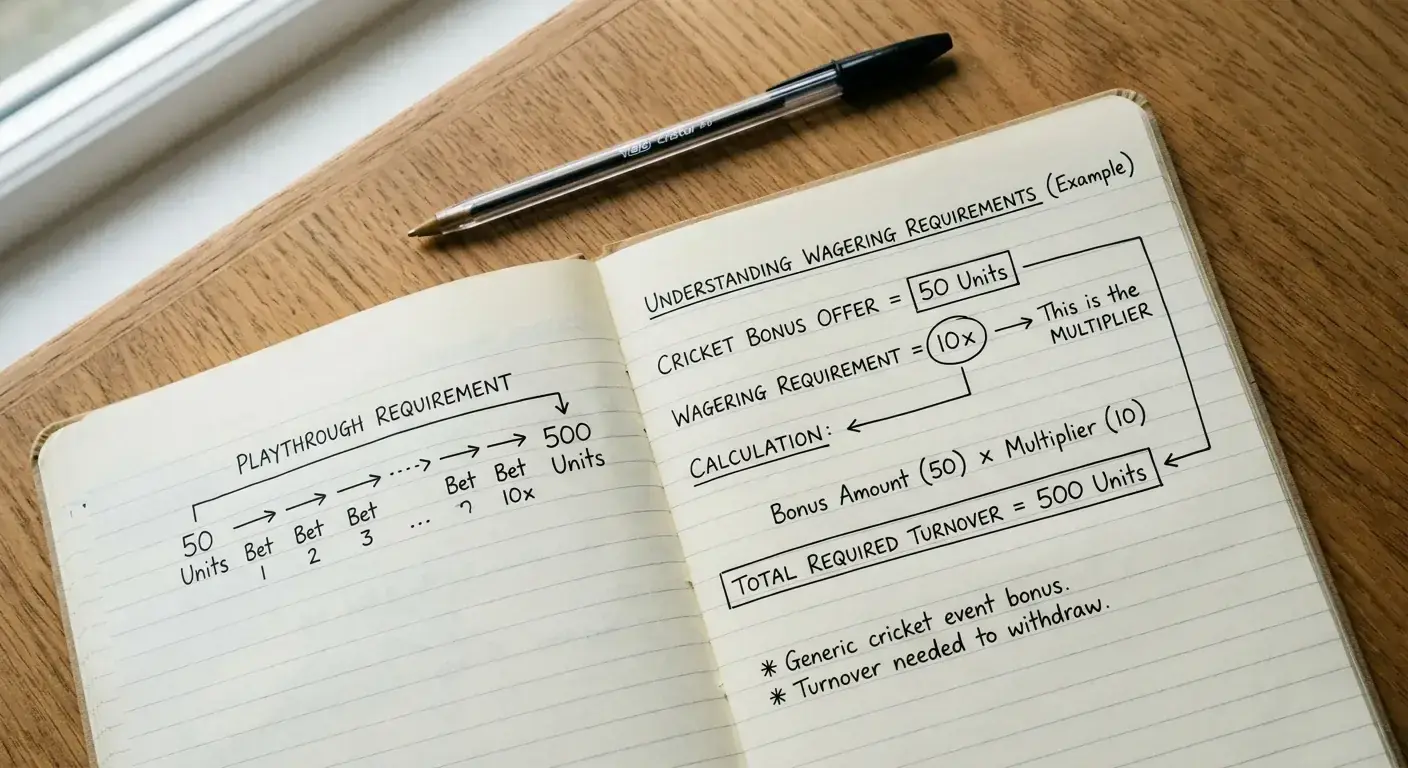
The mathematics of wagering requirements compound against the punter. A 5% house margin per bet, applied across £150 of wagering to clear a £30 bonus, costs an expected £7.50 in margin. The net expected value of the bonus is £30 minus £7.50, leaving £22.50 of positive expected value. That’s still positive, but it’s far less than the headline £30 suggests, and the variance is high – most punters lose far more than £7.50 in the process of wagering £150 because individual bets don’t return their expected value perfectly.
The 10x requirement compounds the issue further. £600 of wagering at 5% margin costs £30 in expected margin, which exactly offsets the bonus value. A 10x bonus with 5% per-bet margin has zero expected value at the breakeven point, and any margin above 5% per bet makes the bonus negative-EV. This is why the wagering requirement number is the most important single piece of information on any bonus offer.
Minimum odds and excluded markets
UK bonus terms typically restrict the markets that count toward wagering requirements. Minimum odds requirements (usually 1.5 or 1.7 decimal, equivalent to 1/2 or 7/10 fractional) prevent punters from clearing rollovers by repeatedly backing strong favourites at short odds. Excluded markets often include odds-on selections, cash-out positions, both-sides-of-a-market hedging, and specific markets where the operator’s margin is thinner.

For cricket bettors, the minimum odds requirement bites particularly hard on outright tournament markets where a heavy favourite might be available at 1.4 – below the typical 1.5 minimum. Excluded market types vary significantly by operator. Some exclude all in-play cricket from bonus wagering. Others restrict bonus wagering to outright markets and exclude match-result and player markets entirely. Reading these exclusions is essential because a bonus that “looks like” it covers all cricket markets may turn out to count only specific market subsets toward the rollover.
Free bet mechanics
Free bets work differently from deposit-match bonuses because the stake isn’t returned with winnings. A £10 free bet placed on a selection at 2.00 settles for £10 in winnings if it lands, not £20. This is the structural feature that makes free bets less valuable than they appear at first glance – half the apparent value of the bet is the stake, which the punter doesn’t actually get.

The mathematics of free bet value depends on the odds you place the free bet at. A £10 free bet at 2.00 has a true expected value of around £4 to £5. The same free bet at 4.00 has expected value of around £7 to £8 because the odds extract more value from the stakeless structure. The general principle is that free bets are best deployed on longer-odds selections where the stakeless structure provides the most leverage. Most free bet promotions include minimum odds requirements and limited time windows for use, and letting free bets expire is one of the most common bonus-related mistakes.
Odds boosts and price-enhanced promotions
Odds boosts are the cleanest UK bonus structure because they don’t involve separate bonus credits or rollover requirements. The operator offers an enhanced price on a specific market for a limited time, and the punter who places the bet at that price gets the enhanced odds applied to their cash stake. The bet operates exactly like any other cash bet.

The value of an odds boost depends on how much the enhancement actually moves the price. A boost from 2.00 to 2.10 on a 50% probability selection adds 5% expected value. A boost from 4.00 to 5.00 on a 25% probability selection adds significantly more in relative terms. Cricket-specific odds boosts often appear around major events – Ashes Tests, IPL playoffs, ICC finals – where operator competition is highest. These boosts can offer genuine value when the underlying market read aligns with the boosted selection. They offer negative value when used to chase selections that wouldn’t have been bet otherwise.
Acca insurance and refund promotions
Acca insurance promotions refund the stake (usually as a free bet credit rather than cash) on multi-leg accumulators where exactly one leg lets the bet down. The promotion is designed to retain customers who would otherwise abandon multi-leg betting after consistent near-misses. The structural value is real but limited – the refund is usually capped at a maximum amount (often £20 or £25) and applies only to accumulators of a minimum size at minimum odds per leg.
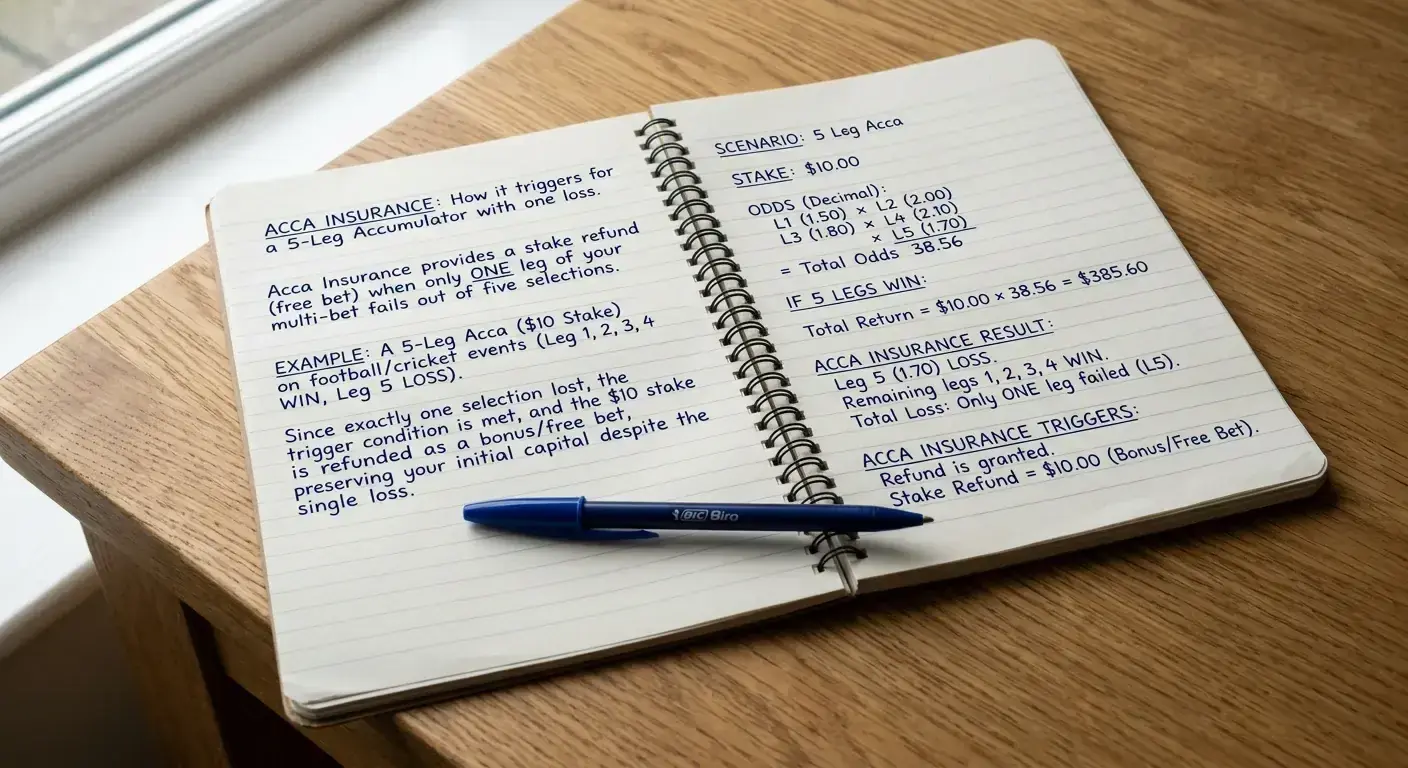
The economic logic favours the operator over the customer in expectation. The compounded margin on 5-leg accumulators with 5% per-leg margin runs around 25% combined. The insurance refund partially offsets one specific failure mode (one-leg miss) but doesn’t address the broader negative expected value of large multi-leg accumulators. For punters who are going to bet large accumulators anyway, acca insurance is incremental positive value. For punters who wouldn’t otherwise bet large accumulators, the promotion prompts bets they wouldn’t otherwise make.
The 18+ and responsible gambling layer
All UK bonus offers are subject to age verification (18+) and the operator’s broader responsible gambling framework. The Betting and Gaming Council’s industry standards require that bonus promotions are not directed at vulnerable customers and that the terms are presented clearly. The Gambling Commission’s licensing conditions reinforce these requirements with regulatory oversight that can result in enforcement action for non-compliant operators.
The framework around bonus presentation has tightened substantially in recent years. Operators are required to display the full terms accessibly, to avoid misleading headline claims, and to ensure that bonuses aren’t promoted to self-excluded customers or those who have shown signs of harm. Gambling Commission CEO Andrew Rhodes has framed the broader reform agenda as the largest programme since the 2005 Act.
How I assess a bonus offer now
The framework I use to assess UK cricket betting bonuses has three parts. The first is the headline value adjusted for wagering requirements. A £50 bonus with 10x rollover at 5% margin is worth around zero in expected value. A £20 bonus with 4x rollover at 5% margin is worth around £16 in expected value. The headline value tells me almost nothing about actual value.

The second is the market eligibility – what bets count toward the rollover and at what minimum odds. Bonuses that restrict eligibility to outright markets or exclude in-play are less valuable for cricket bettors whose normal bets aren’t in those segments. Bonuses that allow standard match-result and player markets at 1.5+ minimum odds align with normal cricket betting patterns and produce real value when the underlying activity would have happened anyway.
The third is the time pressure. A bonus that needs to be cleared within 7 days forces accelerated betting that may not align with planned activity. A bonus with 30 days or no time limit allows the wagering to happen across natural betting patterns without prompting unnecessary bets. The longer the window, the more the bonus value can be captured without distortion to normal betting habits.
What I won’t sign up for
The bonus offers I now decline are those with 10x or higher rollover requirements, those with 7-day clearance windows, those that restrict eligibility to specific market types that don’t align with my normal activity, and those that combine deposit and bonus in a wagering calculation that effectively requires wagering 20-30 times the actual bonus value to extract any return. These structures are designed to look generous and deliver less than they promise, and the time invested in clearing them is rarely worth the marginal value they provide.
The offers I do engage with are odds boosts on selections I would bet anyway, free bets on markets where I have a strong read, and modest welcome bonuses with clear and reasonable terms. The framework that’s worked best is to treat bonuses as supplementary to the broader UK gambling framework rather than as a primary reason to bet. The cricket activity comes first. The bonuses come second. The terms determine whether the bonus is worth the wagering it requires. The IPL final scenario that started this article is the lesson I keep returning to – the headline number on a welcome bonus is the least important piece of information on the page, and the terms below it are what actually determine whether the offer is value or marketing.
