
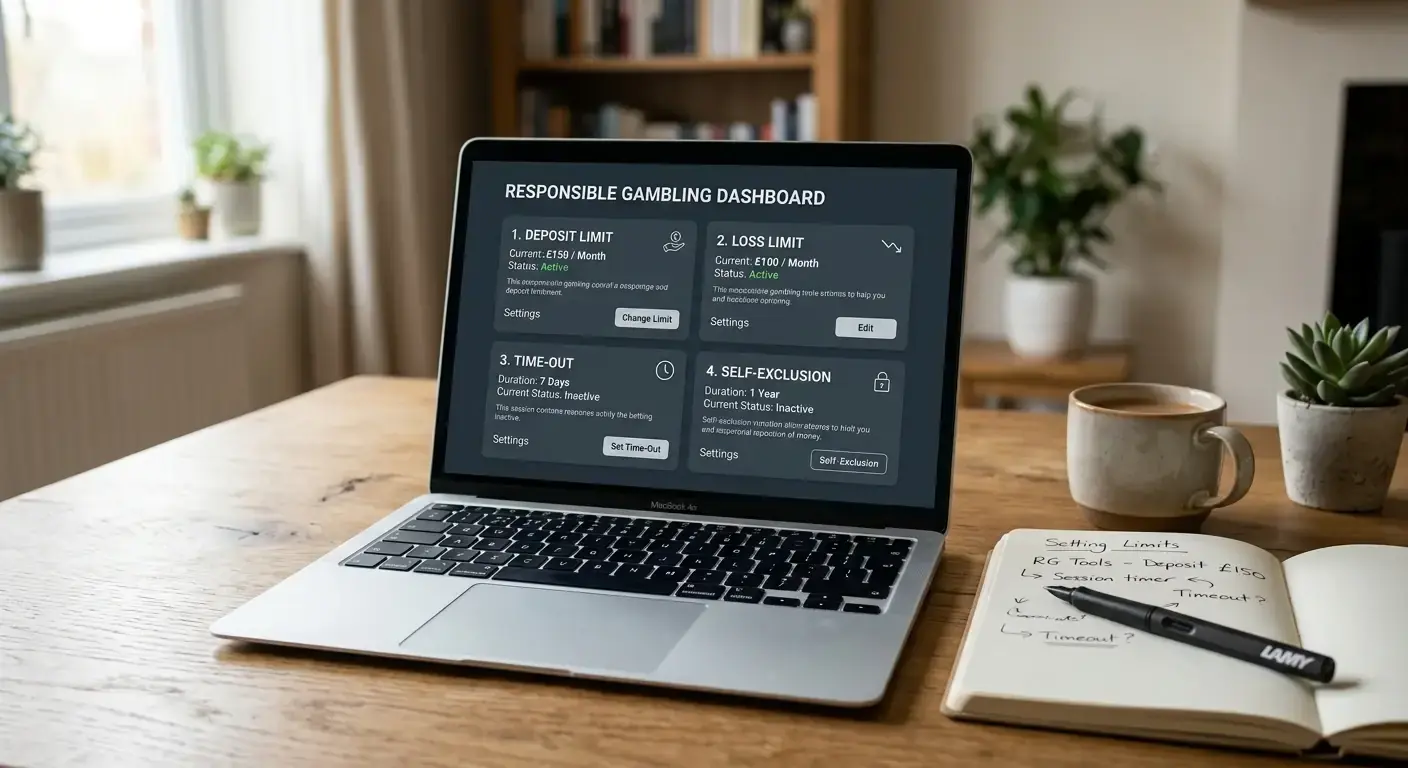

The IPL season I learned which tool I actually needed
Three IPL seasons ago I went into the tournament with a casual approach to betting that had worked fine through previous English summers but didn’t survive the relentless pace of an IPL schedule. Two matches a day, six weeks of fixtures, in-play markets running ball by ball. By the end of week three I’d burnt through more than I’d planned, my evenings had become entirely about betting rather than watching the cricket, and the satisfaction I usually got from the game had quietly drained out of it. The next morning I went into my account settings and started looking at the responsible gambling tools the operator offered. I’d seen them before – they’re not hidden, they’re on every UKGC-licensed site – but I’d never used any of them seriously. I set a daily deposit cap, a session time limit, and reality checks at 30-minute intervals. The rest of that IPL season was completely different. The tools weren’t dramatic. They didn’t stop me betting. They just structured the betting in a way that prevented the drift that had taken over the first three weeks.
This is about the responsible gambling tools UK cricket bettors can use, what each one actually does, and where the tools fit in a sensible betting framework rather than as an emergency response.
The toolkit that comes standard
Every UKGC-licensed cricket betting site is required to offer a defined set of responsible gambling tools. The standard set includes deposit limits, loss limits, session time limits, reality checks, time-out (cooling-off) periods, and self-exclusion. The tools are accessible from the account settings menu and the language used to label them is standardised enough across operators that finding them is straightforward regardless of which site you’re using.
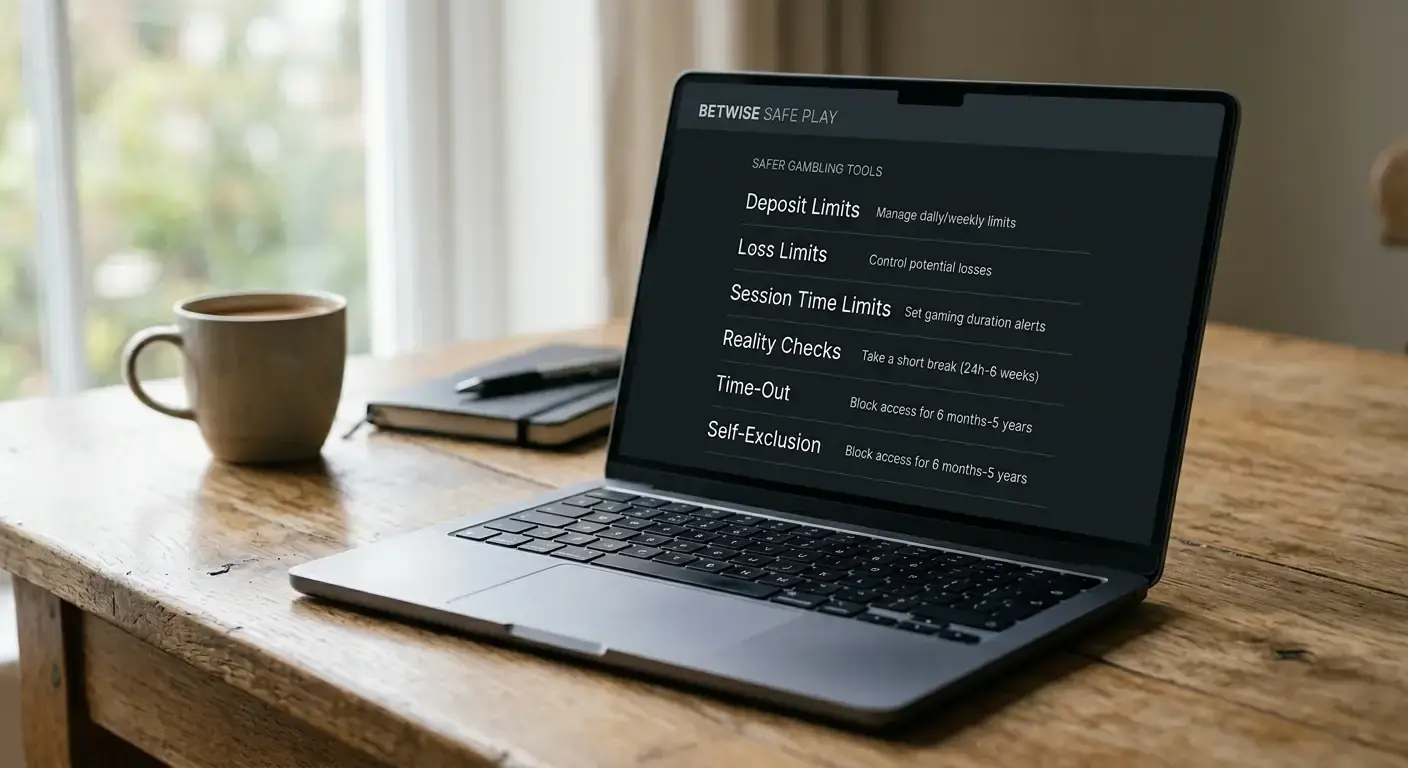
The required toolkit reflects the Gambling Commission’s licensing conditions and the broader regulatory framework that’s been substantially updated over the past few years. The Gambling Commission CEO Andrew Rhodes has described the current reform programme as the largest since the Gambling Act 2005, and the responsible gambling tools available to cricket bettors are one of the practical results of that programme. The Betting and Gaming Council, whose CEO Grainne Hurst has emphasised the importance of evidence-based industry standards, has supported the integration of these tools as part of the licensed sector’s distinction from offshore alternatives.
The toolkit isn’t optional for operators. Every licensed UK cricket betting site must offer all of these tools, must make them accessible without unreasonable friction, and must implement them faithfully when customers activate them. The Commission monitors compliance, and enforcement action follows when operators fail to apply customer-set limits or design interfaces that obstruct access to the tools.
Deposit limits and how they actually work
The deposit limit is the most direct tool in the responsible gambling toolkit. The customer sets a maximum amount that can be deposited into the account over a specified period – typically daily, weekly, or monthly. Once the limit is set, the operator’s system blocks deposit attempts above that amount until the period resets. The limit is binding on the operator; it can’t be overridden during the period in which it’s in force.

The structural feature that makes deposit limits effective is the asymmetric friction on changing them. Reducing a limit takes effect immediately. Increasing a limit takes at least 24 hours and often requires re-verification of identity. This asymmetric friction is deliberate – it prevents impulsive limit increases during emotional betting sessions while allowing customers to tighten limits the moment they decide to do so.
Loss limits and the difference from deposit limits
Where deposit limits cap inputs, loss limits cap net outcomes. A loss limit specifies the maximum amount the customer is willing to lose over a period. The operator tracks net activity (deposits minus withdrawals minus account balance changes from settled bets) and blocks further betting when the loss limit is reached, regardless of whether the deposit limit has been hit.

Loss limits work differently for different bettors. For a customer who deposits steadily and bets steadily, the loss limit triggers when the net outcome turns sufficiently negative. For a customer who deposits substantially and then wins, the loss limit may never trigger because the net outcome stays positive. The tool addresses a different question than the deposit limit – not “how much am I willing to put in” but “how much am I willing to lose.”
The interaction between loss limits and cricket markets is straightforward. A cricket bettor with a £200 monthly loss limit can bet whatever volume the limit allows, but the moment cumulative losses reach £200 the betting stops for that period. The tool doesn’t prevent winning streaks or limit the upside; it caps the downside at a known amount. This is particularly useful for bettors who want to engage with substantial volumes during big events (Ashes, IPL playoffs, ICC finals) but want a structural backstop against runaway losses.
Session time limits and reality checks
Session time limits set a maximum continuous logged-in time. When the limit is reached, the system automatically logs the customer out and prevents login again for a set period (typically 30 minutes or longer). The tool addresses the cognitive depletion that happens during long betting sessions, particularly during in-play cricket where the constant stream of market updates can sustain engagement well beyond the point of useful decision-making.
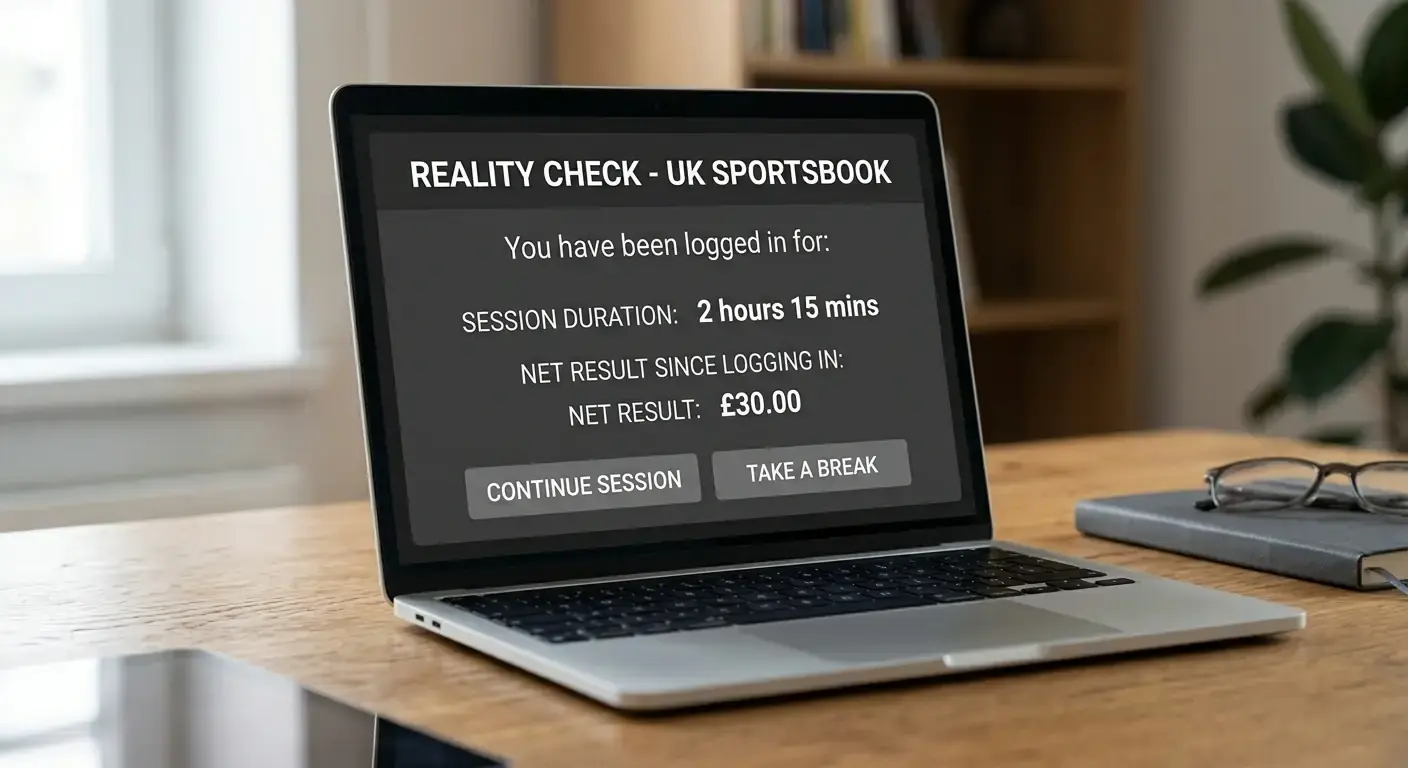
Reality checks are softer but related. The customer sets an interval (often 15, 30, or 60 minutes) at which the system displays a popup showing the current session duration, the net win/loss for the session, and a prompt to consider whether to continue. The reality check doesn’t force a break – the customer can dismiss it and continue – but the prompt itself disrupts the flow that can otherwise sustain extended betting without conscious reflection.
I use both tools differently. Reality checks at 30-minute intervals are my default during in-play cricket. They’re disruptive enough to break the flow without forcing a session end. Session time limits are reserved for longer events – Ashes Tests where I might otherwise spend five hours logged in across a day – and the auto-logout enforces a break that the reality check alone wouldn’t. The combination handles different betting modes without either tool being too restrictive for normal use.
Time-outs and cooling-off periods
Time-outs are voluntary short-term breaks from betting at a specific operator. The customer chooses a period (typically 24 hours to 6 weeks) during which the account is locked from betting activity. Unlike self-exclusion, a time-out is per-operator rather than across the licensed industry, and the periods available are shorter.

The use case for time-outs is the deliberate short-term break. After a frustrating weekend of losing bets, a 7-day time-out forces the gap that emotional momentum might otherwise close. After a big winning weekend, a time-out can prevent the “I’m running hot” effect that often produces over-betting in the days that follow. The tool is less serious than self-exclusion but more structural than just deciding to take a break, because the system prevents access during the chosen period rather than relying on personal willpower.
Self-exclusion via the operator
Self-exclusion at the operator level is more substantial than a time-out. The customer sets a longer exclusion period (typically 6 months to 5 years), and the account is locked from access for that period. The operator removes the customer from all marketing channels and blocks login attempts. The customer can’t reverse the exclusion during the period – the duration is binding.

Operator-level self-exclusion blocks only that specific operator. The customer can theoretically continue betting at other UKGC-licensed operators. This is a meaningful limitation if the goal is to take a complete break from gambling, but it’s a useful targeted tool for customers who have specific issues with a particular operator’s platform or marketing.
The relationship with the national scheme is important. GamStop, the UK national self-exclusion scheme, blocks every UKGC-licensed operator simultaneously and is the comprehensive option for customers who want a complete break from licensed UK gambling. The choice between operator-level exclusion and GamStop depends on whether the issue is operator-specific or broader.
Affordability checks and financial vulnerability monitoring
The most recent additions to the UK responsible gambling framework are affordability checks and financial vulnerability monitoring. These aren’t customer-set tools – they’re operator-side monitoring that runs automatically based on activity patterns. The framework triggers reviews at thresholds that vary by operator, with the reviews including assessment of whether the gambling activity is consistent with the customer’s known financial capacity.

The framework has been controversial in industry debate. The Betting and Gaming Council has estimated that 1.5 million Britons are active on black-market gambling sites, with 28% of regulated punters potentially shifting to illegal sites if reforms tighten further. For cricket bettors, the practical effect is that substantial activity patterns may trigger affordability requests. Responding promptly and accurately is the practical approach.
How the tools fit a sensible cricket betting strategy
The framework that’s emerged from years of using these tools is that they work best as routine structure rather than emergency response. The deposit limit I set during the IPL season I described earlier wasn’t an emergency intervention – it was a structural commitment that prevented the drift before it could happen. The reality checks during in-play sessions aren’t reactions to losing streaks – they’re standing structure that disrupts unconscious extended sessions.
The mental model that works for me is to think of the tools as infrastructure that protects good decision-making rather than as restrictions that limit it. A deposit limit doesn’t prevent me from making any individual bet I want to make. It prevents me from making bets that the calmer version of me wouldn’t endorse. The 2025 statutory levy on gambling operators, in force from 6 April 2025 at rates between 0.1% and 1.1% of gross gambling yield, funds research, education, and treatment for gambling harm – the broader infrastructure that supports the operator-level tools. Around 0.5% of UK adults meet the problem gambling threshold according to UKGC research, with 1.8 million classified as at-risk.
Where the tools have their limits
The tools aren’t magic. A customer who’s determined to bet beyond their means can find ways around individual operator limits – opening accounts at additional operators, treating limits as obstacles rather than commitments. The tools work when they’re being used in good faith by customers who want them to work.
The other limitation is that the tools address the activity but not the underlying drivers. A customer who’s betting to escape stress, to chase losses, or to fill an emotional gap that gambling isn’t actually filling won’t be helped by structural betting limits alone. Addressing the drivers usually requires support beyond what a betting site can provide – talking to friends and family, talking to a GP, talking to GamCare or the National Gambling Helpline (0808 8020 133, free and confidential, 24/7).
Why these tools matter beyond the individual account
The summary I’d offer is that the responsible gambling toolkit at UK cricket betting sites is one of the most developed consumer protection frameworks in any regulated gambling market globally. The tools are mandatory, the implementation is monitored, and the design has been refined over years of regulatory iteration. For UK cricket bettors who use the tools deliberately, they provide structure that makes sustained betting possible without the drift that catches less structured punters.
The IPL season that taught me to use these tools properly is the season I keep returning to as a reference. The cricket hadn’t changed. My read of the markets hadn’t changed. What had changed was the absence of structure around the activity, and the absence had let the activity expand beyond what I actually wanted from it. The tools restored the structure, and the cricket became enjoyable again. That’s not a dramatic outcome. It’s a routine one. And it’s the routine outcome that the tools are designed to produce – not crisis intervention, but the steady structure that prevents crises from forming.
