


The single feature that changed how casual UK punters bet
The first cricket bet builder I built was a four-leg slip on an England-India ODI, sometime around 2019, and I lost it on the last leg by half a wicket. I remember staring at the cash-out value tick down across the death overs and realising I’d just paid the bookmaker a teaching fee. The lesson stuck. Bet builders are seductive, accessible, and structurally designed to feel like good value when the maths is doing something else.
This is the read for any UK punter who clicks through to the bet builder page and wants to actually understand what’s happening to the price.
What a bet builder actually is
A bet builder lets you combine multiple markets from the same match into a single multi bet. England to win, Joe Root Top Batter, total match runs over 280.5, fall of first wicket between 11-20 – all on one slip, settled as a single combined outcome. If every leg wins, the bet pays; if any leg loses, the whole thing loses.

Mechanically, a bet builder is a same-game multi with one important wrinkle: the legs are correlated. England winning is correlated with England’s openers scoring runs, which is correlated with the match total being high, which is correlated with the fall of first wicket being later than usual. Those correlations matter, because they break the simple multiplication that drives normal accumulator pricing.
That’s the structural fact most casual punters don’t realise. A standard four-leg acca multiplies the prices of four independent events. A four-leg bet builder can’t do that – the operator has to discount for correlation between the legs, which means the final price is shorter than the multiplied prices would suggest.
The Gambling Commission’s Chief Executive Andrew Rhodes made an unrelated point about market integrity at a recent industry forum that’s worth paraphrasing here: “I do not understand why anyone in the licensed industry would want to be in business with a company that is supporting illegal competition.” The discipline of UK-licensed bet builders – including the correlation-aware pricing they apply to multi-leg slips – is one reason UK-regulated bookmakers price these slips differently to offshore equivalents that may not be doing the correlation maths properly.
Typical cricket bet builder legs
The bet builder page on a UK cricket fixture typically offers six or eight categories of leg. Match Winner, Run Lines, Player Runs Over/Under, Player Wickets Over/Under, Match Total Runs, Match Total Wickets, Boundaries Markets, Player Milestone bets.
The leg combinations that work cleanly are the ones with low or zero correlation. Backing one team to win combined with the opposing team’s bowler to take a wicket has near-zero correlation – opposing-side outcomes from independent sources. Backing the same team’s batter to score 50 and the team to win is heavily positively correlated, which means the operator builds a meaningful discount into the multiplied price.

The leg combinations that pay are the genuinely independent ones. A match total runs Over line combined with a player wickets Over on the bowling side is roughly independent – one rewards batting volume, the other rewards wicket-taking, and they’re driven by different parts of the cricket. A match winner combined with method of dismissal for the first wicket is roughly independent – the winner is determined across the whole match, the first-wicket method is determined in the powerplay.
Learning to spot the independent combinations is the actual skill in bet builder construction. Most casual builders stack legs in the same direction – they pick the favourite team to win, that team’s opener to score, and the match total to be high. All three legs are positively correlated, which means the operator’s discount is large and the final price is shorter than the builder realises.
Correlation and how the price gets compressed
The technical truth about bet builders is that they compress price when legs are correlated. The compression is asymmetric – positively correlated legs pay less than the multiplied price, negatively correlated legs would in theory pay more but operators rarely allow obviously negative-correlated combinations on the builder.
A worked example. Suppose England are 5/6 (decimal 1.83) to win an ODI, and Joe Root is 6/4 (2.50) for Top Batter. A simple multi would price the two legs at 1.83 × 2.50 = 4.58, or roughly 7/2 fractional. The actual bet builder price for those two legs is likely to come back at around 3.50 or 3.75 decimal – a meaningful step shorter, because Root’s chance of being Top Batter is materially higher when England win, and the operator has to discount for that linkage.
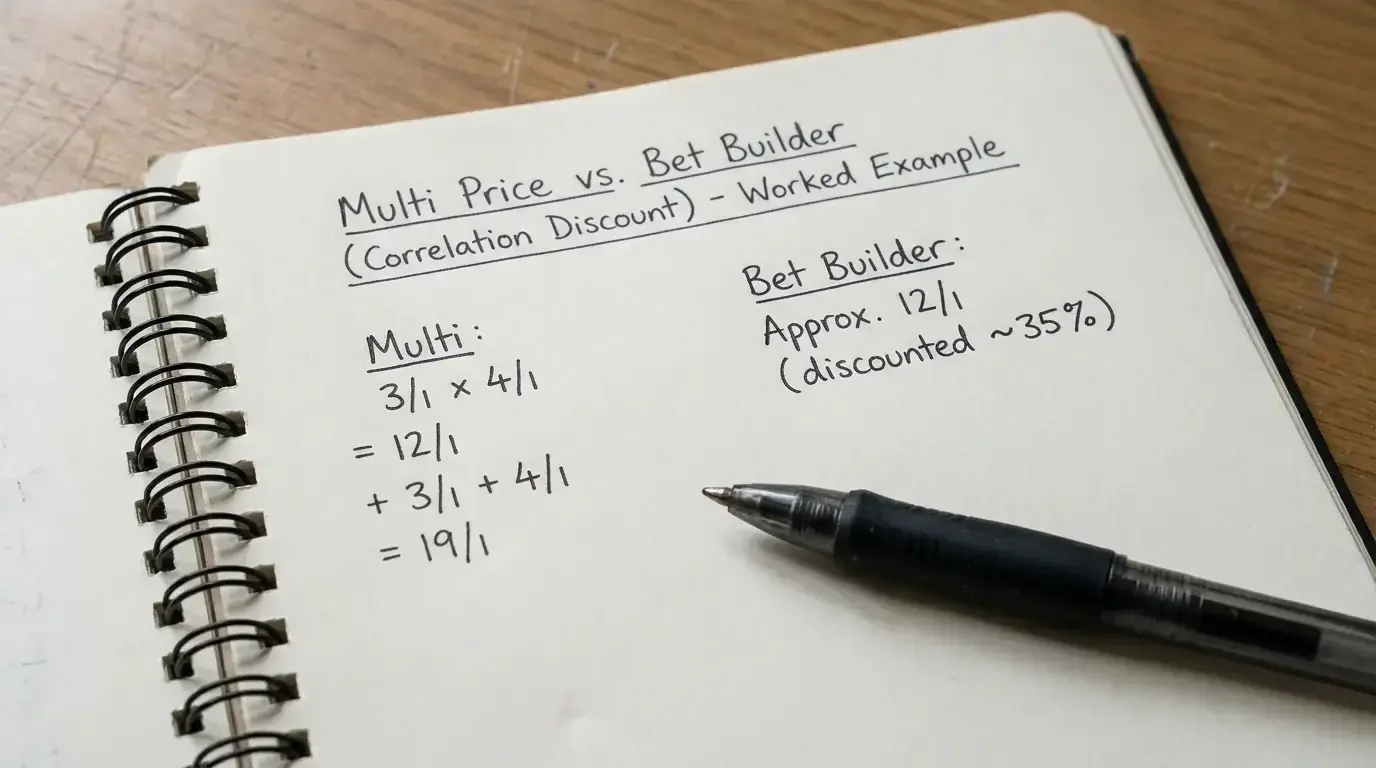
The compression gets larger with more legs. A six-leg builder with all legs in the same direction can come back at a price 30-40% shorter than the multiplied legs would suggest. That’s a substantial bite. Casual punters often interpret the displayed builder price as a single number and stake accordingly, without realising they’ve paid a heavy correlation tax.
What this means in practice is that bet builders are best used either for entertainment (small stakes, lots of legs, fun outcome) or for very specific independent-leg constructions. They’re not a good way to extract value from a single match when you have a strong cricket read – a properly sized individual bet on the highest-confidence leg usually pays more, with less variance, than the same conviction expressed through a multi-leg builder.
The deeper market-by-market context that drives those correlations sits inside the underlying coupon – match result interacts with run-line, top batter interacts with total runs, method of dismissal interacts with bowler wickets. The full picture of the individual markets that feed into any bet builder is covered in the format-by-format walkthrough of cricket betting markets, which is the right place to start before constructing any multi-leg cricket slip.
Request a bet versus standard builder
Some UK-licensed operators offer a “request a bet” feature alongside the standard bet builder. Request a bet lets you submit a custom multi – combinations not available on the builder page – and the trading desk prices it manually, usually within a few minutes.

The structural difference is in who builds the price. The standard builder uses pre-computed correlation models. The request a bet feature uses a human trader applying judgement. The advantage is broader market availability; the disadvantage is wider margins, because the trader builds in protection against the punter knowing something the model doesn’t.
Request a bet is genuinely useful for unusual combinations – “Joe Root to score 50 and England to win by more than 30 runs”, for example – that don’t have pre-set pricing on the builder. The trader prices it, you accept or decline, and the slip locks in. For combinations the builder already handles, request a bet typically gives you a slightly worse price than building the same multi on the builder page.
One quirk worth knowing: request a bet markets often don’t qualify for cash-out, while standard builder slips usually do. If you might want to take an in-running cash-out value, build on the standard builder rather than submitting the same legs via request a bet.
Where the bet builder pays for itself
Bet builders work best when you treat them as entertainment, not as a value optimisation strategy. A small stake on a six-leg construction with a fun price is a perfectly reasonable use of the product. A meaningful stake on a four-leg builder, when you could have backed the highest-conviction leg directly at a better effective price, is the casual mistake the operator quietly thanks you for.
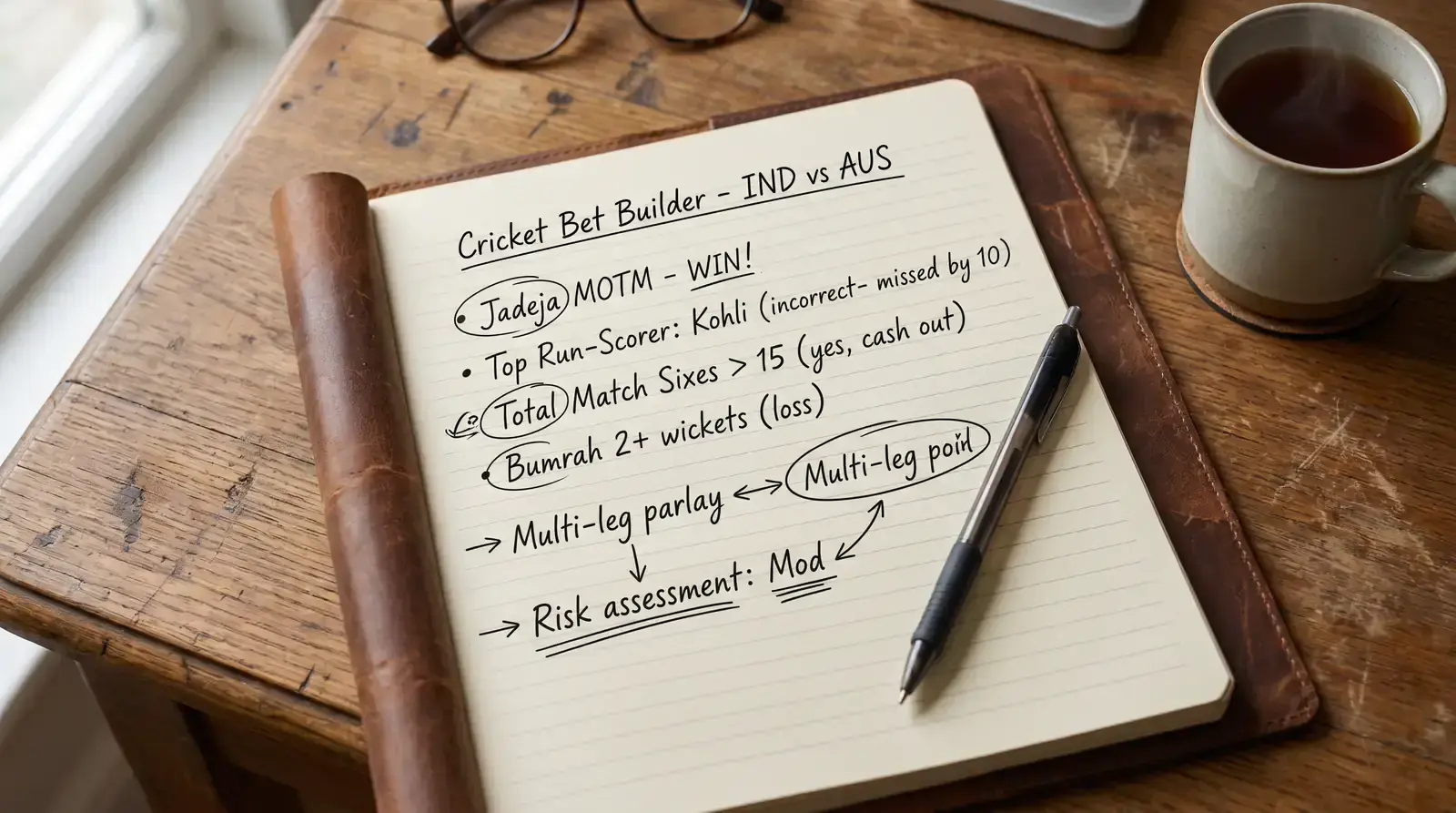
The discipline is to pick the leg you’re most confident in and stake that one harder. Everything else – every additional leg, every fun combination – is the operator extracting margin in exchange for the entertainment value of the multi. Sometimes that’s worth paying for. Often it isn’t.
