


A hundred-ball tournament that finally arrived
I was sceptical about The Hundred. Most cricket writers were. A 100-ball format wedged into an English summer that already had a perfectly functional T20 Blast felt like an answer to a question nobody had asked. Five seasons in, the numbers and the markets have stopped arguing with me. The Hundred is now a real betting tournament – and the changes it makes to T20 shape the prices in ways that catch out punters who treat it as Twenty20-minus.
This is the guide for anyone who watches The Hundred each August and wants to understand why their usual T20 instincts keep being half a step out.
What 100 balls changes for a bettor
The headline is obvious: each side gets 100 balls instead of 120. But the structural changes underneath that headline matter more for pricing.
A bowler can deliver ten balls in one go before being switched. The maximum overs per bowler are split into five-ball blocks instead of six-ball overs, and a captain can run two five-ball blocks back-to-back with the same bowler. That changes the rhythm of an innings – your best bowler can be deployed in a single ten-ball spell instead of forced to come back later, and your worst bowler can be hidden behind a tactical timeout.

The tactical timeout itself is the second hidden lever. Each side gets a strategic two-and-a-half-minute break in the field, and how the captain uses it shapes the back-end run rate. A timeout called between balls 60 and 80 of the chasing innings is a clear sign the field is concerned – bookmakers move the run-line by half a run within seconds.
The third change is the par-score recalibration. A par score in a T20 Blast game is roughly 165-175. In The Hundred, the same ground with the same conditions might pay par at 150-160 because you’ve taken twenty balls out of the innings. T20 punters who haven’t recalibrated keep backing the Over on a 150 line that’s actually a high-side number for the format. That mismatch is the single most common Hundred betting mistake I see.
Outright and eliminator markets
The Hundred has a short tournament structure – eight teams, fourteen group games per team, then a three-match playoff system that compresses the knockout phase into a single weekend at Lord’s. That structure produces a particular market shape.
The outright winner market is liquid throughout the group stage because the season is short enough that early form is genuinely predictive. A team that wins three of its first four games has roughly a 40-45% probability of making the playoffs, and the market prices it accordingly. That’s quite different to a T20 league with a fifty-game season, where early form is mostly noise.

The Eliminator and Final markets open after the group stage closes and run for about 48 hours before the knockout weekend. These are the most efficient prices in the entire Hundred betting calendar – the market has watched fourteen rounds of cricket and now has to price four games. If you’re going to bet The Hundred outright, the playoff weekend window is the one to wait for.
To Win Group, Top Group Finish and Wooden Spoon markets sit alongside the outright. Wooden Spoon – the bet on the worst team in the tournament – has more value than most punters give it credit for, because the bottom of the table in The Hundred is structurally about three teams who chronically under-recruit overseas talent. The market often prices a four-way Wooden Spoon race when it’s really a two-team race.
Top player markets
Top Tournament Runs and Top Tournament Wickets work the same way as their IPL equivalents – volume wins, not quality. The batter who plays all fourteen group games and bats in the top three usually wins the runs title, regardless of who has the highest strike rate. Hundred openers face the new ball for a maximum of 25 balls before the powerplay ends, which gives them a slightly compressed but very predictable run-scoring window every game.
Bowler markets are noisier. The five-ball block structure means a single bowler can take three or four wickets in one sustained spell, while their teammate who bowls in fragments might end the season with twelve wickets across fourteen games. Tournament-long bowler bets reward consistency of selection more than form.

Per-match player runs and wickets markets are where the Hundred coupon gets thin compared to the IPL. UK-licensed sites carry maybe forty per cent of the prop board you’d see on an Indian site, partly because The Hundred is a younger tournament with shallower historical data for the trading rooms to model. Expect Top Batter and Top Bowler per match, runs in the powerplay, total sixes – but not the deep per-over markets you’d find on an IPL game.
Audience, engagement and what they did to the markets
The 2025 Hundred was the tournament’s strongest commercial moment yet, and the numbers had real consequences for betting markets. The ECB issued 580,000 tickets across the season, with record attendances at four of the eight grounds. Sky Sports’ group-stage audience averaged 38% higher than 2024, and BBC Sport recorded 2.2 million online viewing requests, up from 1.6 million the previous summer.
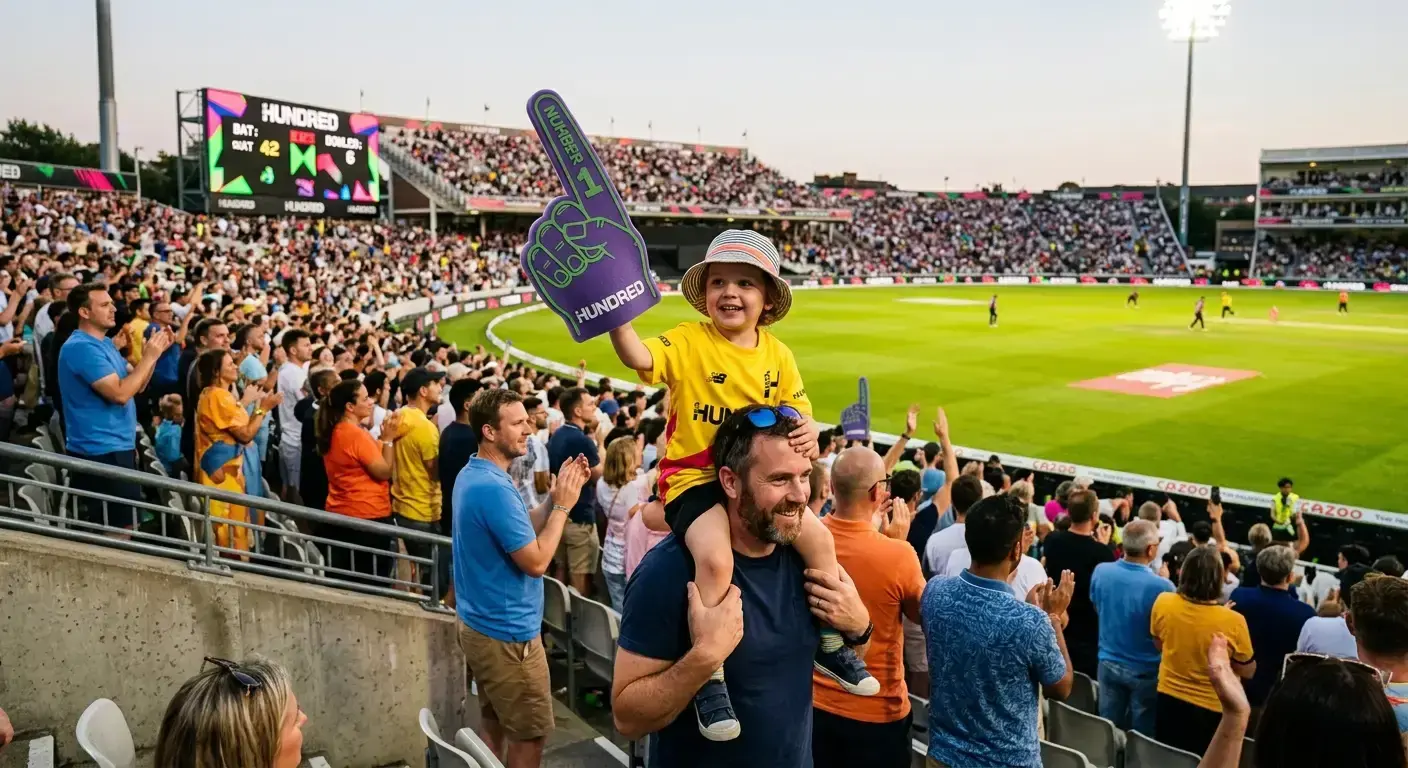
Those audience numbers translated into deeper betting markets. More TV viewers means more sportsbook traffic, which means tighter prices and broader prop coverage on Hundred games than I’d seen in previous seasons. The bookmaker margin on a Hundred Match Winner sits around 103-105% – comparable to The Blast, not the IPL, but a clear step tighter than it was in the tournament’s first three years.
The women’s Hundred is the bigger story for betting depth. The 2025 women’s competition broke the global record for total attendance at a women’s cricket tournament, with 349,401 fans across the season. Vikram Banerjee, the tournament’s managing director, framed the broader achievement clearly: “The aim of this competition from day one was to throw open cricket’s doors and bring more people into our game – these numbers demonstrate that has been happening and everyone involved in The Hundred can be rightly proud of that.”
The market consequence is that women’s Hundred prices are now competitive across UK sites in a way they weren’t five years ago – Top Batter and Top Bowler markets stay live throughout each game, and outright tournament prices are priced within a couple of percentage points of the men’s competition. The full picture of women’s cricket betting in the UK, including how the Hundred reshaped market depth across the women’s calendar, is worth a separate read.
Broadcast value rose alongside attendance – the Hundred TV deal moved from £37.8 million per year in 2024 to £54.3 million per year for the 2025-2028 cycle. That money funds the operational infrastructure, including the data feeds that betting operators rely on for in-play pricing. Higher-quality feeds equals faster price updates equals fewer obvious arbitrage gaps for the punter.
How I’d approach a Hundred betting season
Wait for the structure to declare itself. The first four rounds of group games are noise – short tournament, small sample, half the squads still finding their best XI. Round five onwards, the picture clears, and the pricing becomes properly readable. Bet selectively across the back half of the group stage, then concentrate on the playoff weekend where the market has the most information and you have the most cricket to watch.