
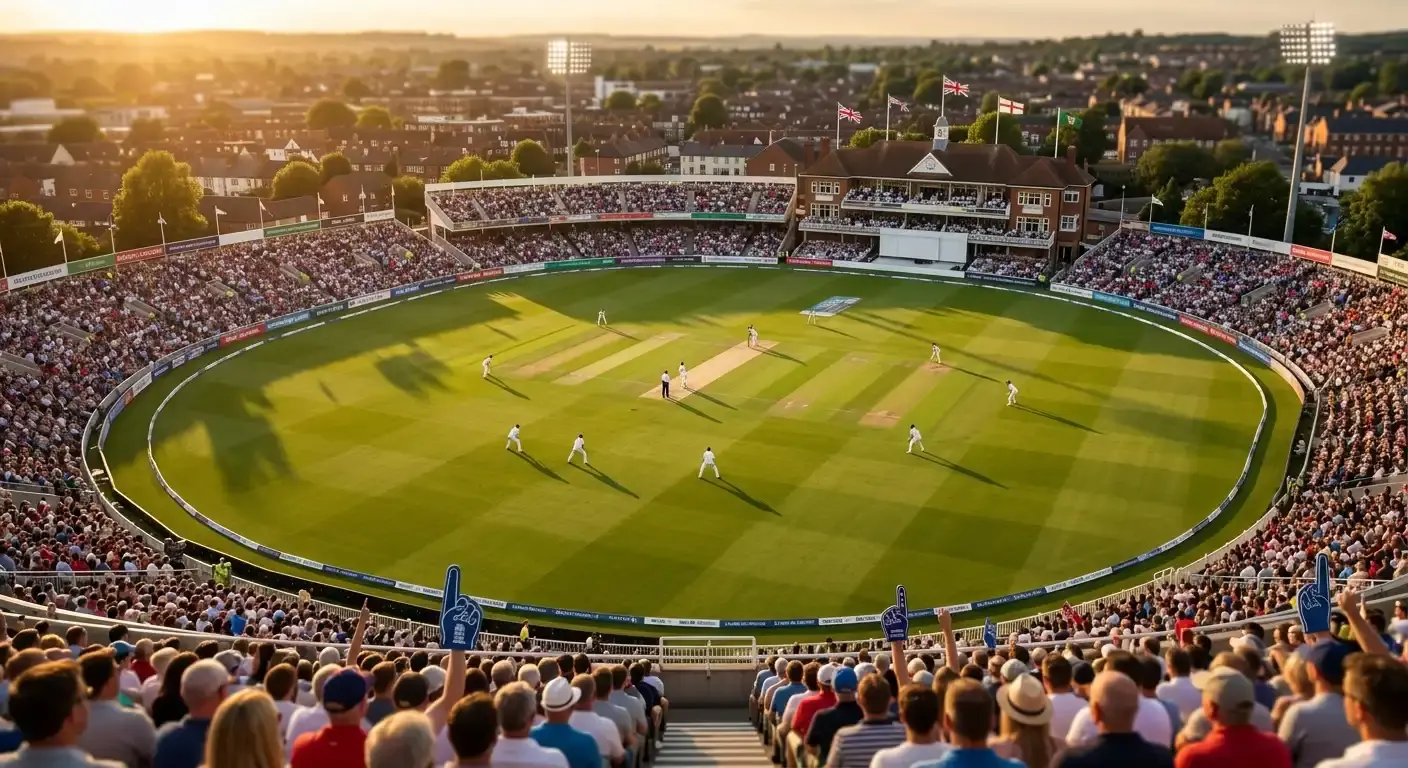

The year I stopped buying a wall calendar
For about eight years I kept a printed cricket calendar pinned above my desk. Every January I marked the Ashes Tests in red, the IPL in green, county fixtures in pencil, and the women’s series in blue. I gave up around 2022 because the calendar could not keep up. The Hundred had moved windows, the IPL had grown a play-off tail, the ICC kept rolling out new white-ball events, and the WPL had appeared seemingly overnight. Trying to plan a betting year on paper had become a fool’s errand.
Which is the polite way of saying that betting on cricket from a UK seat is now a calendar problem at least as much as it is an analysis problem. The global cricket betting market sits at USD 76.5 billion and is forecast to reach USD 151.2 billion by 2032, and that growth is concentrated in white-ball franchise formats squeezed into windows that overlap, conflict and occasionally cannibalise each other. YouGov data shows 21% of UK cricket fans placed an online sports bet in the past year. Most of them ended up backing whichever tournament was loudest that week. This guide is for the punter who wants to think a step ahead of that.
I am going to walk through the year as a UK bettor experiences it — winter through summer through back-end Asian leagues — and explain how each tournament behaves on the coupon. Not which team to back. Where the markets are deep, where the value tends to live, and which events deserve your attention versus which deserve your scroll.
The UK cricket calendar at a glance
Start with the rhythm. The UK cricket year, from a bettor’s perspective, has three loose seasons. Winter, roughly November to March, is overseas-dominated — Ashes tours, English tours of India and Pakistan, the Big Bash, the SA20, the ILT20, and the back end of the international Test calendar. Spring through summer is domestic — County Championship, Vitality Blast, The Hundred, women’s internationals at home, and visiting tour series. Late summer into autumn is the Asian and franchise stretch — the Asia Cup in various guises, the start of the next IPL planning cycle, T20 internationals across multiple countries, and the ICC events whenever they land.

The format of where you live changes which window matters. UK punters skew older — over 40% of UK cricket fans are aged 65 or older — and that demographic skew shapes which tournaments get the deepest market coverage on UK sites. Test cricket and the Ashes draw the deepest fixed-odds menus because that audience asks for them. White-ball franchise leagues get the deepest in-play menus because they generate the volume. The two audiences barely overlap, and the UK coupon is built to serve both.
The Hundred is the format that has most visibly changed this picture. 31% of The Hundred’s fanbase is aged 18 to 44 against 24% across UK cricket fans generally — meaning the competition has pulled in a different audience and pulled younger money toward English summer cricket. That has affected the depth and style of markets offered on Hundred fixtures in ways I will get to.
The Ashes cycle, broadcast, and the way the markets breathe
I have never been able to resist Ashes pricing. The series is, by some distance, the most aggressively traded cricket event for UK punters across a calendar year, and the markets on it are sharper than on almost any other Test cricket because of that volume.
An Ashes cycle is two series — one in England, one in Australia — across roughly two years. Each series is five Tests. Each Test gets its own outright, match-result, top run scorer, top wicket taker, day-by-day and session market suite. The series outright opens about six months before the first ball; the day and session markets appear hours before each Test. The peak TV audience for an Ashes Test in the UK reached 2.12 million in 2023, the highest since Sky took broadcasting rights post-2005 — and that audience translates into volume that compresses the margins on series-level markets to lows you do not see on other Tests.
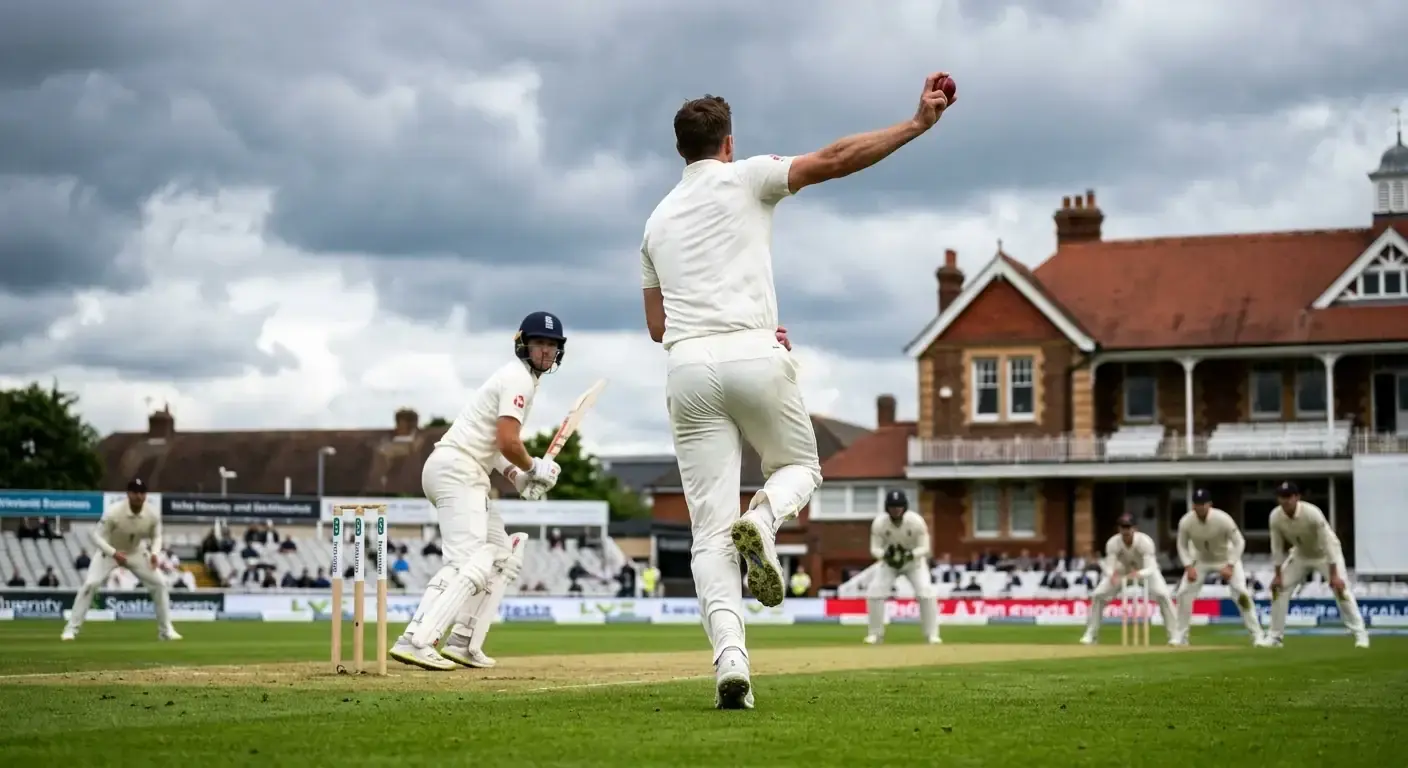
The Ashes also creates the largest seasonal lift in cricket fan betting that I track. Alex Perkins, Commercial Director at the England and Wales Cricket Board, said in 2025 that they were delighted Vitality would feature on England shirts as the men’s Ashes approached — a comment that signals how commercial gravity bends around the series. Sponsors plan around it, broadcasters plan around it, and so do bookmakers.
Where the markets get interesting is not on the series outright but on the day-by-day. Sky Sports holds the rights in the UK for home Ashes Tests under the current cycle, and the away tour goes to a different rights holder depending on the year — and that switch genuinely affects when day-three and day-four markets settle, because operators rely on broadcast feeds to confirm settlement events. I write at length about the betting suite, the broadcast switch and the session-by-session value cases in my editorial guide to Ashes 2025/26 betting.
ICC World Cups and global event windows
The ICC events — the 50-over World Cup, the T20 World Cup, the Champions Trophy, the World Test Championship final — are the second tier of cricket gravity after the Ashes, and they each create their own market window.
The 50-over World Cup runs every four years. The T20 World Cup runs every two. The Champions Trophy returned after a gap and now runs on a rolling cycle. The World Test Championship final is a single match every two years and produces some of the strangest pricing in the calendar because it pits two sides that may not have played each other for eighteen months in a one-off Test at a neutral venue.
Europe holds roughly 48% of global sports betting revenue, and the UK share of European cricket betting on ICC events is meaningful. Operators price these events deeply: outright tournament winner, group qualification, top batter and top bowler across the event, semi-final and final outright pricing. The outright pricing on the major ICC events opens about a year before the event and tightens steadily as the squad announcements roll through.

The mistake I see UK punters make on ICC events is treating them like a six-week franchise league. They are not. ICC events compress short careers into knockout pressure, and the pricing on player markets reflects coaches who may rotate, conditions punters have not seen since the last cycle, and venues that were not even built when the last edition was played. Outright pricing is sharper than people assume — the long-shot underdog at 80/1 is rarely value, no matter how romantic. Where the value sits more reliably is in mid-round matchups during the group stage, before form is properly settled.
The IPL from a UK seat
The IPL is, by global volume, the largest cricket betting event in the world. The IPL betting market is estimated at USD 100 billion and is projected to grow at a CAGR of 7.1% through 2033. For a UK punter, the IPL is also the most awkwardly timed major event on the calendar — afternoon matches that start at the back end of a UK working day and evening matches that finish past midnight.
That timing matters more than people realise. UK match-result lines on IPL matches open earlier than the global market because UK punters need to be in their bets before they leave the office. Operators set the lines slightly defensively for that window, then tighten them as the toss approaches. If you are willing to wait until the lines settle — usually about ninety minutes before the toss — you generally get a better price than the morning open.
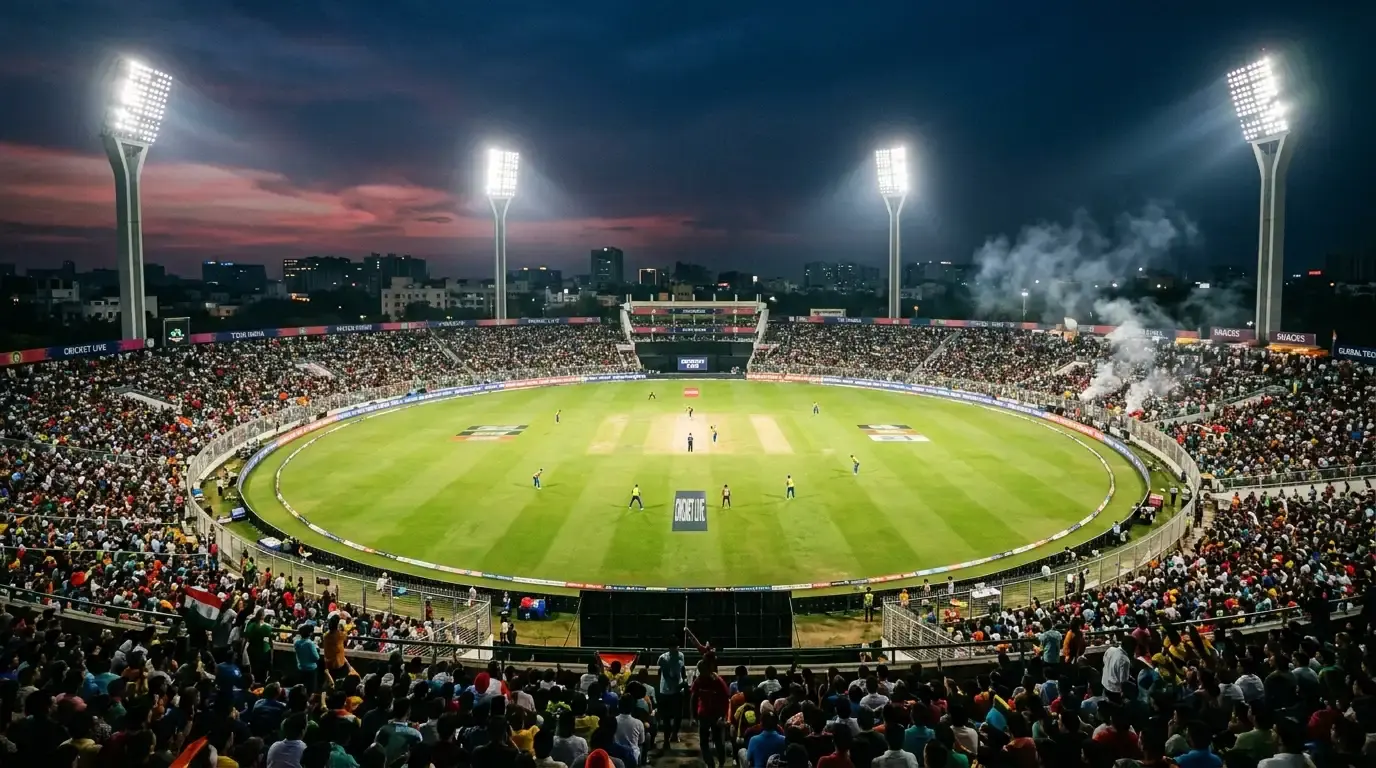
The deeper IPL menus on UK sites cover roughly seventy-five markets per game on the main books — match result, run lines, totals, top batter and top bowler per side, fall of first wicket, method of first dismissal, player runs and player wickets across both sides, partnership totals, six markets, four markets, dot-ball markets, and a sprawling tail of milestones. Most UK fixed-odds books do not match what is available globally on the IPL — Indian-licensed and offshore operators carry deeper menus — but that is largely irrelevant to a UK bettor because those sites cannot legally serve the UK market under the UKGC framework.
What you get from a UK seat is enough depth to find value, and the awkward timing acts as a filter — most of the casual money goes elsewhere.
The Hundred: the format that rewrote the English summer
I was sceptical about The Hundred when it launched. The format — 100 balls per innings, ten balls per set, no traditional overs — felt engineered for a casual audience that English cricket did not really have. Five years in, I am wrong about most of that.
The 2025 edition issued 580,000 tickets with record attendances at four of the eight grounds. The Sky Sports group-stage audience was up 38% year on year. The women’s competition broke the global record for total attendance at a women’s cricket competition, with 349,401 fans, and BBC Sport recorded 2.2 million online viewing requests, up from 1.6 million in 2024. Whatever you think of the format, those numbers describe a tournament that has found its audience.
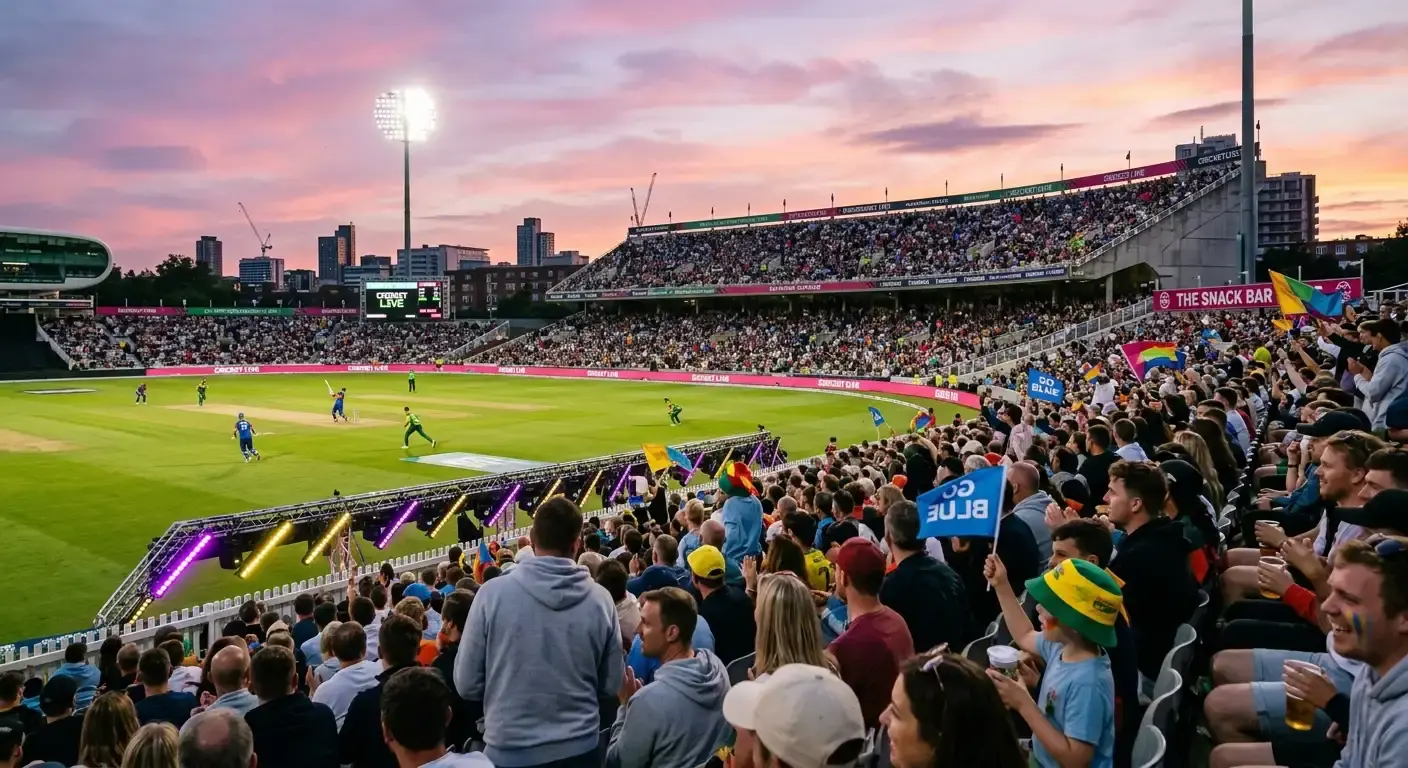
Vikram Banerjee, Managing Director of The Hundred at the ECB, said in 2025 that the aim from day one was to throw open cricket’s doors and bring more people into the game — and the numbers demonstrate that has been happening. The TV deal value reflects the trajectory: from £37.8 million in 2024 to £54.3 million per year for the 2025–2028 cycle on domestic rights.
What that means for a bettor is depth, and a particular kind of depth. Hundred fixtures on UK sites carry roughly forty-five markets per game — slightly thinner than IPL but with more “first ten balls” and “powerplay runs” markets than you see on T20 internationals. The format’s structural quirks shape the menu: ten-ball sets, the rule that allows a bowler to bowl two consecutive sets, the strategic “Powerplay” of the first 25 balls. Markets exist for each of these — runs in the first 25 balls, wickets in the first 25 balls, top bowler across powerplay, and so on.
The market behaviour on The Hundred is also different from T20. Because the format is shorter — 100 balls versus 120 — match-result swings are larger per ball, and the in-play prices move faster. Cash-out values move with more volatility than they do on a T20 international. The structural payoff is that aggressive over-by-over pricing is more rewarding here than on Twenty20 cricket.
The T20 Blast and the domestic Twenty20 stretch
The Vitality Blast — the T20 Blast for the rest of us — is the English domestic T20 competition that has lived alongside The Hundred since 2021 and has, against early predictions, kept its audience. It runs from late spring to mid-summer, with regional group stages followed by quarters, semis and a finals day at Edgbaston.
The market menu on Blast fixtures is thinner than IPL but deeper than the County Championship. Standard fare: match-result, run line, total runs, top batter and top bowler per side, with a smaller tail of in-play products. Where the Blast becomes interesting from a betting standpoint is the overseas player effect. Counties sign overseas T20 specialists for short windows — a fortnight here, four matches there — and those signings reshape pricing in the period before they arrive and after they leave. A side that looks 9/4 to win without a star overseas opener can shift to 5/4 when that opener slots in for two games before flying back to a franchise league.
Where the Blast becomes interesting from a betting standpoint is the overseas player effect, which I will not belabour here. The point for this calendar walk is that Blast fixtures generate consistent UK-summer betting volume but rarely produce the value spikes that the IPL or international T20s do. The market is mature, the pricing is sharp, and the upside lives at the edges — in player props rather than match-result, and in moments of squad churn rather than peak-season form.
County Championship cricket: the long-form patience play
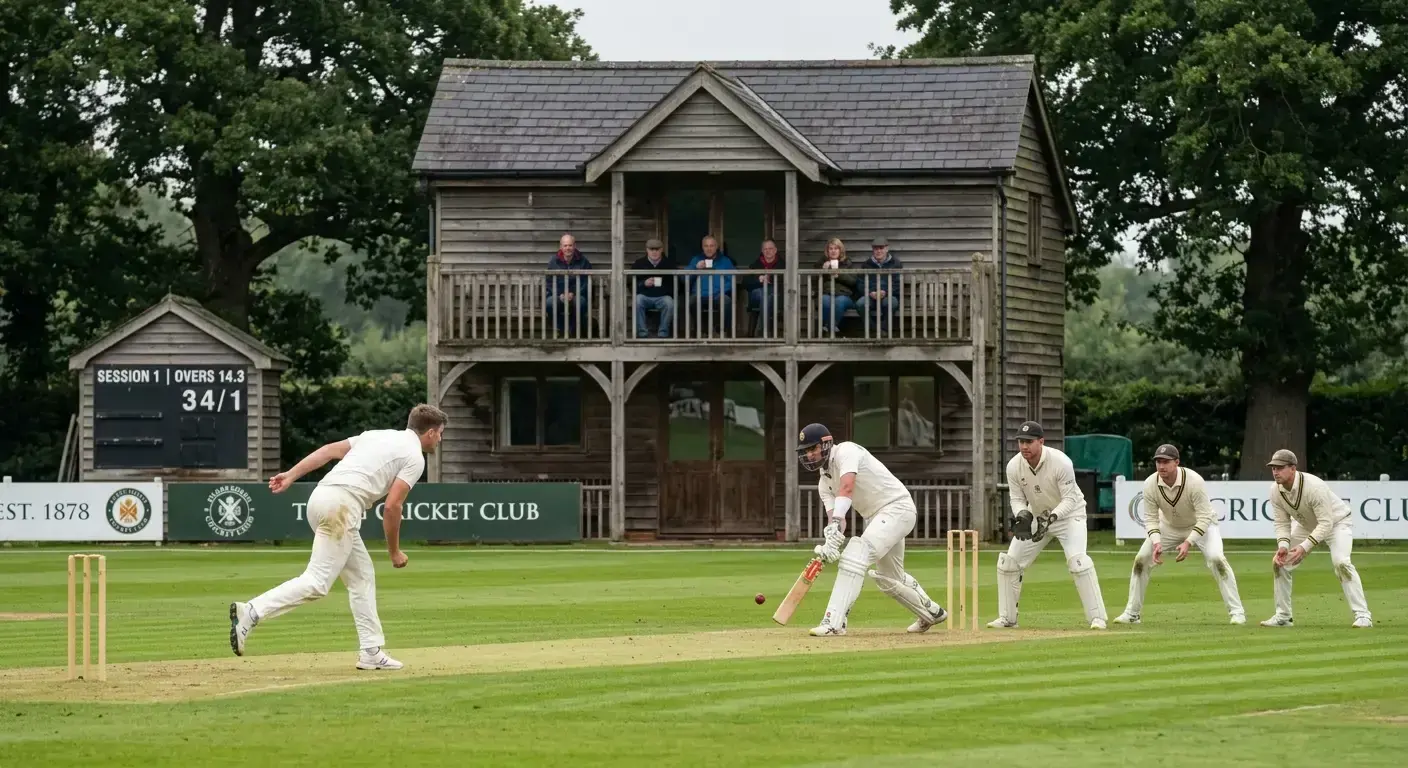
The County Championship is the format I bet on least and care about most. Four-day cricket, two divisions, eighteen counties, fixtures running from April to September with a midsummer break for The Hundred and the Blast. The market depth on a UK coupon is famously thin — match result, total runs, top run scorer at the larger fixtures, occasionally a session market — and the operators do not price every game.
The reason for the thin menu is straightforward. Over 40% of UK cricket fans are aged 65 or older, the Championship audience is the heart of that older demographic, and the betting volume on county cricket is structurally smaller than on white-ball. Operators allocate pricing resources where the volume sits.
What that means in practice is that Championship punters do most of their work on the exchange, where layers and backers create their own liquidity, and the spread between back and lay prices is wider but more honest about the uncertainty. The draw is the market that defines Championship betting. The Championship produces more draws than any other professional format I track — flat pitches, weather, the four-day cap, and the points system all push games toward draws. The draw price reflects that, and the value lives in the conditions read: green seamer in early April, draw is bad value; flat July deck at a high-scoring ground, draw is live.
Women’s cricket: the fastest-growing market depth
Women’s cricket has moved from a thin tail of women’s internationals to a structured year of franchise leagues, internationals and global events. The Women’s Hundred, the Women’s Big Bash, the WPL, the Women’s Premier League fixtures across countries, and the women’s international calendar — all carry growing UK betting menus.
The 2025 Women’s Hundred attendance — 349,401 fans, a global record for a women’s cricket competition — shows the trajectory. Bookmakers do not price markets they do not believe will trade, and the depth on women’s fixtures on UK sites has expanded measurably between 2023 and 2025. Match-result, run lines, top batter and top bowler are now standard on all Women’s Hundred and WPL fixtures, and in-play menus have grown to roughly half the depth of the equivalent men’s product.
Where women’s cricket betting differs structurally is the matchup variance. The men’s format has narrowed competitively — fifteen years of franchise specialisation has produced players who all look similar in ability. The women’s game still has wider gaps between top sides and developing sides, which makes outright markets and group-stage matchups more predictable but also more efficiently priced. The value lives in player props and in head-to-head matchups within a side’s batting order, not in match-result at scale.
How format affects market depth across the calendar
If I had to compress the calendar into a single rule for a UK punter, it would be this: deeper formats produce shallower markets. A Test match has more wickets, more sessions, more decisions per match than a T20, and yet the UK coupon for a T20 will carry three times as many markets as the coupon for the average Test. That looks backwards until you remember what drives pricing decisions for operators.
Operators price what trades. T20 cricket trades more per match because the format pulls a wider, younger, more in-play-driven audience, and the markets follow that volume. The Hundred trades aggressively because its audience skews younger and uses apps. The IPL trades enormously because it is a global event with a UK punter base willing to bet at awkward hours. The Ashes trades deeply on series-level markets because the fixed-odds Test audience is loyal and long-term. The Championship trades thinly because the audience is older, more newspaper-driven, and prefers reading scorecards to placing live bets.
The compounding effect is that market sharpness scales with depth in the opposite direction. The deepest, most-traded markets are the sharpest. The sharpest markets pay the least. The shallowest markets — Championship outright, women’s domestic, lower-tier overseas competitions — carry the widest spreads and, occasionally, the most genuine value. The challenge for a UK punter is that those sharpest spreads also carry the longest settlement risk and the lowest liquidity, so a value bet in a thin market may simply not get matched.
The calendar tells you when to look and where. Winter is overseas Tests and the Big Bash; spring is the Indian Premier League and the start of the English domestic; summer is The Hundred, the Blast, women’s internationals and visiting tour series; autumn is Asian competitions and the international wind-down. I have given up on the paper calendar. The mental map is what matters: which tournament rewards which kind of attention, and which kind of patience.
