


The Ashes Saturday that changed how I manage my account
Day three of an Ashes Test, England’s middle order collapsing through a long afternoon session, and I caught myself opening a new tab on a fresh in-play market for the third time in two hours. None of the bets I’d placed had been part of any plan. They’d been reactions – to a wicket, to a partnership, to the feeling that I needed to do something while the cricket unfolded. I closed the laptop, walked outside, and spent the rest of the day not watching cricket. The next morning I went into my main betting account and set a daily deposit limit at a fraction of what I’d been spending that summer. The limit wasn’t because I couldn’t afford the previous numbers. It was because the bets weren’t decisions any more. They were habits, and the habit had stopped being enjoyable somewhere along the way.
This piece walks through what UK safer gambling tools actually do for cricket bettors, where they sit in the regulatory framework, and the practical habits that separate sustainable cricket betting from the slow drift into something less healthy.
The structural picture in UK gambling
The UK Gambling Commission’s research has reported that around 0.5% of UK adults – about 340,000 people – meet the problem gambling threshold, with a further 1.8 million classified as at-risk. The Commission’s quarterly statistics for the year to March 2025 showed the remote sector generating £7.8bn in gross gambling yield, up 13.1% year on year, which means the volume going through licensed UK operators is substantial and the systems for protecting bettors operate at scale.

The 2025 statutory levy on gambling operators came into force on 6 April 2025 at rates between 0.1% and 1.1% of gross gambling yield depending on licence type. The levy funds research, education, and treatment for gambling harm. In its first full year, the levy raised approximately £120 million – roughly double what voluntary contributions had peaked at under the previous arrangement.
The framework around safer gambling has been substantially rebuilt over the past few years. Baroness Twycross, Minister for Gambling, has noted in parliamentary debate that two decades have passed since the Gambling Act 2005 and that gambling behaviours have undergone monumental change. The regulatory reform agenda has responded with new affordability checks and financial vulnerability monitoring.
What the safer gambling tools actually do
Every UKGC-licensed cricket betting site is required to offer a standard set of safer gambling tools, accessible from the account settings menu. The tools include deposit limits (daily, weekly, monthly caps on how much you can fund the account), loss limits (caps on net losses across a period), session time limits (automatic logout after a set duration of activity), reality checks (popup reminders showing how long you’ve been logged in), and self-exclusion options ranging from cooling-off periods of 24 hours to permanent account closure.

The tools exist because the regulator requires them. They work because the operator can’t override them. Once you set a daily deposit limit at £50, the system blocks deposits above that amount until the next 24-hour window resets. Reducing a limit takes effect immediately. Increasing a limit takes 24 hours minimum and often requires re-verification of identity – a deliberate friction designed to prevent impulsive limit increases during emotional betting sessions.
The financial vulnerability checks introduced as part of the broader reform agenda are an additional layer that operates above the customer-set tools. Operators monitor patterns including deposit frequency, loss progression, and session duration to identify customers who may be experiencing financial harm. The interventions range from automated messaging to mandatory account reviews, and they apply regardless of whether the customer has set their own limits. The Betting and Gaming Council’s spokesperson position has been that the industry takes gambling-related harm seriously and that the BGC’s priority remains raising standards, promoting safer gambling, and protecting consumers – and the financial vulnerability framework is the practical expression of that position.
Why cricket specifically tests these tools
Cricket’s betting structure has features that interact with safer gambling tools in distinct ways. The volume of cricket worldwide across the year – IPL, Big Bash, Pakistan Super League, The Hundred, T20 Blast, county cricket, ICC tournaments, bilateral tours – means there’s almost always a match on somewhere. The volume of opportunity is what tests session frequency and weekly deposit caps.
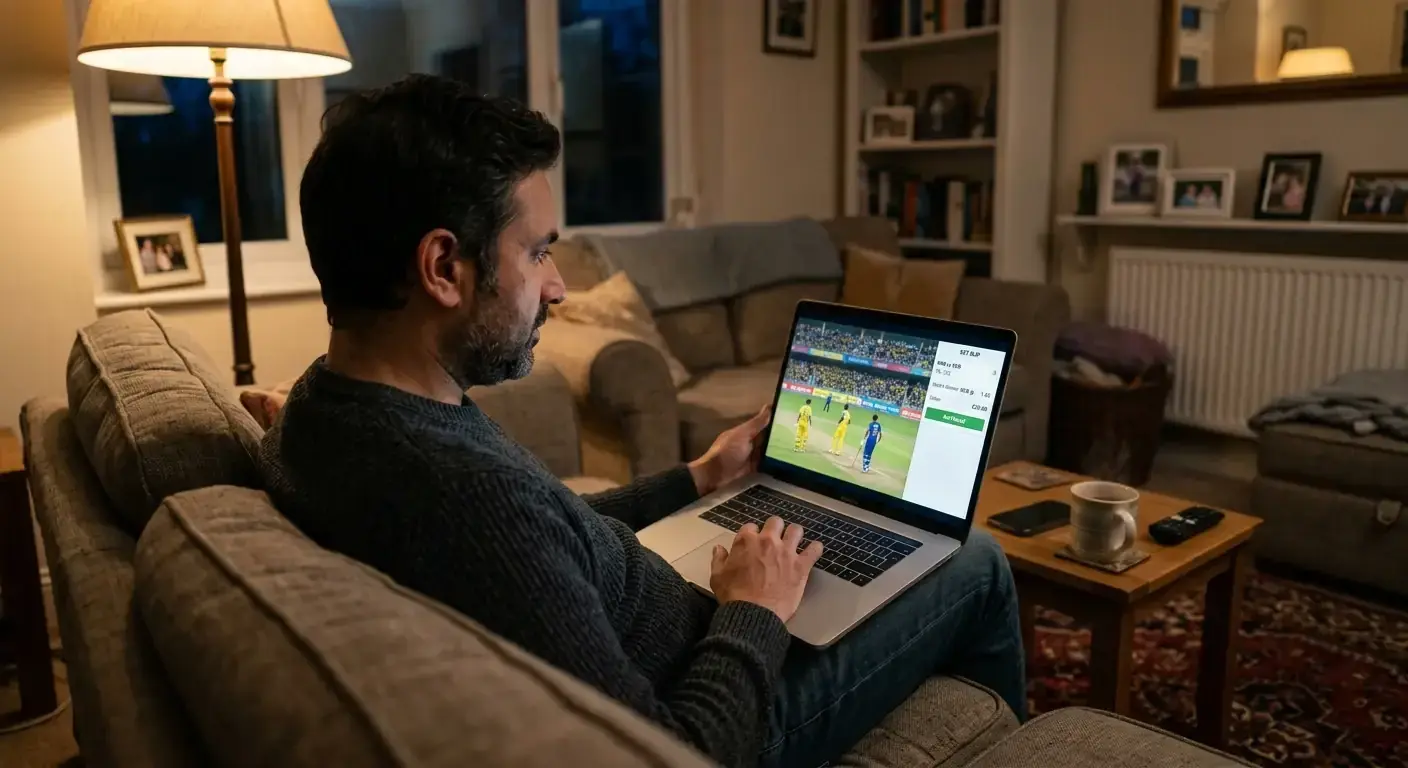
The other feature is the length of individual matches. A Test match plays out over five days. A bettor who’s set a daily deposit limit may not realise how the limit interacts with a multi-day fixture where in-play markets are open across days. The limit resets each day, which means a punter following a five-day Test can deposit five times the daily cap across the match if they choose to. Knowing this matters for setting limits that genuinely match your spending intent rather than the structure that the operator’s reset cycle defines.
The deposit limit conversation with yourself
Setting a deposit limit isn’t a one-time decision. It’s a conversation with yourself that should happen periodically as your circumstances change. The questions I run through are simple. What’s the maximum I’d want to spend on cricket betting per month given my other financial commitments? Is the current limit producing that monthly spend or is it sitting unused? Are there specific events (Ashes summers, ICC tournaments) where I want a different limit applied for that period?

The deposit limit is a structural constraint that protects you from yourself when you’re not at your sharpest. It works best when it’s set during a calm, reflective moment and stays in place during emotional moments. The 24-hour delay on increasing limits is the regulatory safeguard, but the more important safeguard is your own commitment to the original number.
The loss limit is a related but separate tool. Where the deposit limit caps inputs, the loss limit caps net outcomes. A bettor who deposits £200 a month and wins £150 has net losses of £50. A bettor who deposits £200 and loses £200 hits the loss limit and is blocked from further bets for that period.
GamStop and the wider self-exclusion infrastructure
The GamStop scheme is the UK national self-exclusion programme, free to register for any UK gambling customer who wants to exclude themselves from all UKGC-licensed online gambling. A single registration covers every licensed UK operator simultaneously, with exclusion periods of 6 months, 1 year, or 5 years available. The scheme is mandatory for licensed operators to integrate with, which means a GamStop registration takes effect across the entire licensed UK gambling industry from the moment it’s confirmed.

The scheme isn’t reversible during the exclusion period. A 5-year self-exclusion is genuinely 5 years, regardless of how the registrant feels about the decision a week or a month after registering. The non-reversibility is the structural feature that makes self-exclusion effective for people who need a complete break from gambling.
The patterns that should trigger a check-in
The patterns that should prompt reflection aren’t always dramatic. They’re often the slow ones. Betting more frequently than you intended. Betting on matches you haven’t watched. Chasing losses with bigger stakes. Betting during work hours. Hiding the extent of your betting from people close to you. Borrowing money to fund a bankroll. Feeling worse rather than better after a betting session. Treating winning bets as evidence that you “deserve” to bet more and losing bets as evidence that you need to recover.

Any one of these in isolation is worth noticing. Multiple of them in combination is a signal worth taking seriously. The signals don’t always reach the threshold of formal problem gambling, but they do indicate that the relationship with the activity has shifted from entertainment to something less healthy. Acting on the signal early – adjusting limits, taking a break, talking to someone – prevents the slow drift that turns at-risk behaviour into more serious harm.
The Gambling Commission’s CEO Andrew Rhodes has spoken publicly about the regulatory reform agenda being the largest programme since the 2005 Act, with affordability checks and financial vulnerability monitoring playing central roles. The tools the operators deploy are part of that programme. The personal habits that interact with the tools are what give them practical effect. The regulator can require deposit limits to exist. The bettor decides what number to set.
The cricket-specific habits that help
The habits that have worked for me are specific to cricket’s structure. The first is treating individual matches as discrete betting events with predetermined stakes, rather than open-ended sessions where bets can stack across the day. If I’ve decided to bet £20 across the morning IPL fixture, that’s the budget for that match. The evening fixture is a separate decision, and if I’m not in the mental state to make a separate calm decision, I don’t bet the evening fixture at all.

The second is taking complete days off betting during long fixtures. A five-day Test doesn’t require betting on all five days. Setting a rule that I’ll bet on days one and four only, or pre-match only, or not at all during a particular Test, creates structure that the in-play market doesn’t naturally provide. The market is open ball by ball. Whether I engage with it is a separate decision.
The third is using the regulatory framework as a backstop rather than a primary control. The deposit limit is a safety net that catches me on my worst days. The primary control is my own decisions on better days. Building the habit of betting deliberately, in planned amounts, on matches I’ve actually watched, is what keeps the limit unused most weeks. When the limit does activate, it’s because something has gone wrong with the primary control, and that’s the signal to step back and reflect.
What support looks like if betting becomes a problem
If cricket betting has become a problem rather than entertainment, the UK has a substantial support infrastructure that exists specifically for this situation. The National Gambling Helpline (0808 8020 133) is free and confidential, available 24/7, and staffed by trained advisors who understand the betting world. GambleAware funds NHS-commissioned gambling treatment that’s free to access. GamCare provides counselling and support groups. The newer treatment infrastructure funded by the statutory levy is expanding in scope and reach.
The threshold for reaching out isn’t problem gambling diagnosis. It’s any sense that the betting has stopped being healthy. Talking to a trained advisor about cricket betting habits that have started to concern you isn’t a commitment to anything – it’s a free conversation with someone who’s heard the patterns before and can help you think through what comes next. The infrastructure is there. Using it early is better than using it late.
Why this matters more than the bet
The summary I’d offer is that safer gambling tools and habits aren’t separate from cricket betting strategy. They’re part of it. A bettor who burns out emotionally, drains their bankroll, or damages their relationship with the activity can’t sustain any betting strategy regardless of how good the cricket reads are. The framework that keeps cricket betting sustainable – deliberate stakes, planned sessions, regular limits, periodic reflection – is the foundation that makes any other strategy possible.
The Ashes Saturday that started this article was the moment I learned this in a way that stuck. The bets I’d placed weren’t bad reads. They were reactive bets, placed because I was watching the cricket and felt the need to engage. The match would have been more enjoyable without them. The accounts would have been healthier. The activity would have been what I wanted it to be – entertainment alongside cricket – rather than a separate stream of agitation running beneath the cricket. The deposit limit I set the next morning has been adjusted since but never removed, and the structure it provides is one of the most useful pieces of betting infrastructure I have.
